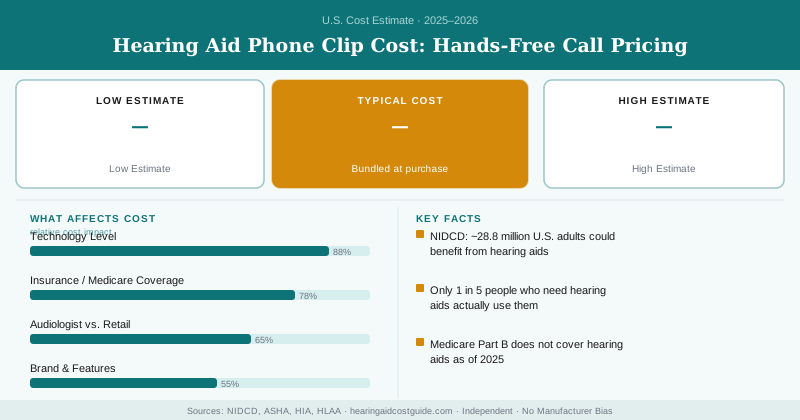
Forty-something percent of hearing aid wearers say phone calls are one of their hardest listening situations — holding a phone to one ear while the aid whistles and the voice sounds tinny. A phone clip fixes that, and it costs $150 to $300.
A hearing aid phone clip is a small device that clips to your shirt and turns your aids into a hands-free headset. Your phone pairs to the clip over Bluetooth, the clip relays the call into both hearing aids, and the built-in microphone picks up your voice. You hear callers in stereo, hands free, with no whistling. For people whose aids can’t stream directly, it’s a game-changer.
What Phone Clips Cost
| Phone Clip Type | Cost |
|---|---|
| Branded phone clip (Phonak ComPilot, ReSound Phone Clip+) | $150–$300 |
| Oticon/Signia/Starkey streamer with phone function | $180–$300 |
| Neck-loop style clip | $150–$280 |
| Direct streaming (Made for iPhone/Android) | $0 |
| Bundled at purchase | Often discounted |
That zero in the middle is the key. If your hearing aids already stream calls directly from your phone, you don’t need a clip at all.
Do You Actually Need One?
Ask one question: do your aids stream phone calls straight from your phone without an extra device? If yes, skip the clip.
Direct phone streaming has become standard on newer aids. The Hearing Industries Association reports that the majority of premium hearing aids sold in recent years ship with built-in wireless connectivity. So the phone clip mainly serves people with:
- Older aids (more than five or six years old)
- Budget or entry-level models without direct streaming
- An Android phone paired with aids that only support iPhone direct connection
If that’s you, the clip is worth it. If not, you’ve already got the feature for free.
How It Works
Pair your phone to the clip once. From then on, incoming calls route to the clip, which relays the audio into both aids. Press a button on the clip to answer, talk through its microphone, and hear the caller in both ears. Some clips also stream music and other phone audio, doubling as a Bluetooth adapter.
Stereo, hands-free, no feedback — it’s a real upgrade over pressing a phone against one aided ear.
A phone clip costs $150–$300 and turns your hearing aids into a hands-free, stereo phone headset. It only matters if your aids can’t stream calls directly — and most aids from the last several years can. Check your model first; if it streams natively, you already have this feature at no extra cost.
Why Phone Calls Are So Hard
There’s no visual cue on a call — no lips to read, no facial expressions — so you rely entirely on the audio. Add a small phone speaker, background noise, and the feedback from holding a phone near a hearing aid microphone, and it’s genuinely tough. The ASHA flags telephone communication as a recurring difficulty for people with hearing loss. Streaming the call directly into both ears removes most of those obstacles at once.
Phone clips are brand-specific and sometimes phone-specific. A ReSound Phone Clip+ won’t pair with Phonak aids, and some clips only fully support certain phone operating systems. Confirm compatibility with both your hearing aids and your phone before buying — a non-returnable mismatch is an expensive mistake.
The Upgrade Alternative
If your aids are getting old and you’re already thinking about new ones, a fresh pair with native streaming may be the smarter spend than a $300 clip on aging devices. Weigh it against how long hearing aids last and what replacements cost before committing.
Where to Buy
- Your audiologist — confirms compatibility, sets it up
- Manufacturer website — authorized, guaranteed fit
- Bundled with new aids — often the cheapest route
The Bottom Line
A phone clip is a lifesaver for wearers whose aids can’t stream calls — clear, hands-free, stereo conversations for $150–$300. But check your devices first, because many hearing aids already do this natively. Spend the money only if you genuinely need the bridge, not the duplicate.
Frequently Asked Questions
A hearing aid phone clip typically costs between $150 and $300, depending on the brand and features. Some manufacturers like ReSound and Phonak include basic clips with certain hearing aid models at no extra charge, while premium or aftermarket clips from third-party vendors fall at the higher end of the range.
Most health insurance plans and Medicare do not cover hearing aid accessories like phone clips, leaving you responsible for the full out-of-pocket cost of $150–$300. Some Medicaid programs may offer limited coverage if the clip is deemed medically necessary, so contact your state Medicaid office to confirm your specific benefits.
Not all hearing aids are compatible with phone clips; your aids must have Bluetooth capability to pair with the clip. If your current hearing aids lack Bluetooth, you can still stream calls directly from a compatible smartphone to newer digital aids, or ask your audiologist about upgrading to Bluetooth-enabled models that may eliminate the need for a separate clip entirely.