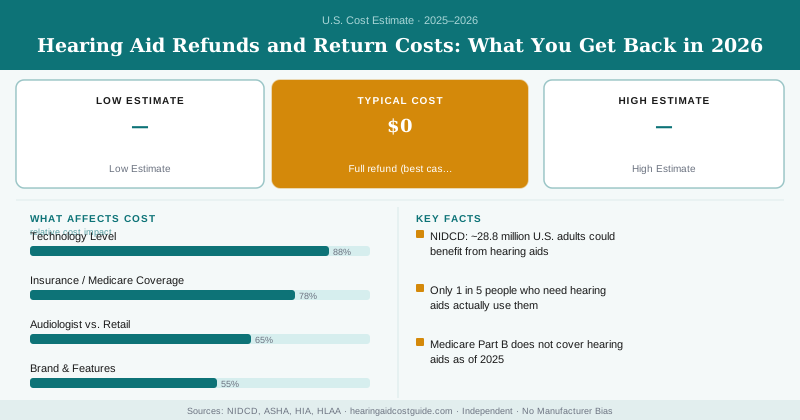
The hearing aids aren’t working out, and now you want your money back. The big question isn’t whether you can return them — it’s how much of your refund the clinic gets to keep. Because here’s the part the sales pitch glossed over: a “money-back trial” rarely means 100% of your money back.
Let’s break down exactly what you can expect to recover.
What you actually get refunded
Most U.S. states require a trial period — often 30 to 60 days — during which you can return hearing aids. But “refund” and “full refund” aren’t the same thing. Clinics commonly subtract fees before they hand back your money.
| Fee Type | Typical Deduction |
|---|---|
| Restocking fee | $150 – $500 (or % of price) |
| Fitting / professional fee | $100 – $300 (sometimes nonrefundable) |
| Earmold / custom fee | Often nonrefundable |
| Days-used proration | Varies by clinic |
| Full refund (best case) | $0 deducted |
So on a $4,000 pair, a $300 restocking fee plus a $200 nonrefundable fitting charge means you’d get about $3,500 back, not the full $4,000.
Why these fees exist
Clinics argue the fitting and fees cover real professional time — the exam, programming, and adjustments — that happened whether or not you keep the devices. There’s some logic to it. But the amounts vary wildly between clinics, and a few charge nothing at all. That variation is exactly why you ask before you buy, not after.
The questions to ask before you ever buy
Your refund is decided at purchase, not at return. Before you sign anything, get these answers in writing:
- What’s the trial period length? (State minimums vary; some clinics offer longer.)
- Is there a restocking fee, and how much?
- Are the fitting and professional fees refundable?
- What’s the absolute deadline to return for the best refund?
If a clinic won’t put the refund terms in writing, that’s your answer about how the return will go.
A hearing aid “money-back trial” usually isn’t 100% money back. Restocking and fitting fees can carve $150 to $500 out of your refund. Get the trial length, restocking fee, and which fees are nonrefundable in writing before you buy — that’s when the refund is really decided.
State trial-period protections
Many states legally require a minimum trial period and cap or regulate the fees a seller can keep. The rules differ by state, so if a clinic claims you can’t return devices at all, check with your state department of insurance or attorney general’s consumer office — that may not be legal where you live.
Mark your return deadline on a calendar the day you get the devices. Miss the trial-period window by even one day and the full purchase becomes nonrefundable — turning a $200 fee into a $4,000 loss. Don’t “wait and see” past the deadline.
Protecting your refund during the trial
A few habits keep your money safe:
- Keep all packaging, accessories, and receipts. Missing parts can trigger extra charges.
- Document your concerns in writing (email the clinic) so there’s a record of timely complaints.
- Return in person when possible and get a written confirmation of the return and refund amount.
Avoiding the return headache entirely
The best return is the one you never need. A few ways to lower the risk:
- Try OTC hearing aids first for mild loss — lower price means a smaller amount at risk, and online sellers often have simple return windows.
- Understand the full price up front so you’re confident in the purchase — see our hearing aid cost guide and why hearing aids are so expensive.
- Confirm insurance before buying, since whether insurance covers hearing aids affects how much is even at stake.
If money is tight and the purchase feels risky, our hearing-loss financial assistance guide covers lower-risk routes.
The bottom line
A hearing aid return rarely refunds every dollar — restocking and fitting fees commonly keep $150 to $500. But you control the outcome by asking the right questions before you buy and tracking your return deadline religiously. Get the refund terms in writing on day one, and a return becomes a minor cost instead of an expensive surprise.
Frequently Asked Questions
Restocking fees typically range from $150 to $500 per pair, depending on your provider and how long you've owned the aids. Some clinics charge 15-20% of the purchase price, meaning returns within 30-60 days could cost you $300-$800 combined for fitting and restocking on a $3,000-$4,000 purchase.
Most health insurance plans do not reimburse restocking or fitting fees—these are considered service charges by retailers, not covered medical expenses. Medicare and Medicaid typically cover the hearing aids themselves but exclude trial period fees, meaning you're responsible for the full restocking cost if you return them.
Most U.S. states mandate a 30 to 60-day trial period during which you can return hearing aids for a refund minus restocking fees. Actual refund processing takes 7-14 business days after the clinic receives the returned devices, so expect your money back within 45-75 days total from the return date.