A $5,000 pair of hearing aids can translate to a real tax break. But most people either don’t know it’s available or don’t claim it correctly. Here’s the plain-language version of the IRS rules — and a realistic sense of how much you’ll actually save.
The Basic Rule: IRS Schedule A
Hearing aids are a qualified medical expense under IRS Publication 502. You can deduct hearing-related medical expenses if you itemize deductions on Schedule A and your total unreimbursed medical expenses exceed 7.5% of your adjusted gross income (AGI).
That 7.5% threshold is the catch most people run into.
Example: Your AGI is $60,000. Your threshold is $4,500 (7.5% × $60,000). If you spend $5,200 on hearing aids in one year, only $700 ($5,200 – $4,500) is deductible.
Example 2: Your AGI is $40,000. Threshold is $3,000. You spent $5,200 on hearing aids plus $1,800 on other medical expenses ($700 dental, $600 prescriptions, $500 other). Total medical: $7,000. Deductible amount: $4,000.
| AGI | 7.5% Threshold | $5,200 HA Expense | Deductible Amount |
|---|---|---|---|
| $30,000 | $2,250 | $5,200 | $2,950 |
| $50,000 | $3,750 | $5,200 | $1,450 |
| $70,000 | $5,250 | $5,200 | $0 |
| $40,000 + other medical | $3,000 | $7,000 total | $4,000 |
What’s Included as a Deductible Hearing Expense
The IRS allows deductions for the full cost of hearing care, not just the device itself:
- Hearing aid purchase price (all tiers and brands)
- Audiologist exam fees and diagnostic evaluations
- Hearing aid fitting and programming fees
- Hearing aid batteries and supplies (wax guards, domes, cleaning tools)
- Cochlear implant and surgery costs
- Assistive listening devices prescribed by a physician
- Travel costs to and from audiologist appointments (at the IRS standard medical mileage rate)
- Telehealth audiology appointments
NOT deductible: cosmetic-only items, nonprescription ear amplifiers (OTC amplifiers not recommended by a professional), gym memberships billed as wellness.
The Standard Deduction vs. Itemizing
Here’s the honest reality: most taxpayers take the standard deduction. In 2025, the standard deduction is $15,000 for single filers and $30,000 for married filing jointly. To benefit from itemizing, your total itemized deductions (including medical, mortgage interest, charitable giving, state taxes) need to exceed those amounts.
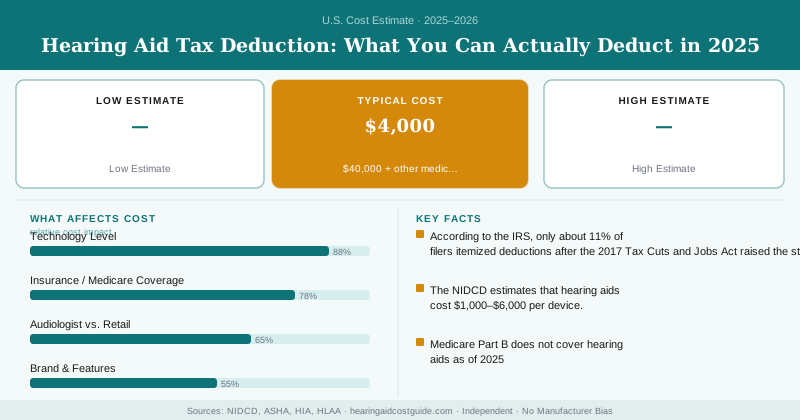
If you’re 65+, the standard deduction increases by $2,000 (single) or $1,600 per spouse (married). According to the IRS, only about 11% of filers itemized deductions after the 2017 Tax Cuts and Jobs Act raised the standard deduction. For hearing aid deductions to pay off, you typically need:
- High hearing care costs that push you above the 7.5% threshold
- Other significant itemizable expenses in the same year
- Income low enough that the threshold isn’t too high to reach
HSA and FSA: Usually the Better Option
If you have access to a Health Savings Account (HSA) or Flexible Spending Account (FSA), those almost always beat itemizing.
- HSA: Contributions are pre-tax. Withdrawals for qualified medical expenses are tax-free. There’s no 7.5% threshold — every dollar spent on hearing aids saves you the marginal tax you’d have paid on that income.
- FSA: Same tax benefit, but use-it-or-lose-it rules apply. If you know you’re buying hearing aids this year, front-load your FSA contributions.
The NIDCD estimates that hearing aids cost $1,000–$6,000 per device. At a 22% marginal federal tax rate, an HSA purchase of a $5,000 pair saves $1,100 in federal tax alone — before any state tax benefit. That’s a better outcome than most people get from Schedule A itemizing.
Timing Strategies Worth Knowing
- Bunch medical expenses: If you’re considering hearing aids plus a dental procedure or prescription glasses, try to do them in the same tax year. Concentrating expenses maximizes your chance of clearing the 7.5% threshold.
- Year-end purchase: If you’re buying in late December, you may be able to use that same purchase in conjunction with year-end FSA dollars.
- If you’re 65+: You’re more likely to clear the 7.5% threshold on a fixed income, especially if you’re paying for multiple medications, specialist visits, and hearing care simultaneously.
According to ASHA (American Speech-Language-Hearing Association), the average audiologist charges $1,500–$3,500 for a comprehensive fitting package beyond the device itself. Those professional fees count toward the medical expense deduction too — which helps lower-income buyers clear the threshold more easily.
This page provides general educational information only — not tax advice. Tax rules change. Consult a CPA or enrolled agent before claiming medical expense deductions, especially if your situation involves self-employment income, significant investment income, or state-specific rules that differ from federal guidelines.
Bottom Line
Hearing aids are deductible — but only if you itemize, and only the amount above 7.5% of your AGI. For most buyers, an HSA or FSA delivers more guaranteed tax savings with less complexity. If you don’t have an HSA/FSA, keep all receipts from your audiologist, add up your full-year medical costs, and run the Schedule A math with a tax professional to see if itemizing makes sense for your situation.
Frequently Asked Questions
A single hearing aid usually costs between $1,500 and $3,000, while a pair ranges from $3,000 to $6,000 or more depending on features and technology level. Premium models with advanced noise cancellation can exceed $10,000 per pair, though basic models start around $2,000 per pair.
Most traditional health insurance plans do not cover hearing aids, leaving you to pay the full cost out of pocket—though you may deduct these expenses on your taxes if you itemize. Medicare also does not cover hearing aids, though some Medicare Advantage plans offer limited benefits of $500 to $2,000 per year.
Yes, you can deduct the full cost of hearing aids plus all related audiologist services including hearing tests, fittings, adjustments, and follow-up appointments as qualified medical expenses on Schedule A. All hearing-related professional fees incurred in the same tax year are deductible as long as your total medical expenses exceed 7.5% of your adjusted gross income.