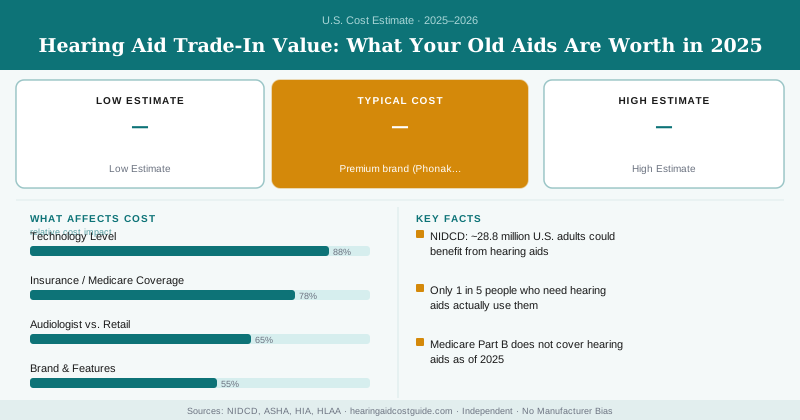
Those five-year-old hearing aids sitting in your nightstand drawer are worth something — just probably not as much as you’d hope. Trade-in values for hearing aids range from nothing (genuinely broken or obsolete models) to $800–$1,000 credit toward a new purchase. The wide spread comes down to brand, age, condition, and most importantly, who you’re trading with.
According to the Hearing Industries Association’s MarkeTrak surveys, approximately one in five hearing aid users hasn’t worn their aids in the past three months. That’s a lot of idle hardware. Here’s what it’s worth.
Hearing Aid Trade-In Value Ranges
| Device Age / Condition | Trade-In Credit Range | Notes |
|---|---|---|
| 1–2 years, working, major brand | $400–$1,000 | Best value; current-gen platform still relevant |
| 3–4 years, working, major brand | $200–$500 | Previous platform; still serviceable |
| 5–6 years, working, major brand | $100–$300 | Often accepted as charity donation credit |
| 7+ years or obsolete platform | $0–$100 | May only qualify for charity programs |
| Broken / needs major repair | $0–$50 | Scrap/parts value only |
| OTC aids (Jabra, Lexie, etc.) | $0–$100 | Rarely accepted by traditional audiologists |
| Premium brand (Phonak, Oticon, Starkey) | +$50–$200 premium | Recognized resale value helps |
How Trade-In Programs Work
Trade-in programs in the hearing industry don’t work like car trade-ins. There’s no book value, no KBB equivalent. What you get depends almost entirely on the specific program offered by:
1. Your audiologist’s practice: Most independent audiologists offer trade-in credit toward new aids purchased in their practice. Typical credit: $150–$500 depending on age and condition. This credit comes from the audiologist’s margin, not a formal manufacturer buyback program.
2. Hearing aid chains (HearingLife, Miracle-Ear, Beltone): These chains sometimes run formal trade-in promotions — “$300 for any working hearing aid” — particularly during manufacturers’ promotional cycles. The credit is often independent of the actual resale value; it’s a sales tool to get you in the door.
3. Manufacturer programs: Some brands run formal upgrade programs through their dealer networks. Phonak’s upgrade program, for example, allows dealers to offer credit for Phonak-to-Phonak upgrades. The credit is processed through the dealer and typically ranges $200–$800.
4. Online resale platforms: eBay, Craigslist, and dedicated medical equipment resale sites sometimes fetch higher actual cash values ($200–$700 for 2–4 year old aids), but the buyer pool is small and private sale has risks.
If your aids are too old for meaningful trade-in value, donation programs offer a tax deduction and help someone else. Starkey Hearing Foundation, Lions Clubs, and Hear Now accept used aids and recondition them for patients in need. Get a qualified appraisal for aids worth over $500 if you want the full tax deduction — the Starkey Foundation provides donation receipts.
What Actually Affects Trade-In Value
Age is the biggest factor. Hearing aid technology platforms change roughly every 3–5 years. A 2-year-old Phonak Lumity is still current-generation; a 7-year-old Phonak Audeo V is two platform generations behind and has almost no resale value.
Working vs. non-working. Audiologists typically test trade-ins. A non-working aid may still be worth $50–$100 for parts (receivers, shells), but don’t expect more.
Both aids vs. one. A complete pair is worth more than a single aid. A unilateral aid is worth roughly 30–50% of what a pair would get.
Brand recognition. Premium brands (Phonak, Oticon, Starkey, ReSound, Widex, Signia) hold value better than off-brand or budget aids. An audiologist can resell or repurpose a used Phonak; a generic hearing amplifier has no secondary market.
Documentation. Having the original purchase receipt, charging case, extra accessories, and warranty paperwork modestly improves credibility in private sales. For audiologist trade-ins, it’s less relevant.
Selling Privately: Is It Worth It?
Private sales through eBay or Facebook Marketplace typically yield $100–$500 for 3–5 year old aids from major brands. The challenges:
- Buyers are often unaware that hearing aids are programmed to a specific audiogram and will need professional reprogramming
- Reprogramming costs $100–$300 at most audiologists, which reduces what buyers will pay
- Selling or buying used prescription hearing aids in a private transaction isn’t technically regulated in most states, but warranties are voided and post-sale problems are your responsibility
- OTC aids can be resold without these concerns since they’re self-fit consumer electronics
Maximizing Your Trade-In
Negotiate during manufacturer promotions: When Phonak, Oticon, or Signia launches a new platform, dealers often run trade-in promotions with above-market credits to move inventory. Ask if any manufacturer promotions are running before accepting the first offer.
Get quotes from multiple audiologists: Trade-in credits are negotiable. If one practice offers $200 and another offers $400 for the same aids, use that as a negotiating lever.
Timing with insurance: If your insurance benefit resets in January, plan your trade-in and upgrade for January to stack your benefit with the trade-in credit.
Consider the full bundle: An audiologist offering $300 in trade-in credit but higher device prices may cost more than one offering $150 credit with lower prices. Calculate total out-of-pocket across the full package.
The NIDCD estimates the average American waits 7–10 years between recognizing hearing loss and getting hearing aids. If you’re finally upgrading after that long a gap, the trade-in value of your previous aids (if you had any) is likely minimal — but the new aids will make the exchange worthwhile.
Frequently Asked Questions
Trade-in values typically range from $100 to $1,000 in credit toward a new purchase, depending on the brand, age, and condition of your devices. Completely broken or obsolete models may receive no credit at all, while recent higher-end models in good condition can reach $800–$1,000.
Most insurance plans, including Medicare, do not cover hearing aids at all, making trade-in credits a direct way to reduce your out-of-pocket cost rather than an insurance benefit. Some private insurance plans offer limited hearing aid coverage ($200–$500 annually), but trade-in value is applied to the remaining balance you pay.
Trading in with a hearing aid provider offers immediate credit toward new purchase without hassle, while private sales (online or local) may net 10–30% more but require time and effort to find buyers. If you need new aids quickly, trade-in is more convenient; if you can wait 2–4 weeks, private resale typically yields higher returns.