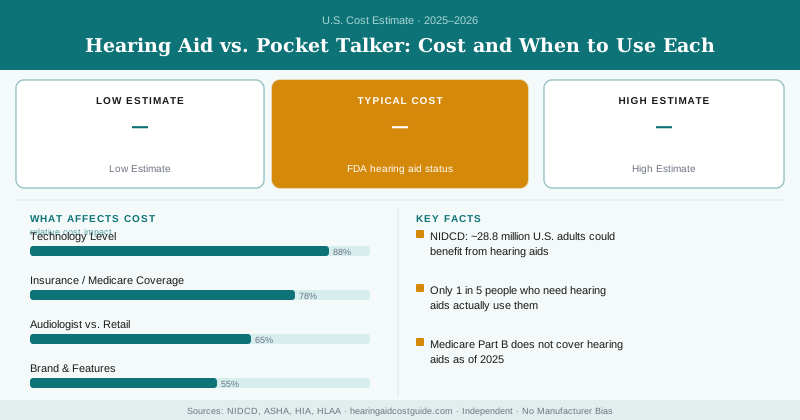
A Pocket Talker costs about $150. A pair of hearing aids can cost $5,000. That’s a 30-fold price gap for two devices that both make sound louder — so why would anyone pay the premium? Because they do fundamentally different jobs. Confuse the two and you’ll either overspend or end up with a device that doesn’t help.
Here’s how to tell which one you need.
Pocket Talker vs. Hearing Aid: Cost
| Factor | Pocket Talker | Hearing Aids |
|---|---|---|
| Price | $130–$200 | $1,000–$7,000 per pair |
| Worn all day | No, handheld | Yes, custom-fit |
| Tuned to your hearing | No, simple volume | Yes, by frequency |
| Best use | Occasional one-on-one | Daily, all-environment |
| FDA hearing aid status | No (amplifier/PSAP) | Yes |
The price gap is huge because they’re not really competitors — one is a situational tool, the other is a medical device worn from morning to night.
What a Pocket Talker Is
A Pocket Talker is a personal amplifier: a small handheld box with a microphone and a headphone or earbud jack. You point the mic at whoever’s speaking, and it boosts the sound into your ears. It applies one general volume boost — it doesn’t shape the sound to your specific pattern of hearing loss.
It shines in narrow situations: a quiet doctor’s appointment, a one-on-one bedside conversation, watching TV with a partner. Many nursing homes and hospitals keep them on hand for exactly these moments.
A Pocket Talker ($130–$200) is a simple, occasional-use amplifier for quiet one-on-one situations — great as a low-cost backup or for people who can’t manage hearing aids. Hearing aids ($1,000–$7,000) are custom-tuned medical devices for all-day, all-environment use. They solve different problems; one isn’t a substitute for the other.
What Hearing Aids Do Differently
Hearing aids are programmed to your exact audiogram — amplifying the specific frequencies you’ve lost while leaving the ones you hear fine alone. They’re worn all day, automatically adjust to different environments, and (in modern models) stream phone calls and filter background noise. That tailored, continuous correction is what the higher price pays for. Our hearing aid cost guide breaks down the full range, and why hearing aids are so expensive explains where the money goes.
A Pocket Talker can’t do any of that. It’s a megaphone for your ears, not a correction for your hearing loss.
A Pocket Talker is a personal sound amplifier, not an FDA-regulated hearing aid — it doesn’t compensate for the pattern of your hearing loss, and turning it up too loud can risk further damage. Don’t rely on one as a long-term replacement for hearing aids if you have real, daily hearing loss. Get a hearing test first.
When the Cheaper Device Makes Sense
A Pocket Talker is a smart buy if:
- You only struggle occasionally, in specific quiet settings
- You’re caring for someone who can’t manage tiny hearing aids
- You want an inexpensive backup for when your aids are out for repair
- You’re testing whether amplification helps before investing in aids
For mild, situational needs, spending $150 instead of thousands is completely reasonable.
When You Need Hearing Aids
If you’re missing parts of everyday conversation, asking people to repeat themselves regularly, cranking the TV, or struggling in groups, you’ve moved past what a Pocket Talker can fix. The NIDCD reports about 28.8 million US adults could benefit from hearing aids, yet only roughly 1 in 5 who’d benefit use them — and substituting an amplifier for real aids is one way people stall. A 2024 AARP report found cost is the leading reason for that delay.
If budget is the barrier, look at the OTC hearing aid cost options or Costco hearing aids before settling for an amplifier.
Bottom Line
A Pocket Talker is a cheap, useful tool for occasional one-on-one listening — not a hearing aid. If your hearing loss affects daily life across many situations, you need real, custom-fit hearing aids. Use the Pocket Talker for what it’s good at, and don’t let its low price talk you out of treatment you actually need.
Frequently Asked Questions
A Pocket Talker typically costs $130–$200, while a pair of hearing aids ranges from $1,000–$7,000 depending on style and technology level. This means hearing aids cost roughly 5 to 50 times more than a Pocket Talker, making the latter a budget-friendly option for basic sound amplification.
Most health insurance plans do not cover Pocket Talkers since they are personal sound amplification products rather than medical devices. Medicare covers 50–80% of hearing aid costs only after you meet your deductible, leaving you responsible for $500–$3,500 out-of-pocket per pair, depending on your plan and the device chosen.
Use a Pocket Talker for temporary situations like one-on-one conversations, watching TV with subtitles, or trying amplification before committing to hearing aids. Choose hearing aids if you have diagnosed hearing loss and need all-day amplification across multiple environments, as they are programmed to your specific audiogram and provide better sound quality and speech clarity.