Most people assume the warranty that comes with a new hearing aid purchase covers pretty much everything that could go wrong. It doesn’t. Standard manufacturer warranties typically run 1 to 3 years and cover manufacturing defects only — not loss, not accidental damage, and not the wear and tear that comes from wearing a device in your ear canal for 14+ hours a day, every day.
Hearing Aid Warranty Extension Costs
| Coverage Type | Typical Cost (Per Device) | What’s Covered |
|---|---|---|
| Standard manufacturer warranty (included) | $0 (1–3 years included) | Manufacturing defects only |
| Extended warranty (defects only) | $150–$350 | Manufacturing defects, extra 1–2 years |
| Loss/damage rider (standalone) | $150–$400/year | Accidental damage, loss, theft |
| Combined extended warranty + loss/damage | $300–$600 | Defects + loss + accidental damage |
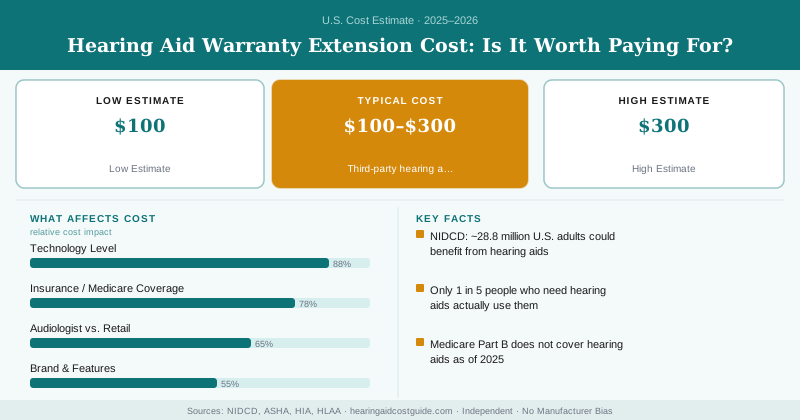
| Third-party hearing aid insurance | $100–$300/year | Varies by provider, often broader coverage |
What the Standard Warranty Actually Excludes
Read the fine print on any standard hearing aid warranty and you’ll typically find exclusions for:
- Loss (dropped down a drain, left on an airplane, misplaced)
- Accidental damage (stepped on, chewed by a pet, dropped and cracked)
- Damage from moisture exposure beyond normal use
- Earwax damage from inadequate cleaning
- Normal cosmetic wear
The standard warranty covers the manufacturer’s liability for defects in materials or workmanship — not the day-to-day risks of wearing a small electronic device in and around your ears constantly.
When an Extension Makes Financial Sense
Given that a single hearing aid typically costs $1,500–$3,900 depending on technology tier, a $150–$400 extended warranty or loss/damage rider is protecting a significant asset. The math generally favors purchasing extended coverage if:
- You have young children or pets in the home (increased accidental damage risk)
- You’re active outdoors or work in conditions with heavy sweat or moisture exposure
- You have a history of losing small items or previous hearing aids
- Replacing the device out of pocket would create real financial strain
If you have to choose between an extended warranty (covering manufacturing defects) and a loss/damage rider (covering accidental damage and loss), the loss/damage rider is usually the more valuable purchase for most people. Manufacturing defects are relatively rare and often caught within the standard warranty period anyway, while accidental damage and loss are the more common — and more expensive — real-world risks hearing aid wearers actually face.
Third-Party Insurance as an Alternative
Beyond manufacturer-offered extended warranties, several third-party companies specialize in hearing aid insurance, often at a lower annual cost than manufacturer riders and sometimes with broader coverage terms. These policies function similarly to phone insurance — a modest annual premium in exchange for reduced-cost replacement if the device is lost, stolen, or damaged. Compare the deductible and claim limits carefully, since some third-party policies cap the total payout per year or per claim below the full replacement cost.
Before purchasing any extended warranty or loss/damage rider, confirm exactly what “accidental damage” covers in the policy language. Some policies exclude specific common scenarios — like damage from a pet, or damage during travel — that you might assume are covered under a general “accidental damage” label. Get the specific exclusions list, not just the marketing summary, before paying for the add-on.
Bottom Line
If your hearing aids represent a significant portion of your budget and you have any elevated risk factors — kids, pets, an active outdoor lifestyle, a history of losing devices — the $300–$600 combined cost for extended warranty and loss/damage coverage on a pair is a reasonable insurance policy against a $3,000–$8,000 out-of-pocket replacement cost.
Frequently Asked Questions
Extended hearing aid warranties typically cost $150 to $500 per device, or $300 to $1,000 for a pair, depending on the manufacturer, the length of the extension, and whether loss/damage coverage is included.
A standard manufacturer warranty typically covers 1 to 3 years and includes repair or replacement for manufacturing defects, but usually excludes loss, accidental damage, and normal wear and tear like earwax damage — those often require a separate loss/damage rider.
No. A warranty extension covers manufacturing defects beyond the standard warranty period, while loss and damage coverage is a separate add-on that covers accidental damage, loss, or theft — many buyers need both, and they're often sold separately even by the same manufacturer.