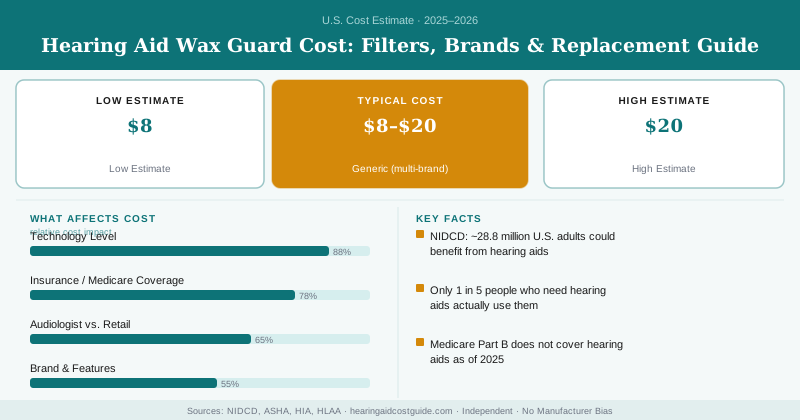
Most people throw away a $3,000 hearing aid because it “stopped working.” They drop it in a drawer, buy a new one — then find out two years later it just needed a $1 wax filter replacement. That’s not an exaggeration. Blocked wax guards are the single most common cause of sudden hearing aid failure, and they’re fixed in 30 seconds with a tool that costs less than a coffee.
According to the National Institute on Deafness and Other Communication Disorders (NIDCD), over 28 million American adults have disabling hearing loss, and the vast majority who use hearing aids don’t know the first thing about wax guard maintenance. It’s a gap worth closing.
Wax Guard Costs by Brand
| Brand / Filter Type | Pack Size | Price Range | Per Filter |
|---|---|---|---|
| Phonak CeruStop | 8 filters | $7–$12 | $0.88–$1.50 |
| Oticon ProWax miniFit | 6 filters | $6–$10 | $1.00–$1.67 |
| Signia / Siemens CeruStop | 8 filters | $7–$12 | $0.88–$1.50 |
| Widex NanoCare | 10 filters | $8–$14 | $0.80–$1.40 |
| ReSound Wax Guard | 8 filters | $6–$11 | $0.75–$1.38 |
| Starkey Hear Clear | 8 filters | $7–$12 | $0.88–$1.50 |
| Unitron CeruStop | 8 filters | $7–$12 | $0.88–$1.50 |
| Generic (multi-brand) | 20–50 filters | $8–$20 | $0.16–$0.40 |
What Wax Guards Actually Do
Wax guards — also called wax traps, wax filters, or cerumen guards — are tiny mesh discs that sit at the tip of the receiver (speaker) where it enters your ear canal. Their job is to catch earwax and moisture before either can reach the speaker membrane.
When the filter gets clogged, sound gets muffled or disappears entirely. You might notice it as a gradual volume drop over a few days, or sudden silence. Either way, the fix is the same: swap the filter with a new one using the stick tool included in every pack.
The process takes about 30 seconds once you’ve done it a few times. One end of the stick has a peg to pull out the old filter; the other end pushes the new one in. No tools, no audiologist visit required.
Brand-Specific Filters: The Compatibility Problem
Here’s the critical buying mistake people make: assuming all wax guards are the same. They aren’t. Phonak uses CeruStop. Oticon uses ProWax miniFit (smaller diameter). Widex uses NanoCare (custom size). These are not interchangeable.
Using the wrong filter can leave gaps, fall into the ear canal, or not seat properly — turning a simple maintenance task into a $150 audiologist visit to fish a filter out of your ear.
Before ordering filters online, confirm your hearing aid model and cross-reference the manufacturer’s filter compatibility chart. Most brands publish this on their website or include it in the original documentation.
Never buy generic wax guards as replacements without confirming compatibility with your exact hearing aid model. Ill-fitting filters can dislodge inside the ear canal. When in doubt, order brand-name filters from the manufacturer or your audiologist.
How Often to Replace
Replacement frequency depends on how much earwax your ears produce. Most users fall into one of three categories:
- Light producers: Every 3–6 weeks — filters look lightly tan but not blocked
- Moderate producers: Every 2–3 weeks — noticeable color change, slight volume drop
- Heavy producers: Weekly — filters fully brown or gray, audio muffled quickly
If you’re replacing filters more than once a week, talk to your audiologist. There may be a wax removal treatment that reduces buildup, or your hearing aid may benefit from a different filter design.
Annual cost for one pair of aids: $30–$80 depending on replacement frequency and whether you buy brand-name or compatible generics.
Where to Buy
Direct from manufacturer or audiologist: Most reliable for exact compatibility. More expensive ($7–$15 per pack).
Amazon: Most brands are available. Search your hearing aid model + “wax guard” and check the compatibility notes. Prices are often 20–40% lower than clinic pricing.
Bulk packs: Some third-party suppliers sell multi-packs of 30–50 filters for $15–$20. Excellent value if you’ve confirmed compatibility and use filters at a moderate rate.
Big-box hearing centers (Costco, Sam’s Club): Stock filters for the hearing aids they sell (Kirkland, ReSound). Less useful if you have aids from a different brand.
Annual Filter Budget
At average replacement rates (every 3 weeks per aid, two aids):
- Brand-name filters: ~$80–$130/year
- Compatible generics (confirmed): ~$20–$40/year
The price gap is real. Once you’ve confirmed a generic is compatible with your exact model — not just “similar” models — switching to bulk generics is a legitimate cost-saving strategy. The filters themselves are straightforward mechanical parts; the manufacturing tolerance matters more than the brand name on the package.
The Takeaway
Wax guards are the cheapest maintenance cost in hearing aid ownership — and the most overlooked. A pack costs $6–$14 and one replacement takes 30 seconds. Check your filters monthly. Keep a spare pack in your case. You’ll avoid the most common hearing aid “failure” that isn’t actually a failure at all.
Frequently Asked Questions
Wax guard filters typically cost $5–$15 per pack, depending on the brand and hearing aid model. A single pack usually contains multiple filters (often 6–12 pieces), making the per-filter cost roughly $0.50–$2 each. This makes wax guards one of the most affordable hearing aid maintenance supplies available.
Most health insurance plans do not cover wax guards, as they are considered routine maintenance supplies rather than medical devices. You'll typically pay out-of-pocket for replacements, though some hearing aid retailers include free wax guards with annual service plans or offer bulk discounts for regular customers.
Most audiologists recommend replacing wax guards every 1–3 months, though frequency depends on earwax buildup and your hearing aid type. If you notice reduced volume, feedback, or sound cutting out, a clogged wax guard is likely the cause and should be replaced immediately—a 30-second fix that can prevent unnecessary hearing aid replacement.