“There’s no room back there.” That’s the worry millions of glasses-wearers have when an audiologist recommends behind-the-ear hearing aids. The space behind your ear is suddenly hosting a temple arm, a mask loop, and now a hearing aid? It sounds like a traffic jam. In practice, it’s a solved problem — and it doesn’t cost a penny extra in device price.
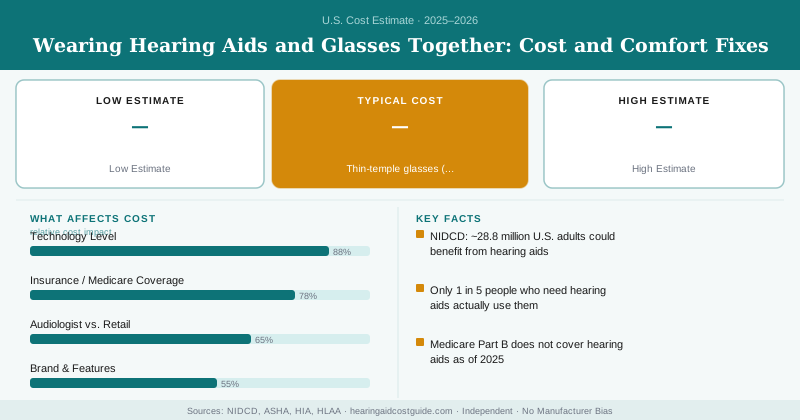
Hearing aids themselves run $1,500–$5,000 per pair whether or not you wear glasses. The real question is style and fit. Let’s sort it out.
Costs Stay the Same — Style Choice Changes
| Option | Cost | Glasses Compatibility |
|---|---|---|
| In-the-canal (ITC/CIC) | $2,000–$5,000/pair | Excellent — nothing behind ear |
| Receiver-in-canal (RIC) | $2,500–$4,000/pair | Good — slim wire, low profile |
| Behind-the-ear (BTE) | $1,500–$4,000/pair | Workable — can crowd thicker arms |
| Costco rechargeable | $1,499–$2,199/pair | RIC styles pair well with glasses |
| Thin-temple glasses (optical) | $50–$200 add-on | Reduces crowding |
The Style That Sidesteps the Problem
Want zero competition behind your ear? Choose an in-the-canal or completely-in-canal device. It sits inside your ear, so your glasses’ temple arms have the whole space to themselves. The tradeoff is a smaller battery and tighter controls, but for glasses-wearers who hate clutter, it’s the cleanest answer.
If you prefer a receiver-in-canal style — the most popular type today — the part behind your ear is small and the wire is hair-thin. Most people wear RIC aids and glasses together with no issue once they get the order of putting them on right (more on that below). Our hearing aid styles explained guide shows the full range.
Wearing glasses and hearing aids together costs nothing extra — the device price is the same. If crowding worries you, pick an in-the-canal style that sits inside the ear, or a slim RIC. Thin-temple eyeglass frames also free up space. It’s a fit choice, not a budget problem.
The On-and-Off Order Trick
Comfort comes down to sequence. Put your glasses on first, then your hearing aids. Take the hearing aids off first, then your glasses. This keeps the temple arm from knocking the aid loose or jamming against it. A small habit that prevents most of the daily annoyance.
The NIDCD reports that roughly 28.8 million U.S. adults could benefit from hearing aids, and since vision changes and hearing changes both rise with age, a huge share of those people also wear glasses. You’re far from alone — and the combination is routine for audiologists to fit.
Comfort Tips That Actually Help
- Ask for thin eyeglass temples. Many optical shops offer slim or wire temple arms that leave more room behind the ear.
- Try a smaller dome or earmold if you feel pressure where the temple sits.
- Consider rechargeable. A rechargeable hearing aid means fewer fiddly battery-door movements that could dislodge your glasses.
- Mask loops too? Use a mask with head ties or an extender so three things aren’t fighting over one ear.
Don’t Forget Real Eyeglass Hearing Aids Are Rare Now
Decades ago, “hearing glasses” with built-in aids existed. Today they’re niche and expensive, and modern separate devices outperform them while costing less. Don’t go hunting for an all-in-one gimmick — separate, well-chosen aids and glasses are the better and cheaper route.
A 2022 Hearing Industries Association survey linked long-term satisfaction strongly to physical comfort and fit. For glasses-wearers, that means nailing the style and the wear order, not spending more.
If your glasses cause a sore spot or your hearing aid whistles when you push your frames up, don’t just live with it — go back to your audiologist. A quick adjustment to the dome, the receiver wire length, or the BTE shell usually fixes feedback and pressure. Whistling often means the aid isn’t seated right because the temple arm shifted it, which is an easy fit correction.
Start With the Right Fitting
Tell your provider you wear glasses before the fitting — it changes the style recommendation. An audiologist visit is the place to try styles with your actual frames on. For mild-to-moderate loss, even an in-the-canal OTC hearing aid can be a glasses-friendly, lower-cost entry.
Compare every style and price in our full hearing aid cost guide, and remember: glasses don’t raise the price. They just point you toward the style that fits your ear best.
Frequently Asked Questions
Hearing aids cost $1,500–$5,000 per pair regardless of whether you wear glasses. The price does not increase because of glasses compatibility; you may pay extra only if you choose a specialty style like invisible-in-canal models, which can run up to $6,000 per pair.
Most Medicare plans and private insurance do not cover hearing aids, leaving patients to pay out-of-pocket, though some employers offer hearing aid benefits. A small number of Medicaid programs cover hearing aids (typically $500–$2,000 per pair), depending on your state and age; contact your plan directly to check your state's coverage.
Behind-the-ear (BTE) and receiver-in-canal (RIC) styles work well with glasses when fitted slightly lower or forward on the ear; an audiologist can adjust positioning at your fitting appointment with no additional cost. A standard fitting appointment takes 1–2 hours, and any adjustments for glasses compatibility are made during this visit at no extra charge.