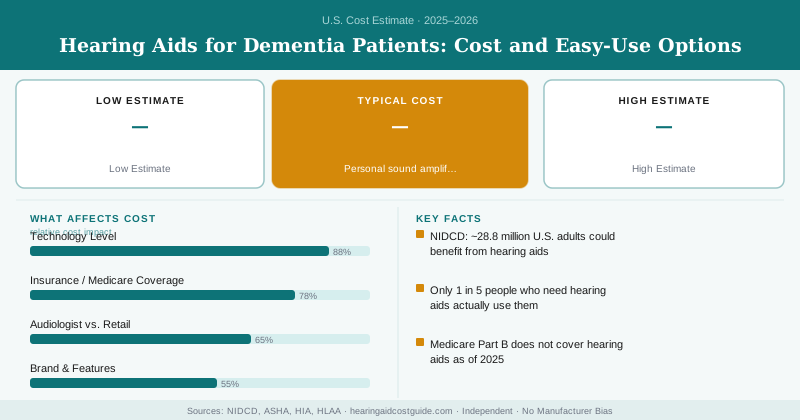
A 2023 Lancet study put hearing loss at the top of the list of modifiable dementia risk factors — bigger than smoking, depression, or physical inactivity. For a family already caring for a loved one with cognitive decline, that finding cuts two ways: hearing aids may help, but using them brings real-world challenges. The devices cost $1,000–$5,000 per pair, and for this situation, simplicity matters more than features.
If you’re a caregiver weighing whether hearing aids are worth it, here’s an honest, practical breakdown.
Cost Options for Dementia Patients
| Option | Cost | Notes |
|---|---|---|
| OTC self-fitting | $799–$1,500/pair | Simple, but small controls |
| Costco rechargeable | $1,499–$2,199/pair | Easy charging, 3-yr care |
| Mid prescription | $2,500–$4,000/pair | Pro support for caregivers |
| Premium prescription | $4,500–$5,000/pair | Often unnecessary for this use |
| Personal sound amplifier (PSAP) | $50–$300 | Backup for severe agitation cases |
Simple Beats Smart Here
For most users, premium features sell the device. For a person with dementia, those same features become obstacles. Tiny buttons, app-only controls, and disposable batteries that get lost or swallowed all work against you. The goal is the opposite of fancy: a device that’s easy to insert, hard to lose, and effortless to power.
That points straight to a rechargeable hearing aid. Drop it in a charging cradle at night — no fumbling with size 312 cells, no small batteries to misplace or mistake for pills. Choose a model with no required app and simple, automatic operation. You, the caregiver, control the rest.
For dementia patients, choose the simplest device that works, not the most advanced. A $1,499 rechargeable model with automatic settings and a charging cradle beats a $5,000 app-controlled premium aid that confuses and frustrates. Easy to insert, hard to lose, no tiny batteries — that’s the priority list.
Why Treating Hearing Loss Still Matters
Untreated hearing loss accelerates the isolation and confusion that dementia already causes. When someone can’t hear, they withdraw, misunderstand, and grow agitated. The CDC reports that about 1 in 3 adults aged 65–74 has hearing loss, and the rate climbs sharply after 75 — exactly the ages most affected by dementia. Restoring sound can reduce frustration, improve connection with family, and make caregiving days calmer.
The 2023 ACHIEVE trial found that treating hearing loss slowed cognitive decline by 48% over three years in high-risk older adults. That’s a powerful reason to try aids early, before the dementia progresses to a stage where wearing them becomes impractical.
Keeping Devices From Getting Lost
Loss is the number one practical problem. Strategies that help:
- Retention clips and cords that tether the aid to clothing.
- Brightly colored devices so they’re easier to spot on the floor or in bedding.
- A consistent routine — same spot for the charger, same time for insertion.
- A “find my device” feature in some models that locates a dropped aid via app.
Also confirm the loss-and-damage warranty before buying, because replacement is more likely in this situation. Many devices include one no-charge replacement in the first year.
When Aids Become Too Much
Be realistic. In advanced dementia, some people won’t tolerate anything in their ears, repeatedly remove devices, or become agitated by amplified sound. If that happens, a simple personal amplifier used only during important conversations — or a bedside communicator — can be a gentler, cheaper alternative. There’s no failure in scaling back; you’re matching the tool to the stage.
Watch for the device being chewed, swallowed, or mistaken for food — a real risk with small disposable batteries and tiny in-ear aids. This is the strongest argument for rechargeable, behind-the-ear styles in this population. Never leave loose batteries within reach. If your loved one repeatedly removes the aids or seems distressed by sound, stop and reassess with the audiologist rather than forcing it.
Getting Started as a Caregiver
Start with a baseline test so you know what you’re treating. Our hearing test cost guide explains the audiogram, and an in-person audiologist visit lets the provider account for cognitive limits in fitting and program the device for simple, automatic use.
For mild-to-moderate loss and a calmer patient, a straightforward OTC hearing aid at $799–$1,500 may be enough. Many of the same considerations apply to older adults generally — our hearing aids for seniors cost guide covers Medicare and value options worth reviewing too.
Compare the full range in our hearing aid cost overview, and keep one rule front of mind: simplest device that works.
Frequently Asked Questions
Hearing aids for dementia patients typically cost $1,000–$5,000 per pair, depending on the model and features. Basic, easy-to-use models are often sufficient and fall in the lower to mid-range of this cost spectrum. Rechargeable and simpler designs may cost slightly less than advanced Bluetooth-enabled options.
Medicare Part B does not cover routine hearing aids, leaving most beneficiaries to pay out-of-pocket for the full $1,000–$5,000 cost per pair. Some supplemental Medigap or Medicare Advantage plans may offer partial coverage of $500–$2,000, though coverage remains limited. Private insurance plans vary widely; checking your specific policy is essential.
Simple, rechargeable models with large buttons and minimal settings are ideal for dementia patients, as they reduce confusion during daily use. Hard-to-lose designs—such as behind-the-ear styles or models with case locators—prevent the common problem of patients misplacing their devices. Caregiver-friendly options with remote controls or smartphone apps allow family members to manage settings without requiring patient cooperation.