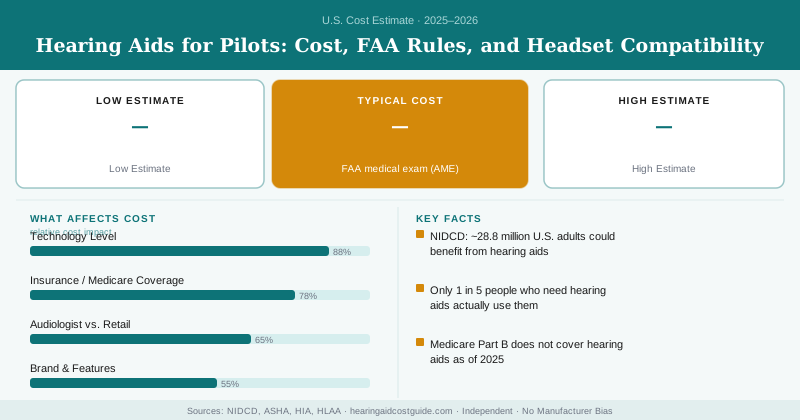
Can you fly with hearing aids? Yes — the FAA issues medical certificates to pilots who use them every day. The catch isn’t the regulation. It’s getting a device that works under an aviation headset and survives a noisy cockpit. That problem has a price, and it runs $2,000–$6,000 per pair.
Pilots face a specific combination of challenges: chronic noise exposure, the need to hear radio and intercom clearly, and headsets that physically squash behind-the-ear units. Here’s how cost and fit actually shake out.
Pilot Hearing Aid Costs
| Option | Cost | Notes |
|---|---|---|
| Custom in-the-canal (CIC) | $2,500–$5,000/pair | Fits under headset, low feedback |
| Mid-tier RIC | $2,500–$4,000/pair | Needs careful headset pairing |
| Premium prescription | $4,500–$6,000/pair | Best noise management |
| Custom earmolds for headset | $100–$300 | Improves seal and comfort |
| FAA medical exam (AME) | $75–$200 | Required for certificate |
The Headset Problem
A behind-the-ear hearing aid sits exactly where the headset’s clamping force lands. That causes two issues: discomfort and feedback whistle. The whistle happens when the headset reflects amplified sound back into the microphone. Annoying on the ground, dangerous in the air when you’re straining to hear ATC.
Two common fixes. First, choose a low-profile custom in-the-canal device that sits inside the ear, out of the headset’s path. Second, if you prefer a receiver-in-canal model, work with your audiologist on feedback management and consider an over-the-ear headset with deep cups. Some pilots skip aids entirely in the cockpit and rely on a good active-noise-reduction headset, then wear aids on the ground.
The FAA does not ban hearing aids — pilots fly with them routinely under a Statement of Demonstrated Ability or standard medical certificate. Budget $2,500–$5,000 for a headset-compatible custom CIC pair, and bring your aids to the medical exam so the AME tests you as you’ll actually fly.
FAA Medical Reality
To hold a medical certificate, you must meet the FAA’s hearing standard, which you can satisfy either by a conversational voice test or an audiometric test. Pilots who don’t pass the standard unaided can often qualify wearing hearing aids, sometimes via a Statement of Demonstrated Ability (SODA) or a medical flight test. The key point: you can be a certificated pilot with hearing loss. Many are.
OSHA sets the occupational noise limit at a 90 dBA time-weighted average over an 8-hour shift, and cockpit noise — especially in older piston aircraft — can push past that. NIOSH recommends a lower 85 dBA limit, and years of exposure are exactly why so many career pilots develop measurable loss. Protecting the hearing you have left is part of the job.
Buy the Hearing Test First
Before spending a dollar on devices, get a baseline. A proper audiogram tells you and the FAA exactly where you stand. Our hearing test cost guide explains what to expect, and an audiologist visit is where you’ll dial in feedback management for headset use — a step generic OTC devices can’t handle well.
Streaming Radio and Intercom
Newer aids with Bluetooth can connect to compatible headsets or panel-mounted audio, though aviation integration is still limited compared to consumer audio. Our Bluetooth hearing aid cost guide covers what’s realistic. For most pilots, the priority is clean amplification and zero feedback, not music streaming.
Don’t surprise your Aviation Medical Examiner. If you wear hearing aids, declare them and wear them to the exam. Trying to pass the conversational voice test unaided when you actually need amplification can backfire and complicate your certificate. The FAA process is far smoother when you’re upfront and demonstrate you hear well aided.
Career Pilots vs. Recreational Flyers
A weekend Cessna pilot with mild loss might do fine with a good headset and an OTC hearing aid for everyday use, dropping the aids in the cockpit. A commercial or instrument-rated pilot logging hundreds of hours needs custom-fit, feedback-managed prescription devices and a documented FAA path. The investment scales with how much you fly.
Whatever your hours, compare full pricing in our hearing aid cost guide and treat the headset fit as part of the purchase decision — not an afterthought you discover at 8,000 feet.
Frequently Asked Questions
Hearing aids suitable for pilots typically cost $2,000–$6,000 per pair, with prices varying based on the model type and features needed for cockpit compatibility. Custom in-the-canal (CIC) models that fit under aviation headsets tend to fall in the higher range due to their specialized design and durability requirements for high-noise environments.
Most standard health insurance plans do not cover hearing aids, leaving pilots responsible for the full $2,000–$6,000 out-of-pocket cost per pair. Some FAA-approved occupational health plans or union benefits may offer partial coverage, so pilots should verify their specific policy details with their insurer or employer.
The full process typically takes 4–8 weeks, including an FAA medical certificate evaluation, hearing test, device fitting, and cockpit compatibility testing with your headset. Pilots should plan ahead before certification renewal or when audiological changes occur, as the FAA medical review can add 2–3 weeks to the timeline.