Sarah, 67, had been living alone since her husband passed. Her moderate-to-severe hearing loss meant she slept through her smoke alarm in a drill her neighbor triggered next door. She’d also missed her doctor calling her name in three waiting rooms in one year. A hearing alert dog changed both problems — and cost her exactly $0 through a nonprofit placement program.
Hearing dogs aren’t a replacement for hearing aids, but they serve a different function entirely: alerting their owners to specific sounds — doorbells, smoke alarms, alarm clocks, a baby crying, someone calling their name — through physical contact and leading behavior. Here’s what they cost, and how the nonprofit model works.
What Is a Hearing Alert Dog?
A hearing alert dog is a service animal trained to alert a person with hearing loss to specific environmental sounds. Unlike guide dogs for the blind, hearing dogs don’t navigate the owner through space — they make physical contact (a nose nudge or paw touch), then lead the person toward the sound source or, in the case of danger signals, toward an exit.
They’re covered under the Americans with Disabilities Act as service animals, meaning they can accompany their owner into businesses, housing, and transportation regardless of “no pets” policies.
The Cost of a Professionally Trained Hearing Dog
| Cost Category | Range |
|---|---|
| Privately purchased trained hearing dog | $12,000–$30,000 |
| Nonprofit program placement fee | $0–$2,500 |
| Owner training program (residential, at organization) | Often included in nonprofit programs |
| Annual care costs (food, vet, gear) | $1,500–$4,000/year |
| Service dog vest and ID documentation | $50–$200 |
| Post-placement follow-up support | Usually included by nonprofits |
The wide private-market range reflects the depth of training. A dog trained only to alert to a doorbell and smoke alarm takes significantly less time than one trained for six or eight specific sounds with reliable performance in all environments. Most private training programs run 4–6 months of intensive work.
Nonprofit Programs: The Free Path
The majority of hearing dogs in the United States are placed through nonprofit programs that provide fully trained dogs at no charge (or a nominal application fee of $100–$500). These organizations are funded through grants, donations, and corporate partnerships.
Major U.S. nonprofit hearing dog programs include:
- Dogs for Better Lives (Central Point, Oregon) — one of the oldest, places hearing dogs nationally at no cost
- Canine Companions (multiple training centers nationwide) — free service dogs including hearing dogs
- NEADS World Class Service Dogs (Princeton, Massachusetts) — includes hearing alert specialization
- International Hearing Dog, Inc. (Henderson, Colorado) — focuses specifically on hearing alert dogs
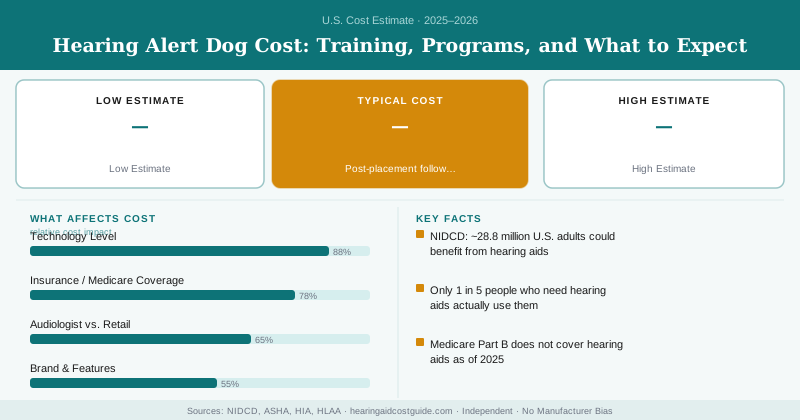
NIDCD reports that roughly 28.8 million American adults could benefit from some form of hearing assistance. Service dogs represent a small but meaningful subset of assistive solutions, particularly for people with profound deafness or those who live alone.
Applications are competitive — most programs have waiting lists of 1–2 years. The typical application process:
- Submit an application documenting your hearing loss (audiogram required)
- Complete an interview and home assessment
- Wait for a match — the organization matches you to a specific dog based on lifestyle, home environment, and the sounds you need alerted to
- Attend a 1–2 week residential training program where you learn to work as a team with your dog
- Post-placement follow-up and ongoing support from the organization
Eligibility typically requires: documented hearing loss (severe-profound for most programs), stable housing, ability to care for a dog, and commitment to the working relationship.
Annual Costs of Owning a Hearing Dog
The placement cost (or lack thereof) is only part of the picture. A hearing dog is a working animal and a pet, with all the ongoing expenses that implies.
Budget annually for:
- Quality dog food: $600–$1,500 depending on size and brand
- Routine veterinary care (vaccines, preventive medications, annual exam): $500–$1,000
- Unexpected veterinary costs (illness, injury): $500–$2,000 (pet insurance helps here)
- Grooming: $200–$600
- Gear replacement (vest, leash, collar, identification): $100–$200
Total annual care: roughly $1,500–$4,000. Over a working lifespan of 8–10 years, that’s $12,000–$40,000 in care costs beyond placement.
Hearing Dogs vs. Other Assistive Technology
A hearing dog isn’t an either/or choice with hearing aids or assistive listening devices. Many people with significant hearing loss use aids, alerting devices (vibrating alarm clocks, visual door bell systems, flashing smoke alarms), and a hearing dog simultaneously — addressing different parts of the same problem.
Hearing dogs are particularly valuable for:
- People with profound loss for whom amplification is insufficient
- People who live alone and need reliable alerting during sleep or when not wearing aids
- Those who have had safety incidents related to missed environmental sounds
- Individuals who would benefit from the companionship and mental health benefits of a working dog
Be wary of “service dog certification” websites that charge fees to register your pet as a service dog online. These registrations have no legal standing under the ADA. A legitimate hearing alert dog must be individually trained to perform specific tasks for a person with a disability. There is no official government registry for service dogs in the United States, and no certificate or ID card is legally required — though many nonprofit programs provide documentation as a courtesy to their graduates.
Is a Hearing Dog Right for You?
A hearing dog is a significant 10+ year commitment. You’re responsible for the animal’s care, welfare, and continued training. Working dogs need exercise, mental stimulation, and consistent handling — they’re not passive alarm systems.
That said, for the right person — someone whose hearing loss creates genuine safety or independence concerns, who lives alone or with others who can’t reliably serve as sound monitors, and who has the lifestyle and commitment to care for a dog — a hearing alert dog delivers a quality-of-life benefit that no piece of technology fully replicates.
Start with the nonprofit application process. The waiting period is long, but the placement is free and comes with professional training and ongoing support.
Frequently Asked Questions
Professionally trained hearing dogs cost between $12,000 and $30,000 when purchased privately. However, many qualified applicants can receive a hearing dog at no cost through nonprofit placement programs, which cover all training and placement fees.
Most standard health insurance plans, including Medicare and Medicaid, do not cover hearing alert dogs as they are classified as service animals rather than medical equipment. Some state Medicaid programs may provide coverage in limited cases, so contacting your specific plan is recommended to confirm eligibility.
The application and training process typically takes 6 to 12 months through nonprofit programs after initial approval. You must meet candidacy requirements, including documented hearing loss, stable housing, and ability to care for the dog, with most programs requiring references and a home evaluation before placement.