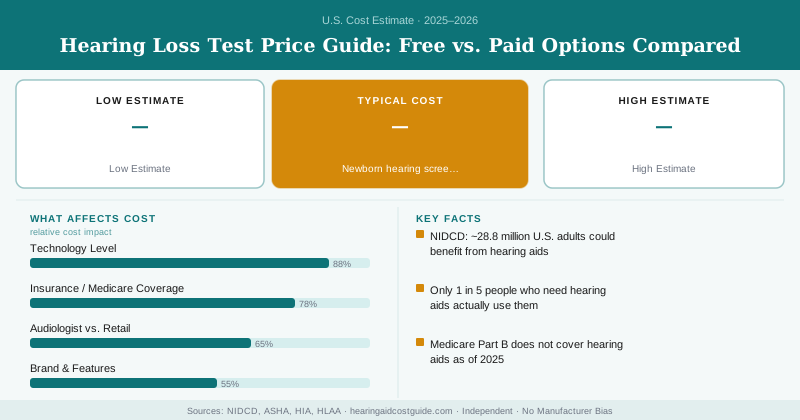
Most people assume any hearing test is going to cost money and require an appointment weeks out. Wrong on both counts, for at least the screening tier. The real range runs from completely free to around $400, and knowing which tier you actually need saves both money and time.
Hearing Test Options and Costs
| Test Type | Typical Cost | Accuracy Level |
|---|---|---|
| Smartphone app screening | $0–$10 | Basic screening only |
| Retail store free screening | $0 | Basic screening only |
| Online web-based hearing test | $0 | Basic screening only |
| Basic pure-tone test (clinic) | $50–$150 | Moderate diagnostic value |
| Comprehensive diagnostic evaluation | $150–$400 | Full diagnostic accuracy |
| Pediatric/specialized testing | $200–$500 | Full diagnostic accuracy |
| Newborn hearing screening (hospital) | Included in birth costs | Screening, standard of care |
What Free Tests Actually Tell You
Free hearing screenings — whether through a smartphone app, an online test, or a retail hearing aid store — are legitimate for one narrow purpose: flagging whether you likely have hearing loss significant enough to warrant a professional evaluation. They’re not diagnostic. They typically use uncalibrated headphones or speakers, aren’t performed in a sound-controlled environment, and can’t distinguish between different types or causes of hearing loss.
If a free screening suggests you have hearing loss, the next step is a comprehensive diagnostic evaluation — not a hearing aid purchase. That distinction gets blurred, often deliberately, by retailers whose free screening exists specifically to funnel you toward buying a device from them that same visit.
What a Comprehensive Evaluation Actually Includes
A full diagnostic audiology evaluation, performed by a licensed audiologist using calibrated equipment in a sound-treated booth, typically includes:
- Pure-tone air conduction testing across multiple frequencies
- Bone conduction testing to distinguish conductive from sensorineural hearing loss
- Speech recognition threshold and word recognition scores
- Tympanometry to assess middle ear function
This is the level of testing that generates an actual diagnosis and informs treatment decisions, whether that’s medical referral, hearing aids, or watchful monitoring.
If you’re simply curious whether your hearing has changed and have no specific symptoms (sudden loss, one-sided loss, ringing, dizziness), a free screening is a reasonable first step. If it flags a concern, or if you have any of those specific symptoms regardless of screening results, skip straight to a comprehensive diagnostic evaluation rather than repeating free screenings hoping for a different result.
Insurance and Medicare Coverage
Medicare Part B and most private insurance plans cover diagnostic hearing testing when a physician orders it for a documented medical concern — but not routine screening without a specific complaint. This is the same coverage pattern that applies across audiology services generally: medical necessity and physician referral unlock coverage; self-directed screening for general curiosity usually does not.
According to NIDCD-cited estimates, roughly 28.8 million U.S. adults could benefit from hearing aids, yet a large share of people with measurable hearing loss have never had a formal diagnostic evaluation — often because they assumed a free screening already answered the question.
Be skeptical of any “free hearing test” that immediately transitions into a same-day hearing aid sales pitch without a documented, detailed diagnostic report. A legitimate screening should result in a clear recommendation — either “your hearing appears normal” or “we recommend a full diagnostic evaluation” — not an immediate device recommendation based on a five-minute screening alone.
Choosing the Right Test for Your Situation
If you have no symptoms and just want a baseline check, a free screening is fine. If you’ve noticed specific changes — trouble understanding speech in noise, needing the TV louder, ringing in your ears, sudden changes — go straight to a comprehensive diagnostic evaluation with a licensed audiologist rather than starting over with free screenings.
Frequently Asked Questions
Hearing loss tests range from free (retail screenings, some smartphone apps) to $50–$150 for a basic pure-tone test, up to $150–$400 for a comprehensive diagnostic audiology evaluation with speech testing and tympanometry.
App-based hearing tests can provide a reasonable initial screening in a quiet environment, but they aren't calibrated medical devices and can't replace a diagnostic evaluation performed with calibrated audiometric equipment by a licensed audiologist.
Medicare Part B covers diagnostic hearing tests when ordered by a physician to evaluate a specific medical concern, typically covering 80% after the deductible, but does not cover routine screening hearing tests without a medical indication.