Here’s a statistic most people with ringing in their ears don’t know: roughly 90% of tinnitus cases occur in the presence of measurable hearing loss. The American Tinnitus Association puts the number of chronic sufferers at 20 million Americans — and for the overwhelming majority of them, treating both conditions simultaneously, with a single device strategy, delivers better outcomes than addressing them separately.
That’s good news for your wallet and your quality of life. Here’s how combination treatment works and what it realistically costs.
Why These Two Conditions Almost Always Travel Together
Sensorineural hearing loss and tinnitus share a root cause: damage to the hair cells in the cochlea. Those same damaged cells that fail to transmit speech sounds clearly are often responsible for generating the phantom signals your brain perceives as ringing, buzzing, or hissing. This means:
- Amplification that treats hearing loss often reduces the contrast between silence and tinnitus — which reduces how much the tinnitus bothers you
- Hearing aids with dedicated tinnitus sound therapy programs treat both conditions through a single device
- Addressing hearing loss first is the single most evidence-supported tinnitus intervention for people with co-occurring hearing loss
Combination Treatment Cost Overview
| Treatment Approach | Cost Range | Best For |
|---|---|---|
| Hearing aids with built-in tinnitus program | $2,000–$7,000/pair | Most adults with mild–moderate hearing loss + tinnitus |
| Hearing aids + external sound therapy (apps) | $1,500–$5,000 + $0–$15/month | Budget-conscious; mild tinnitus |
| Combination hearing aid + masker units | $2,500–$7,000/pair | Moderate-severe tinnitus requiring dedicated masking |
| Tinnitus Retraining Therapy (TRT) + hearing aids | $4,000–$10,000 total | Severe tinnitus distress |
| CBT for tinnitus + hearing aids | $3,000–$8,000 total | High tinnitus-related anxiety/distress |
| Neuromodulation device (Lenire) + aids | $4,000–$10,000 total | Refractory tinnitus cases |
Hearing Aids with Tinnitus Programs: The First-Line Combination Approach
Every major hearing aid manufacturer now includes tinnitus sound therapy as a standard software feature in their premium and many mid-tier lines. You’re not paying extra for these features — they’re included.
Widex Zen: Plays soft fractal music tones through the hearing aid, designed to be pleasant and non-habituating. Multiple peer-reviewed studies support its efficacy for tinnitus distress reduction.
Starkey Multiflex Tinnitus Technology: Generates customizable static noise, modulated tones, or ocean sounds within the hearing aid. Your audiologist programs the type and volume of masking sound alongside your hearing loss amplification.
Oticon Tinnitus SoundSupport: Offers several sound options including ocean sounds and white noise. Integrated with OpenSound Navigator technology for better speech understanding in noise.
Signia Notch Therapy: Rather than masking, Signia’s approach applies a notch filter that attenuates the specific frequency of your tinnitus tone — theoretically training the auditory cortex to de-prioritize that frequency over time.
Phonak Tinnitus Balance: Available in select models; uses broadband noise therapy.
At your hearing aid fitting, your audiologist adjusts two things at once: the amplification settings for your hearing loss, and the tinnitus therapy settings. They’ll ask about the pitch and character of your tinnitus, your most bothersome listening environments, and your tinnitus distress level. Tinnitus programs are layered on top of your base amplification map — not a separate device. Follow-up tuning of both components is part of your trial period and aftercare.
When Hearing Aids Alone Aren’t Enough
For some people, particularly those with high tinnitus distress scores or severe anxiety related to tinnitus, amplification alone doesn’t provide enough relief. That’s when combination therapy makes sense:
Tinnitus Retraining Therapy (TRT) pairs structured sound therapy (including hearing aids or combination devices) with directive counseling to help the brain habituate to the tinnitus signal. A full TRT program runs $2,500–$4,500. It takes 12–24 months. The NIDCD recognizes TRT as a supported intervention for chronic, severe tinnitus.
Cognitive Behavioral Therapy (CBT) for tinnitus doesn’t reduce the loudness of tinnitus — but it changes your emotional response to it, which is where most of the disability lives. Six to twelve sessions with a psychologist trained in tinnitus CBT: $900–$3,600. Strong evidence base; recommended by both ASHA and the American Academy of Audiology.
Don’t buy hearing aids specifically marketed as “tinnitus hearing aids” at a premium price. Tinnitus management programs are software features included across the premium lines of all major manufacturers — there’s no separate hardware for tinnitus. If a salesperson is quoting you a significantly higher price specifically because of the tinnitus feature, that’s a pricing tactic, not a real cost driver.
Insurance Coverage for Combination Treatment
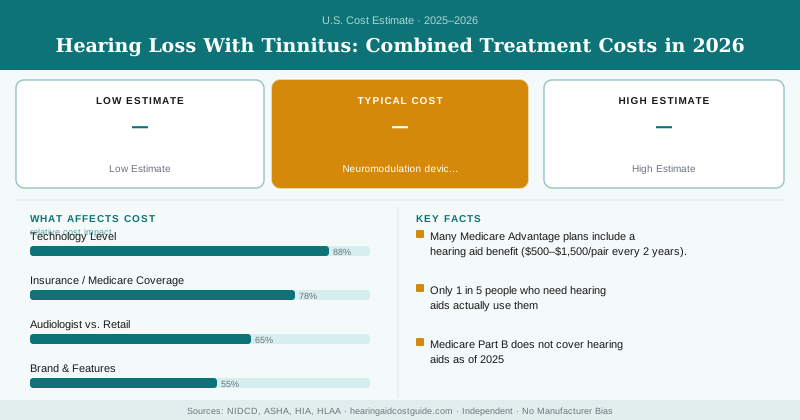
Hearing aids: Medicare doesn’t cover standard hearing aids. Many Medicare Advantage plans include a hearing aid benefit ($500–$1,500/pair every 2 years). Use your FSA or HSA for hearing aids — they’re a qualified medical expense.
TRT counseling and CBT: Coverage depends heavily on how the provider codes the service. Audiological tinnitus counseling sessions may be covered under Part B when referred by a physician. Psychologist-led CBT is typically a mental health benefit with standard cost-sharing.
Audiological evaluation: Covered by Medicare Part B when physician-ordered. You’ll pay the Part B cost-sharing.
The Realistic Bottom Line
For most adults with hearing loss and tinnitus, the total out-of-pocket cost looks like this:
- Hearing aids with tinnitus programs (premium, with insurance benefit): $1,500–$4,000 out-of-pocket
- Additional tinnitus counseling (if needed): $300–$1,500
- Total realistic range: $1,800–$5,500
The combination of amplification and tinnitus programming in a single hearing aid is genuinely the most cost-effective path for most people. You’re solving two problems with one device purchase. That’s the rare situation in hearing care where the efficient solution and the effective one are the same thing.
Frequently Asked Questions
Combined treatment for both conditions typically costs $1,500–$8,000 for most US adults, depending on device type and whether you choose hearing aids with built-in tinnitus masking features or separate solutions. Basic devices with tinnitus management start around $1,500–$3,000 per pair, while premium combination systems can reach $6,000–$8,000. Costs may be lower if you choose one device that addresses both conditions simultaneously rather than purchasing separate treatments.
Medicare does not cover hearing aids or tinnitus devices, leaving most seniors with out-of-pocket costs, though some Medicare Advantage plans offer limited coverage. Private insurance rarely covers hearing aids but may cover diagnostic testing and tinnitus evaluations; out-of-pocket expenses typically range from $500–$3,000 after any covered services. Veterans and Medicaid beneficiaries may have better coverage options, so contacting your specific plan is essential to determine your actual costs.
Yes, most modern hearing aids now include built-in tinnitus masking or sound therapy features, allowing one device to address both conditions simultaneously rather than requiring separate treatments. These combination devices use white noise, nature sounds, or customized masking frequencies to reduce tinnitus perception while amplifying speech and environmental sounds for hearing loss. Approximately 90% of tinnitus cases occur alongside measurable hearing loss, making single-device treatment the most practical and cost-effective approach for the majority of patients.