The WHO estimates that 1.1 billion young people globally are at risk of hearing loss from unsafe listening practices and loud recreational noise. Concert venues, sporting events, fireworks, and even monster truck shows regularly exceed 100 dB — above the threshold where a few hours of exposure produces permanent cochlear damage.
Children’s ears are not tougher than adult ears. They’re more vulnerable, because smaller ear canals create higher sound pressure at the eardrum for the same external noise level. If you wouldn’t attend a loud event without hearing protection, neither should they. Here’s what it costs and what actually works.
Why Children Are at Higher Risk
Adult hearing damage from noise is well-documented. Less discussed is that children face compounding risk: their cochlear hair cells are the same irreplaceable cells adults have, but they have decades more life ahead during which accumulated damage manifests.
The American Speech-Language-Hearing Association (ASHA) notes that noise-induced hearing loss is one of the most preventable types of hearing loss in children. A 2019 study from the Journal of the American Medical Association estimated that approximately 1 in 5 adolescents ages 12–19 has some degree of measurable hearing loss — up from previous estimates, with noise exposure identified as a contributing factor.
Sound pressure also affects children differently due to anatomy. A child’s smaller, shorter ear canal amplifies certain frequencies more than an adult’s canal. The external noise level isn’t the only variable — where that noise lands on the cochlea is shaped by the canal geometry.
Ages and Protection Types
Infants and toddlers (newborn–3 years): Infant earmuffs only. No earplugs of any type for this age group — choking and insertion risks. Earmuffs designed for infants and toddlers sit over the entire ear with a padded headband.
Preschool (3–6 years): Toddler/children’s earmuffs. Still no earplugs — children this age can’t consistently follow the insertion instructions needed for proper protection.
School age (6–12 years): Children’s earmuffs or, with supervision, age-appropriate filtered earplugs. Children this age can be taught correct foam earplug insertion for older ages.
Teenagers (13+): Adult earmuffs or earplugs. Standard adult-sized protection with proper fit guidance.
Children’s Earmuff Options and Prices
| Product | Age Range | Price | NRR | Notes |
|---|---|---|---|---|
| Baby Banz Earmuffs | 0–2 years | $20–$30 | NRR 31 | Infant headband design, 5 colors |
| BANZ Kids Earmuffs | 2–10 years | $25–$35 | NRR 31 | Same brand, larger size |
| Alpine Muffy Baby | 0–36 months | $35–$45 | SNR 23 (≈NRR 17) | European-certified, padded foam |
| Alpine Muffy Kids | 3–8 years | $35–$45 | SNR 25 (≈NRR 20) | Colorful, well-reviewed by parents |
| 3M Peltor Kids Hearing Protector | 2–10 years | $20–$30 | NRR 22 | Classic headband, reliable |
| Peltor Kid Earmuff (adjustable) | 4–12 years | $25–$40 | NRR 27 | More coverage, better seal |
| Vic Firth Kidphones | 5+ years | $18–$25 | NRR 24 | Designed for music practice |
| Custom children’s earmolds | 6+ years | $150–$350 | NRR 22–28 | Audiologist-fitted, 1–2 year lifespan |
Alpine Muffy Kids ($35–$45)
One of the most parent-recommended options. The soft foam ear cushions and padded headband make it comfortable enough that kids will actually keep it on. Available in bright colors children choose, which solves the compliance battle. The European SNR 25 rating corresponds to approximately NRR 20 — adequate for concerts and sporting events.
BANZ and Baby Banz ($20–$35)
BANZ makes the most popular infant protection with a wrap-around soft headband that stays secure on babies who don’t cooperate with headwear. The adult-style cups sit completely over the ear. At NRR 31, it’s one of the highest-rated infant/toddler options. Parents widely report babies wearing these comfortably through concerts, air shows, and NASCAR events.
3M Peltor Kids ($20–$30)
The Peltor Kids uses the same earcup and seal technology as 3M’s professional hearing protectors, scaled down for children. It’s reliable, widely available, and gives you the confidence of professional-grade construction at consumer prices. NRR 22 is sufficient for most concert and event environments.
- Let them pick the color or design — ownership matters.
- Put yours on at the same time. If you’re not wearing protection, they won’t want to either.
- For older kids: explain briefly what loud noise does and why you’re protecting them. Kids respond better to honest explanations than unexplained rules.
- For babies: put earmuffs on 5 minutes before noise begins, not in response to the noise. Reactive donning in a loud environment is harder.
Events Where Children Need Protection
| Event Type | Typical Noise Level | Protection Needed? |
|---|---|---|
| Live concert (large venue) | 94–115 dB | Yes — always |
| Movie theater (action film) | 85–95 dB | Recommended |
| Fireworks (typical viewing distance) | 85–125 dB | Yes — especially within 50 feet |
| Sporting event (indoor arena) | 90–110 dB | Yes |
| NASCAR / motorsports | 100–130 dB | Definitely yes |
| Monster truck/demolition derby | 100–115 dB | Yes |
| Air show / military aircraft | 100–140 dB | Yes, distance matters |
| Noisy restaurant or arcade | 75–90 dB | Borderline; long duration warrants it |
Custom Earmolds for Children: Are They Worth It?
Custom-molded ear protection for children is less commonly needed than for adults — children’s ear canals change as they grow, which means custom plugs fit precisely for 1–2 years before needing replacement. That makes the economics different.
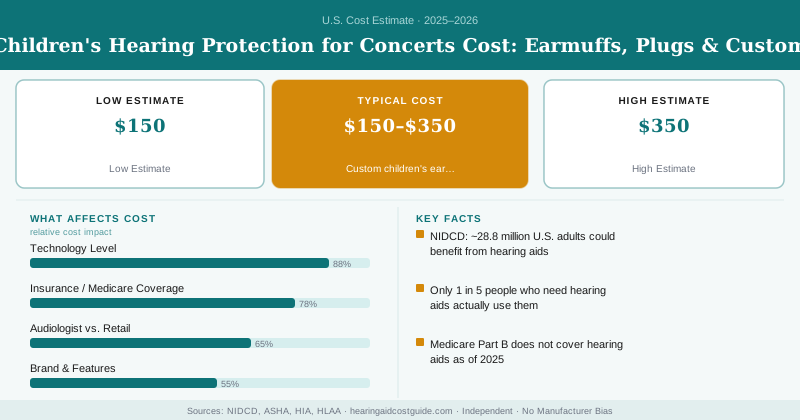
For children with sensory sensitivities who struggle with standard earmuffs, or for older kids (10+) who attend loud events very frequently, custom-molded plugs may be worth considering. Expect to pay $150–$350 per pair for children’s custom plugs, with re-molding needed as the child grows.
The audiologist takes impressions (15–20 minutes), which are sent to a lab. Children’s plugs often use brighter colors and softer materials than adult versions. Many pediatric audiologists who fit hearing aids also fit custom earmolds for hearing protection.
Children’s earmolds need replacement when they no longer fit — usually every 1–2 years in growing children. A plug that no longer seals properly can give the parent false confidence while delivering significantly less than rated protection. If your child’s custom plugs are more than 18 months old, have the fit re-checked by the audiologist who made them.
Adults vs. Children’s Products: What’s Actually Different
Adult earmuffs used on children often don’t seal properly because the headband width and cup size are designed for adult skull dimensions. A poor seal can reduce effective attenuation by 10–15 dB. Always use age-appropriate products for children, not downsized adult equipment.
The NRR difference between adult and children’s products isn’t the priority — fit and seal are. A children’s earmuff with NRR 22 that seals completely will outperform an adult NRR 28 model with poor contact on a child’s head.
The investment is small. Alpine Muffy Kids at $40 or BANZ at $30 — used across multiple concerts, fireworks shows, sporting events, and air shows over several years — is a fraction of the cost of a pediatric hearing evaluation or the hearing aids a child might need later from preventable hearing loss.
If your child is complaining of ringing ears or muffled sound after loud events, schedule a hearing evaluation promptly. Temporary threshold shift that isn’t fully reversing is a warning sign worth taking seriously.
Frequently Asked Questions
Standard earmuffs (headband style) are suitable from birth — infant earmuffs like BANZ and Baby Banz are designed for newborns and infants at concerts and loud events. Adult-style earplugs are generally appropriate only for children 6 and older who can follow instructions about correct insertion, and only under adult supervision. For children under 6, earmuffs are the safer and more practical option.
Children's hearing protection earmuffs typically cost $20–$50 for brands like Alpine Muffy ($35–$45), BANZ ($25–$40), and 3M Peltor Kids ($20–$35). These provide NRR 22–27 of protection suitable for concerts, sporting events, fireworks, and other loud environments. Custom-molded ear protection for children runs $150–$350 and requires an audiologist visit.
Yes. The WHO estimates 1.1 billion young people worldwide are at risk of hearing loss from unsafe sound levels at entertainment venues. Concert noise regularly reaches 94–115 dB — well above the 85 dB level that causes cumulative hearing damage. Children's ear canals are smaller, which means louder sound pressure reaches the cochlea for the same external sound level. Children need hearing protection at any event where adults would need it.