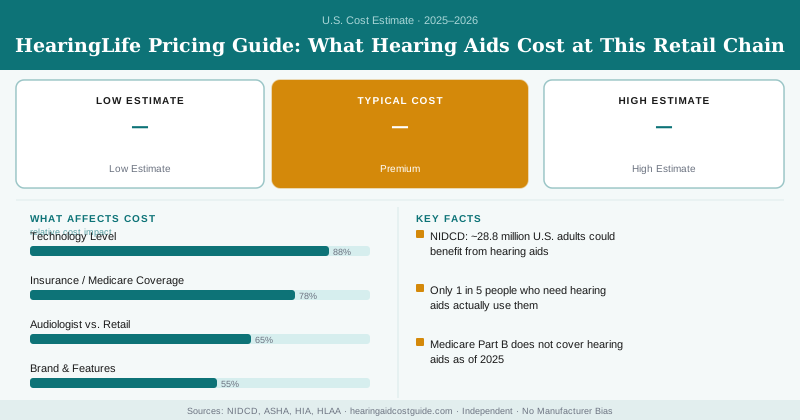
Most people assume big-box stores can’t match audiologist quality — and that retail hearing aid chains are just glorified sales floors. With HearingLife, the reality is more nuanced than that. HearingLife operates over 600 locations across the United States and employs licensed audiologists at many of its centers (not just hearing instrument specialists), which distinguishes it from some other franchise chains. But their pricing is squarely in private-clinic territory, which means you need to know exactly what you’re getting before you sign anything.
HearingLife Hearing Aid Price Ranges (2025)
| Technology Tier | Price Per Pair | Typical Features |
|---|---|---|
| Essential / Entry | $2,200–$3,500 | Basic amplification, directional mics, no streaming |
| Standard | $3,500–$4,800 | Noise reduction, Bluetooth, app control |
| Advanced | $4,800–$6,200 | AI processing, speech-in-noise, remote fine-tuning |
| Premium | $6,200–$7,500 | Full feature set, best speech clarity, fall detection |
HearingLife is a subsidiary of Demant — the same Danish company that owns Oticon and Philips HearLink. Most devices sold at HearingLife centers are Oticon hearing aids, though some locations also carry devices from other manufacturers. That matters because it means you’re getting access to genuine Oticon technology with professional fitting — not rebranded budget hardware.
What’s Included in HearingLife’s Price
HearingLife’s standard pricing is bundled, which means the sticker price typically includes:
- Comprehensive hearing evaluation (at most locations, conducted by a licensed audiologist)
- Hearing aid fitting and programming using real-ear measurement
- 45-day trial period with full refund option if you return the devices
- 3 years of follow-up adjustments and reprogramming at any HearingLife location
- 2–3 year manufacturer warranty covering defects
- Loss and damage coverage (usually one claim per device during the warranty period)
- Remote fine-tuning via Oticon’s app for supported models
The bundled service model is worth understanding. If you move to a new city, you can continue your follow-up care at another HearingLife location — that network portability is a genuine advantage for retirees who split time between homes or relocate.
HearingLife employs audiologists (AuD) at many locations, not just hearing instrument specialists (HIS). This means you may receive a more comprehensive diagnostic evaluation than at some other retail chains. However, individual location staffing varies — when booking, ask specifically whether the provider is an audiologist or an HIS. This affects what diagnostic tests they can perform and how they’re licensed.
The Oticon Connection
Because HearingLife is owned by Demant (Oticon’s parent), their flagship devices are typically Oticon hearing aids: the Oticon Intent, Oticon Real, and Oticon More. At an independent audiology practice, these same Oticon devices typically run $5,500–$7,500 per pair. HearingLife pricing for equivalent Oticon technology is generally in the same range — you’re not getting a Costco-style discount here.
Where HearingLife can beat independent practices: promotional periods. HearingLife runs seasonal promotions — sometimes $500–$1,000 off per pair — particularly in January (New Year health resolutions) and around Medicare open enrollment season in the fall. If you’re not in urgent need, timing your purchase to a promotion can meaningfully reduce the cost.
Comparing HearingLife to Other Options
| Provider Type | Typical Price Per Pair | Professional Level | Follow-Up |
|---|---|---|---|
| HearingLife (retail chain) | $2,200–$7,500 | Audiologist or HIS (varies by location) | 3 years, network-wide |
| Independent audiologist (AuD) | $3,000–$7,500 | Doctoral audiologist | Practice-dependent |
| Costco Hearing Aid Center | $1,399–$2,199 | Licensed HIS | 3 years, in-store |
| OTC (self-fit, no professional) | $200–$1,600 | None | App-based support |
Insurance and HearingLife
HearingLife accepts most major insurance plans and works with hearing benefit programs including TruHearing, UnitedHealthcare Hearing, and others. They also accept HSA and FSA funds, which can reduce your effective out-of-pocket cost if you have pre-tax dollars available.
If you have Medicare Advantage, your plan may include a hearing aid benefit that covers a portion of the cost — typically $500–$2,500 toward the purchase price. HearingLife will verify your benefits at no charge before you commit.
The NIDCD reports that only about 30% of adults aged 70 and older who could benefit from hearing aids actually use them — and cost is consistently cited as the primary barrier. If HearingLife’s pricing is out of reach, ask specifically about their financing options (CareCredit is commonly accepted) and whether your state’s Medicaid program covers hearing aids. Many states do.
HearingLife’s Trial Period: Use It
HearingLife’s 45-day trial period is one of the more generous in the retail hearing aid market. The American Academy of Audiology (AAA) recommends a minimum 30-day trial for all new hearing aid fittings, because real-world adaptation — getting used to the sound of your own voice, adjusting to background noise, retraining your brain to process amplified sound — takes weeks, not days.
Use the full trial period. Schedule at least two follow-up adjustment appointments within those 45 days. If you’re not satisfied with fit, sound quality, or comfort by week six, return them. This is your most important consumer protection.
Who HearingLife Works Best For
HearingLife is a reasonable choice if you:
- Want a professional retail hearing care experience with network portability
- Prefer confirmed audiologist oversight rather than just a hearing instrument specialist
- Qualify for insurance benefits that HearingLife accepts and can process directly
- Benefit from in-person locations in communities that lack independent audiology practices
- Value extended follow-up service with the ability to visit multiple locations
It’s probably not your best option if cost is the primary driver. For that, Costco’s Hearing Aid Centers remain the strongest value in the market for most buyers with standard hearing loss profiles.
Bottom Line
HearingLife sits at private-clinic pricing with the added convenience of a retail network, professional audiologist presence at most locations, and network-wide service portability. That’s worth something — but you’re not getting a discount over independent audiology. Shop their promotional pricing periods, verify your insurance benefits before your appointment, and use the full 45-day trial before finalizing the purchase.
Frequently Asked Questions
HearingLife hearing aids cost between $2,200 and $7,500 per pair in 2025, depending on the technology level and features you choose. Entry-level digital hearing aids start around $2,200, while premium models with advanced noise reduction and connectivity features can reach $7,500 per pair. Most patients purchase two hearing aids (one for each ear), so total costs typically range from $4,400 to $15,000 for a complete pair.
Coverage varies significantly by insurance plan; some Medicare Advantage plans and employer-sponsored plans offer partial coverage of $500–$2,000 per pair, while Original Medicare does not cover hearing aids at all. Most patients pay out-of-pocket at HearingLife, though the chain may offer financing options to spread costs over 12–24 months. Veterans with VA benefits may be eligible for fully covered hearing aids through the VA rather than HearingLife.
Initial fitting appointments at HearingLife typically take 1–2 hours and include a hearing test, device selection, and programming. Most patients need 2–4 follow-up adjustment appointments over 4–6 weeks as they acclimate to wearing hearing aids, with each follow-up lasting 30–45 minutes. HearingLife locations are generally available for same-week or next-week appointments, making the process faster than waiting for independent audiologist availability in many areas.