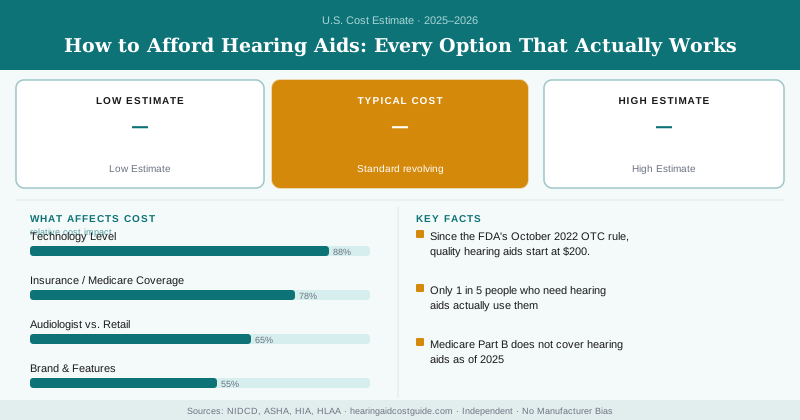
Wondering what hearing aids cost in 2025? Our complete hearing aid cost guide covers OTC ($200+), Costco, and prescription prices side-by-side. This page focuses on how to pay less.
$4,700. That’s the average out-of-pocket price Americans pay for a pair of prescription hearing aids, according to MarkeTrak survey data. For someone on a fixed income or without hearing coverage, that number can feel impossible.
It isn’t. Here’s every real strategy for reducing what you pay — from zero-interest financing to state programs most people don’t know exist.
Option 1: OTC Hearing Aids (Cut the Starting Price by 80%)
The single fastest way to reduce hearing aid cost is to consider whether OTC aids will meet your needs. Since the FDA’s October 2022 OTC rule, quality hearing aids start at $200.
- Jabra Enhance Select 300 — $799/pair
- Sony CRE-E10 — $999/pair
- Lexie Lumen — $799/pair
- Eargo 7 — $1,650/pair
If your hearing loss is mild to moderate and you’re comfortable with smartphone-based setup, OTC aids can be a legitimate clinical choice — not a compromise. See a full comparison in our OTC vs. prescription hearing aid guide.
Option 2: FSA and HSA Funds (Use Pre-Tax Dollars)
Flexible Spending Accounts (FSA) and Health Savings Accounts (HSA) let you pay for hearing aids with pre-tax dollars — effectively reducing the cost by your marginal tax rate.
For someone in the 22% federal bracket paying $4,000 for hearing aids:
- Pre-tax FSA/HSA payment: $4,000
- Tax savings: ~$880
- Effective cost: ~$3,120
What’s covered: Hearing aids, batteries, exams, fitting fees, repairs, and accessories all qualify as FSA/HSA eligible expenses.
Important for FSA: Funds are use-it-or-lose-it annually (with some grace period variations). If you have FSA funds expiring, hearing aid purchases are an excellent use. HSA funds roll over indefinitely — no urgency.
Many employers offer FSA open enrollment in the fall for the following year. If you know you’ll need hearing aids in the next 12 months, elect enough FSA funds to cover the purchase. You can access the full annual FSA election amount on January 1 — even if you haven’t contributed that amount yet.
Option 3: CareCredit and Medical Financing
CareCredit is a healthcare credit card accepted by thousands of audiologists and hearing centers. It offers promotional financing periods that can make a large purchase manageable:
| Financing Plan | Interest | Monthly Payment Example ($4,000 purchase) |
|---|---|---|
| 6-month promotional | 0% if paid in full | ~$667/month |
| 12-month promotional | 0% if paid in full | ~$333/month |
| 18-month promotional | 0% if paid in full | ~$222/month |
| 24-month promotional | 0% if paid in full | ~$167/month |
| Standard revolving | 26.99% APR | Avoid — expensive |
Critical warning: CareCredit’s 0% promotional periods are deferred-interest, not true 0% interest. If any balance remains when the promotional period ends, the full accumulated interest charges back immediately at the standard rate. Pay it off completely before the deadline.
Other medical financing options: Ally Lending, LendingClub Healthcare, Prosper Healthcare Lending.
Option 4: Manufacturer Financing
Several hearing aid manufacturers offer direct financing programs:
- Phonak: Partners with Synchrony Bank for installment plans
- Starkey: Financing through their website and partner clinics
- Oticon: Clinic-level financing arrangements
Terms vary; ask your audiologist what manufacturer financing is available for the specific brand you’re considering.
Option 5: Costco Hearing Aid Centers (Lower Starting Price)
Costco’s Hearing Aid Centers offer current-generation technology from Philips, Jabra, and Rexton — licensed hearing instrument specialists, comprehensive services, and 180-day trial periods — at $1,500–$3,000 per pair. That’s 30–50% less than most private audiology clinics for comparable technology.
You don’t need a Costco membership to get a hearing evaluation at Costco. You do need one to purchase aids. An annual Costco membership costs $65 — a rounding error compared to the potential savings.
Option 6: State Vocational Rehabilitation Programs
Every U.S. state has a vocational rehabilitation (VR) agency. If hearing loss creates a barrier to employment, your state VR office may fund hearing aids, audiologist evaluation, and follow-up care — entirely.
Eligibility requires demonstrating that your hearing loss affects your ability to work. The application and evaluation process can take weeks to months, but the benefit can be substantial.
Find your state’s VR agency: careeronestop.org/LocalHelp
Option 7: Hearing Aid Tax Deduction
Hearing aids are a qualified medical expense under IRS rules. If your total medical expenses exceed 7.5% of your adjusted gross income (AGI), the amount above that threshold is deductible if you itemize.
For most people, this threshold is difficult to reach on hearing aids alone. But if you had a major medical year — surgery, significant other expenses — hearing aid costs can push you over the threshold and become deductible.
Consult a tax professional; rules vary by situation.
Option 8: Refurbished and Certified Pre-Owned Aids
Refurbished hearing aids from reputable sources can be 30–60% less than new devices. Look for:
- Manufacturer certified pre-owned programs (Starkey, Phonak, and others)
- Audiology clinic trade-in programs — when patients upgrade, their previous aids are serviced and resold
- Nonprofit hearing aid banks — Gift of Hearing Foundation, Sertoma Gift of Sound
Caution: refurbished aids should always be refitted by a licensed audiologist to your specific audiogram. A used aid programmed for someone else’s hearing profile is worse than no aid at all.
Avoid purchasing used hearing aids from eBay, Facebook Marketplace, or Craigslist without a professional refitting plan. Hearing aids must be programmed to your specific audiogram — they’re not one-size-fits-all. An unprogrammed used aid is at best ineffective and at worst harmful to residual hearing.
Option 9: Nonprofit and Assistance Programs
For those with genuine financial need:
- Lions Club International: Local clubs frequently fund hearing aids for low-income community members
- Starkey Hear Now: Application-based assistance for adults under income thresholds
- Medicaid: Covers hearing aids for adults in some states (varies significantly)
- VA Benefits: Free hearing aids for eligible veterans — the best benefit available
Putting It Together: A Decision Path
| Your Situation | Best Starting Strategy |
|---|---|
| Mild-to-moderate loss, tech-comfortable | OTC hearing aids ($200–$1,600) |
| Moderate loss, need professional fitting | Costco Hearing Aid Center ($1,500–$3,000) |
| Have FSA/HSA funds available | Use pre-tax dollars for any purchase |
| Need to finance over time | CareCredit 12–24 month plan (pay before deadline) |
| Loss affects employment | Apply for state vocational rehab |
| Veteran | VA benefits — start here |
| Low income | Lions Club + Starkey Hear Now |
Bottom Line
The $4,700 average price is not what you have to pay. Between OTC options, Costco pricing, pre-tax accounts, state programs, and financing, most people can get quality hearing aids for significantly less — or in some cases free. The key is knowing which path applies to your situation and income.
Frequently Asked Questions
Prescription hearing aids cost between $3,000 and $7,000 per pair, with the average out-of-pocket expense around $4,700 according to MarkeTrak data. Over-the-counter hearing aids are significantly cheaper, ranging from $200 to $1,500 per pair, making them a budget-friendly alternative for mild to moderate hearing loss.
Most traditional health insurance plans do not cover hearing aids, though some Medicare Advantage plans offer limited coverage of $0 to $2,000 per ear. You may have coverage through your employer's FSA or HSA accounts, state vocational rehabilitation programs, or supplemental insurance plans, so it's worth checking your specific policy details.
You can use zero-interest financing through CareCredit or manufacturer payment plans to spread costs over 12–24 months with no money down, purchase refurbished or returned hearing aids at 20–40% discounts, or buy OTC hearing aids for $200–$1,500 upfront instead of prescription models. State vocational rehabilitation programs can also cover costs for eligible working-age adults, though enrollment and approval typically take 4–8 weeks.