Everyday sounds that most people ignore — a running dishwasher, someone typing at the next desk, a car door closing — can feel physically painful when you have hyperacusis. It’s not that you’re being dramatic. The auditory system genuinely overreacts, amplifying ordinary noise into something that registers as discomfort or even pain. And treating it costs real money that most people aren’t prepared for.
Here’s the breakdown of what hyperacusis care actually runs, and what you’re paying for.
What Is Hyperacusis?
Hyperacusis is a reduced tolerance for everyday sound. It’s distinct from misophonia (an emotional reaction to specific sounds) and from tinnitus (perceived ringing in the ears), though the three frequently co-occur. The American Tinnitus Association estimates that roughly 1 in 50,000 people have significant hyperacusis — though mild forms affect a much broader population that often goes undiagnosed.
It can appear after noise trauma, viral illness, head injury, or alongside conditions like fibromyalgia, PTSD, and Lyme disease. There’s no pill that fixes it. Treatment is almost entirely behavioral and auditory.
Hyperacusis Treatment Costs at a Glance
| Treatment | Typical Cost |
|---|---|
| Audiological evaluation (hyperacusis-specific) | $250–$600 |
| Sound desensitization therapy (per session) | $100–$250 |
| Full TRT/sound therapy program (6–18 months) | $1,500–$4,500 |
| Pink noise generators / sound therapy devices | $300–$1,200 |
| Cognitive behavioral therapy (CBT) for hyperacusis | $100–$200/session |
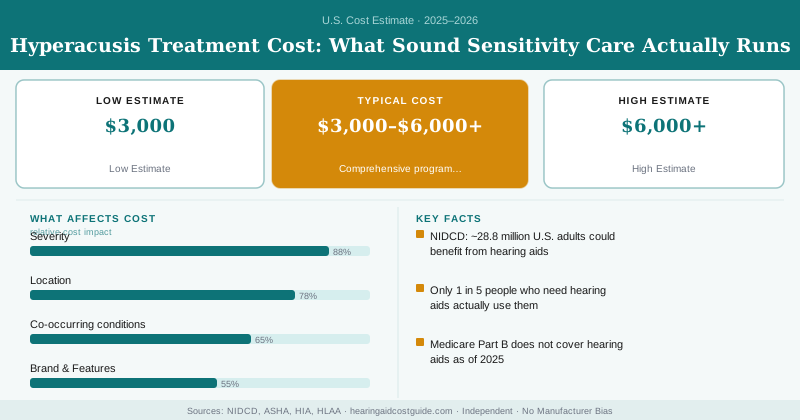
| Comprehensive program (audiology + CBT combined) | $3,000–$6,000+ |
The Main Treatment Approaches
Sound Desensitization (Sound Therapy)
The cornerstone of most hyperacusis treatment is gradual, controlled exposure to broadband sound — usually pink or white noise — at volumes slightly below the discomfort threshold. Over months, the brain recalibrates its reaction. An audiologist programs wearable sound generators (similar in size to hearing aids) and provides structured listening guidelines.
This is not something to self-direct with a phone app. The exposure protocol needs to be calibrated to your loudness discomfort levels (LDLs), which are measured during an audiological evaluation. Starting at the wrong volume — too loud — can worsen hyperacusis.
Tinnitus Retraining Therapy (TRT)
Originally developed for tinnitus, TRT has been adapted for hyperacusis. It pairs sound therapy with directive counseling — sessions that explain the neurological underpinnings of the condition and work to reduce the fear and avoidance behavior that typically amplifies suffering. A full TRT course runs 12–18 months, with periodic appointments.
Cognitive Behavioral Therapy (CBT)
CBT doesn’t change how loud sounds feel in the moment, but it’s highly effective at changing how patients respond emotionally and behaviorally. Avoidance of sound — wearing earplugs constantly, canceling social plans, stopping activities — tends to worsen hyperacusis over time. CBT breaks that cycle. Expect 8–16 sessions with a psychologist or trained counselor.
Wearing earplugs or earmuffs in ordinary environments — restaurants, offices, stores — provides short-term relief but makes hyperacusis worse over months. It prevents the auditory system from desensitizing. Most hyperacusis audiologists will ask you to gradually reduce protective use as part of treatment. This feels counterintuitive, but it’s backed by research and is central to most recovery protocols.
Who Treats Hyperacusis?
Not every audiologist has training in hyperacusis management. You’ll want to look specifically for:
- Audiologists who list tinnitus and hyperacusis treatment as a specialty
- TRT-trained clinicians (certification is available through the Tinnitus Practitioners Association)
- University audiology clinics, which often have dedicated tinnitus/hyperacusis programs
The American Academy of Audiology and the American Tinnitus Association both have provider directories.
Does Insurance Cover Hyperacusis Treatment?
Coverage is inconsistent and often frustrating. Here’s the reality:
- The audiological evaluation is usually covered under major medical if ordered for hearing evaluation purposes
- Sound therapy devices may be covered if your audiologist codes them correctly — but many insurers classify them as hearing aids, which triggers separate (often worse) coverage
- TRT counseling may be covered under behavioral health benefits
- CBT is typically covered under mental/behavioral health benefits with a co-pay
Traditional Medicare does not cover hearing aids but does cover audiological evaluations when medically necessary. Check your Medicare Advantage plan for hearing and behavioral health details.
Be cautious about programs that promise rapid hyperacusis resolution or charge large upfront fees for proprietary “programs.” Legitimate treatment is gradual — measured in months, not weeks. No credentialed audiologist should guarantee a cure. The American Tinnitus Association recommends seeking care from board-certified audiologists and being skeptical of unvalidated treatments.
What Drives the Cost Variation?
A few factors explain the wide range:
Severity. Mild hyperacusis that caught early may resolve with a few months of self-directed sound enrichment and occasional check-ins. Severe cases — where any sound above a whisper triggers pain — require long, intensive programs with more professional support.
Location. Urban academic medical centers charge more than community audiology practices, but may offer more specialized expertise.
Co-occurring conditions. If tinnitus is also present, treatment is bundled. If PTSD or anxiety underlies the hyperacusis, the psychological component becomes more extensive and expensive.
A Realistic Recovery Timeline
NIDCD research on auditory hypersensitivity conditions suggests that structured sound therapy programs show meaningful improvement in 70–80% of patients after 12–18 months of consistent treatment. That’s encouraging — but it also means you’re looking at ongoing costs over more than a year, not a single procedure. Budget accordingly.
The good news: most people improve substantially. Full resolution is less common, but significant reduction in the impact hyperacusis has on daily life is achievable with the right program and a committed clinician.
Frequently Asked Questions
Hyperacusis treatment generally ranges from $500 to $6,000+ depending on severity and the type of care needed. Initial audiological evaluation costs $200–$500, while sound therapy programs (the primary treatment) typically run $1,500–$4,000 over several months, and specialized cognitive behavioral therapy can add another $1,000–$2,000 if recommended.
Most health insurance plans cover the audiological evaluation and diagnosis portion, though many patients still face $200–$500 out-of-pocket costs depending on their deductible. However, sound therapy and counseling components are often only partially covered or excluded entirely, leaving patients responsible for 30–70% of total treatment costs out-of-pocket.
Most hyperacusis treatment programs last 3–6 months, involving weekly or bi-weekly sessions with an audiologist for sound desensitization therapy. Treatment typically includes gradual exposure to uncomfortable sounds in a controlled setting and behavioral coping strategies, with improvements often visible within 4–8 weeks if the patient is consistent with recommendations.