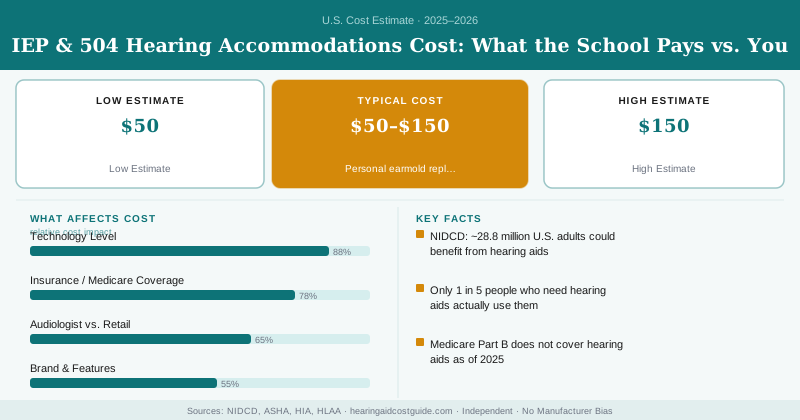
What does a classroom FM system cost a parent whose kid has an IEP? Zero. What does the kid’s personal hearing aid cost that same parent? Up to $4,000. Confusing, right? The single biggest source of money stress for parents of school-age kids with hearing loss is figuring out exactly where the school’s wallet ends and theirs begins.
Let’s draw that line clearly, because once you see it, a lot of anxiety disappears.
IEP vs. 504: Two Different Laws
These two plans get lumped together, but they come from different places. An IEP (Individualized Education Program) lives under IDEA and is for students who need specialized instruction. A 504 plan comes from the Rehabilitation Act and covers accommodations for students who need access but not specialized teaching.
Either way, here’s the part that matters for your budget: schools cannot charge families for accommodations. That’s federal law.
| Accommodation / Service | Who Pays |
|---|---|
| Classroom FM/DM system | School ($0 to family) |
| Sound-field amplification | School ($0 to family) |
| Preferential seating, captioning | School ($0 to family) |
| Educational audiology services | School ($0 to family) |
| Sign language interpreter | School ($0 to family) |
| Child’s personal hearing aids | Family / insurance ($1,500–$4,000 ea.) |
| Personal earmold replacement | Family / insurance ($50–$150 ea.) |
What the School Is Legally On the Hook For
Under IDEA, school districts must provide a free appropriate public education (FAPE) to eligible students ages 3–21. The U.S. Department of Education reports that more than 7 million students receive special-education services under IDEA. For a child with hearing loss, FAPE can include educational audiology, assistive listening devices used at school, captioning, and interpreters — all at no cost.
If a device or service is needed to access education in the classroom, the school pays. If it’s the child’s personal medical device they use everywhere, the family (and their insurance) pays. An FM system for class = school. The hearing aids themselves = you.
The Gray Zone — and How to Win It
The line gets fuzzy with assistive devices that serve double duty. A good strategy is to request, in writing, that specific hearing accommodations be written into the IEP or 504 plan. If it’s in the document, the district must provide and maintain it.
Verbal promises mean nothing here. If an accommodation isn’t written into the IEP or 504 plan, it doesn’t legally exist. Get every device, service, and seating arrangement documented in the plan itself.
Where Families Still Spend Money
Even with an ironclad IEP, the personal devices are yours. That’s the biggest expense. Our pediatric hearing aid cost guide covers what those run, and the children’s hearing aids cost breakdown explains coverage options like Medicaid.
The classroom technology, though, is the school’s responsibility — including the FM system that helps your child hear the teacher over background noise.
Smart Moves at the IEP Table
- Bring a recent audiogram and a letter from your pediatric audiologist recommending specific accommodations.
- Request an educational audiology evaluation through the district — it’s free and strengthens your case.
- Ask for device maintenance and loaner provisions to be written in, so a broken FM unit doesn’t leave your child without access.
- Review the plan annually; needs change as kids move grades and classrooms.
Bottom Line
Hearing accommodations under an IEP or 504 plan cost families nothing — that’s the whole point of FAPE. Your real out-of-pocket expense is the personal hearing devices. Get the school’s responsibilities in writing, and you’ll never pay for something the district legally owes your child.
Frequently Asked Questions
A personal hearing aid typically costs between $1,500 and $4,000 per device, depending on the style, technology level, and features. Most children need two hearing aids (one for each ear), so total out-of-pocket costs can reach $8,000 without insurance coverage or manufacturer assistance programs.
Most standard health insurance plans, including Medicaid, do not cover hearing aids for children, though some state Medicaid programs offer limited coverage. You may qualify for manufacturer payment plans, non-profit assistance programs, or state hearing aid subsidy programs that can reduce your out-of-pocket cost by 25-50%.
You should request accommodations as soon as your child receives a hearing loss diagnosis—ideally before the school year starts or within 30 days of diagnosis. Schools must evaluate your child's needs within 60 days of your written request and implement approved accommodations (like FM systems or seating preferences) at no cost to you within that timeframe.