Why does fitting a six-month-old for hearing aids cost more in appointments than fitting an adult? Because a baby’s ears keep growing, a baby can’t tell you “that’s too loud,” and the whole process leans on specialized testing instead of feedback. Fitting an infant is its own skill, and it carries its own costs on top of the devices themselves.
Here’s what the fitting process actually involves, what it costs in the first year, and why those tiny earmolds get remade so often.
The Fitting Costs, Separate From the Devices
The hearing aids are one bill. The fitting — the appointments, testing, and earmolds that make them work — is another.
| Service | Cost |
|---|---|
| Diagnostic ABR (sedated, if needed) | $500–$2,000 |
| Hearing aid fitting/verification appointment | $200–$500 |
| Real-ear/RECD measurement | included or $100–$200 |
| Custom infant earmold (each) | $50–$150 |
| Earmold remakes, first year (rapid growth) | $300–$900 total |
| Follow-up programming visits | $75–$200 each |
Why Babies Need Special Fitting
Adults sit in a booth and report what they hear. Infants can’t. So audiologists rely on objective measures — auditory brainstem response (ABR) testing and real-ear-to-coupler difference (RECD) measurements — to set the hearing aids precisely for that baby’s tiny ear canal.
The CDC’s EHDI program built the “1-3-6” timeline around this: screen by 1 month, diagnose by 3, and begin intervention — including amplification — by 6 months. The NIDCD reports that 2 to 3 of every 1,000 newborns have detectable hearing loss, and fitting them promptly is what protects their language development.
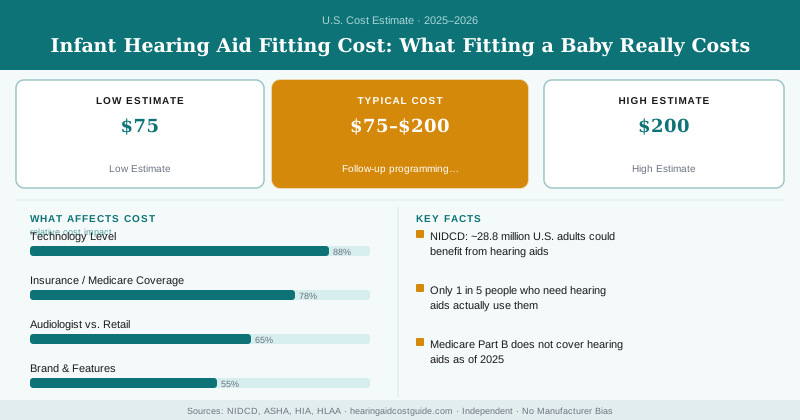
Beyond the cost of the hearing aids, budget $200–$800 for the fitting appointments and $300–$900 for first-year earmold remakes. A baby’s ear canal grows so fast that earmolds may need replacing every few months — that recurring cost catches most new parents off guard.
The Earmold Treadmill
This is the part nobody warns you about. An infant’s ear canal grows rapidly, and a hearing aid leaks and whistles when the earmold no longer fits snugly. So expect new earmolds every two to four months in the first year — far more often than for an older child or adult.
Don’t ignore a whistling hearing aid on a baby. Feedback usually means the earmold has been outgrown, which also means your infant isn’t getting the full, accurate sound they need. Schedule a remake promptly — a poorly fitting earmold quietly undercuts everything.
Coverage Eases the Sting
The good news on cost: infants are covered well. Medicaid’s EPSDT mandate requires states to cover medically necessary hearing aids, fitting, and earmolds for children, and many private plans in mandate states do the same. Our child hearing aid insurance cost guide explains how to find your coverage, and the newborn hearing screening cost guide covers the step that usually starts the journey.
For the device prices themselves, see our pediatric hearing aid cost guide, and for general fitting concepts our broader hearing aid cost guide.
Keeping First-Year Costs Manageable
- Confirm that earmolds and remakes are covered, not just the devices — they’re a recurring expense.
- Ask whether the practice bundles fitting and verification into the device price.
- Keep every appointment; skipped follow-ups let an outgrown earmold linger.
- Enroll in early intervention, which often covers fitting-related services.
Choose a pediatric audiologist specifically experienced with infants — fitting a baby well is a specialized skill, not a generalist task.
Bottom Line
Fitting an infant for hearing aids adds $200–$800 in appointments plus $300–$900 in first-year earmold remakes on top of the devices. The rapid ear growth means frequent earmold changes, but coverage for children is strong — confirm that earmolds and fittings are included, and pick an audiologist who works with babies.
Frequently Asked Questions
Fitting appointments and services for infants typically cost $200–$800 in the first year, separate from the hearing aids themselves. This includes initial fitting visits, frequent earmold remakes as the baby's ears grow (often every 2–3 months), and specialized diagnostic testing like behavioral audiometry.
Most insurance plans cover a portion of fitting services if the child is diagnosed with hearing loss, but coverage varies by plan and state. Many families still face $100–$300 in out-of-pocket costs per year for earmold remakes and adjustment visits not fully covered by their policy.
Babies' ears grow rapidly, making earmolds obsolete every 2–3 months, and they cannot report whether sounds are too loud or uncomfortable. Fitting relies entirely on objective tests like auditory brainstem response (ABR) rather than patient feedback, requiring specialized pediatric audiologist expertise and more frequent adjustments.