In March 2023, the FDA granted marketing authorization to Lenire, making it the first bimodal neuromodulation device cleared in the U.S. for treating tinnitus. That headline got a lot of attention — and a lot of people calling clinics asking the obvious question: how much? The short answer is roughly $3,500 to $4,000, paid out of pocket, because insurance doesn’t cover it. The longer answer is worth your time before you commit.
What Lenire Costs
| Item | Cost |
|---|---|
| Lenire device + 12-week treatment program | $3,500–$4,000 |
| Initial audiological assessment | $150–$300 |
| Follow-up fitting / tuning visits | Usually bundled in program fee |
| Insurance coverage | $0 (not currently covered) |
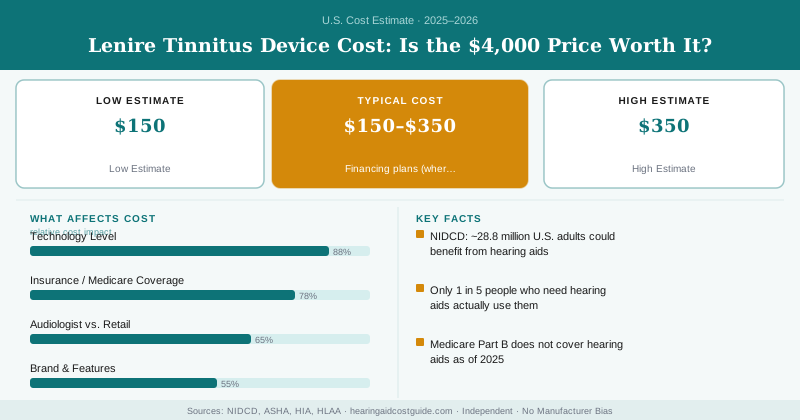
| Financing plans (where offered) | $150–$350/month |
The fee is essentially all-inclusive: the device, the personalized fitting, and the supervised treatment program run through an authorized clinic. You won’t find it on Amazon — it’s prescribed and tuned by trained providers.
How Lenire Actually Works
Lenire uses bimodal stimulation: sound delivered through headphones paired with mild electrical pulses on the tongue via a small mouthpiece. The idea is to gently rewire how the brain processes the tinnitus signal. You use it about an hour a day for 12 weeks under a clinician’s guidance.
The FDA authorization was based on clinical trials showing that a majority of participants reported a meaningful reduction in tinnitus severity. That’s genuinely promising — but “meaningful reduction in severity” is not the same as “cure.” Some people respond well; some don’t respond much at all.
Lenire costs about $3,500–$4,000 out of pocket and isn’t covered by insurance. It’s FDA-authorized and backed by trial data, but it manages tinnitus severity rather than curing it. Make sure you’ve tried cheaper proven options — and ruled out treatable causes — before spending this much.
Why It’s Not Covered (Yet)
Because Lenire is so new, insurers classify it as not-yet-standard-of-care, which is insurance-speak for “we won’t pay.” That’s frustrating, but it’s also typical for newly authorized devices. Hearing-related coverage is already thin, and neuromodulation is even further out on the edge.
Do the Cheaper Things First
Here’s the math that matters. The NIDCD points out that much tinnitus management relies on sound therapy and behavioral approaches, many of which cost a fraction of Lenire. Before spending $4,000:
- Get a hearing test and audiologist visit to find a fixable cause.
- If you have hearing loss, try hearing aids for tinnitus — they often help and may be partially covered.
- Consider evidence-backed therapy like tinnitus retraining therapy.
If you’ve worked through those and still struggle, Lenire becomes a more reasonable next step rather than a desperate first purchase.
Be skeptical of any clinic that pitches Lenire before doing a full evaluation. The American Tinnitus Association stresses that tinnitus is a symptom — the cause should be investigated first. A $4,000 device won’t help tinnitus driven by earwax, a medication side effect, or an untreated medical issue.
Who It’s Best For
Lenire tends to make sense for people with chronic, bothersome tinnitus who’ve already tried sound therapy and counseling without enough relief, and who can afford an out-of-pocket cost in this range. It’s part of the higher end of the overall tinnitus treatment cost spectrum — not the starting line.
The Bottom Line
Lenire is a real, FDA-authorized option, and for the right person it can meaningfully reduce tinnitus severity. Just go in clear-eyed: $3,500–$4,000, no insurance, no guaranteed result. Exhaust the cheaper proven routes first. If you’ve done that and the noise still rules your day, Lenire is a legitimate — if expensive — next move.
Frequently Asked Questions
The Lenire device costs approximately $3,500 to $4,000 out of pocket in the United States. This is a one-time purchase price that includes the bimodal neuromodulation device and initial setup, though ongoing clinical support or accessories may involve additional costs.
No, insurance does not currently cover Lenire because it is classified as a non-covered medical device. Patients must pay the full $3,500 to $4,000 cost out of pocket, making it an elective expense rather than an insurance-reimbursable treatment.
Lenire is designed for adults with bothersome tinnitus and typically requires consistent daily use over several weeks to months to assess effectiveness. Candidates should have moderate to severe tinnitus symptoms and be willing to commit to the treatment protocol, as results vary by individual.