What does a “listening therapy program” actually cost — and is it worth it? Prices swing from about $300 for a self-guided app to $3,000 for a clinician-led course, and the marketing around some of these programs runs hot. Let’s separate the pricing from the promises so you know what you’re paying for before you commit.
Listening Therapy Program Costs
| Program Type | Cost |
|---|---|
| App / software-based listening training | $0–$300 |
| Subscription auditory training platforms | $10–$30/month |
| Clinic-guided listening therapy course | $800–$3,000 |
| Specialized device-based programs | $1,000–$3,500 |
| Initial assessment | $150–$400 |
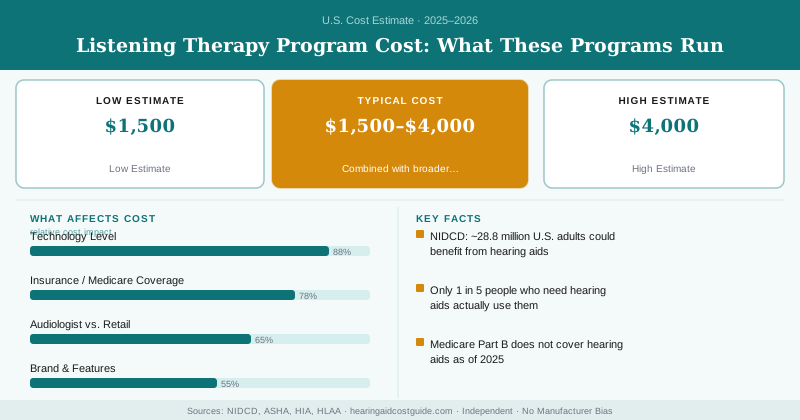
| Combined with broader rehab | $1,500–$4,000 |
The gap between a $300 app and a $3,000 clinic course is mostly about supervision: a trained professional measuring your progress, adjusting the difficulty, and keeping you accountable. For some people that’s worth every dollar; for others, the app does the job.
What These Programs Aim to Do
Listening therapy is an umbrella term covering structured exercises that train your brain to make better use of the sound it receives — discriminating speech from noise, processing rapid speech, and improving auditory attention. ASHA recognizes auditory training as a component of aural rehabilitation, and there’s solid evidence that targeted practice can sharpen real-world listening, especially in noisy settings.
The NIDCD highlights that difficulty understanding speech in background noise is among the most common hearing complaints, and that’s the exact skill many listening programs target.
Listening therapy programs cost $300–$3,000. App-based training is the cheap entry point; clinic-led courses cost more because a professional guides and adjusts them. Be wary of any program promising to “cure” hearing loss — training improves how you use your hearing, it doesn’t restore lost function.
Self-Guided vs. Clinic-Led
A self-guided app makes sense if you’re motivated, have a clear goal (better speech-in-noise, say), and don’t need hand-holding. At $0–$300 it’s low risk.
A clinic-led course makes sense if you’ve struggled to stick with self-practice, have a complex situation (hearing loss plus processing issues), or want measurable, professionally tracked progress. You’re paying for structure and expertise, not just content.
Some listening programs market themselves as fixes for everything from hearing loss to attention problems. Treat sweeping claims skeptically. Listening therapy trains a skill — it doesn’t replace hearing aids, cure hearing loss, or substitute for a medical evaluation when one’s needed.
How It Fits the Bigger Picture
Listening therapy overlaps heavily with formal rehab — see aural rehabilitation cost for the full structured version. If hearing loss is part of your situation, pairing training with devices matters, and the hearing aid cost guide covers that side. Start with a proper audiologist visit so the program targets your actual weaknesses.
If background noise is your main struggle and you also have tinnitus, some of the same tools appear in the hearing aids for tinnitus discussion.
Saving Money
- Try the app first. A $0–$300 program is a cheap test of whether training helps you at all.
- Look for free trials. Many subscription platforms offer a no-cost week.
- Bundle with rehab. If you’re already doing aural rehab, listening exercises may be included.
- Skip device-based programs unless recommended. The pricey hardware isn’t always necessary.
The Bottom Line
Listening therapy can genuinely sharpen how you handle speech in noise, and it ranges from nearly free to around $3,000. Start cheap with an app, escalate to a clinic-led course only if you need structure or have a complex case, and keep your expectations grounded — it trains skills, it doesn’t restore hearing.
Frequently Asked Questions
Listening therapy program costs range from $0 to $3,000 depending on the format. App-based and software programs cost between $0–$300, while clinician-led courses and device-based programs typically run $1,500–$3,000.
Most insurance plans do not cover listening therapy programs, as they are often considered wellness or self-improvement rather than medical treatment. You should expect to pay the full cost out-of-pocket, though you may be able to use a flexible spending account (FSA) or health savings account (HSA) depending on your plan.
Completion time varies by program type: app-based programs usually take 4–12 weeks with 10–20 minutes of daily use, while clinician-led programs typically span 8–12 weeks with weekly sessions. Device-based programs may require several months of consistent use to see results.