Most people researching cochlear implants hear about Cochlear Americas first — it’s the market leader. But MED-EL, founded in Innsbruck, Austria, in 1990, now holds a significant share of the global CI market and is FDA-approved for use in the United States. If your surgeon or audiologist has recommended MED-EL specifically, you probably have questions about what that means for cost.
Short answer: MED-EL surgery costs are nearly identical to Cochlear and Advanced Bionics — the bigger differences are in device design, surgical approach preferences, and long-term upgrade philosophy.
MED-EL in the U.S. Market
According to the National Institute on Deafness and Other Communication Disorders (NIDCD), approximately 90,000 cochlear implants are performed annually in the United States. MED-EL, Cochlear Americas, and Advanced Bionics are the three FDA-approved manufacturers competing for that volume. MED-EL’s U.S. headquarters is in Durham, North Carolina, with a network of implanting centers across the country.
MED-EL is particularly known for its soft, flexible electrode arrays (including the FLEX series), its SYNCHRONY implant with MRI compatibility at 3.0 Tesla without magnet removal, and its full-insertion approach for preserving residual hearing. Many surgeons choose MED-EL for patients with EAS (Electric-Acoustic Stimulation) candidacy or unusual cochlear anatomy.
MED-EL Cochlear Implant Cost Breakdown
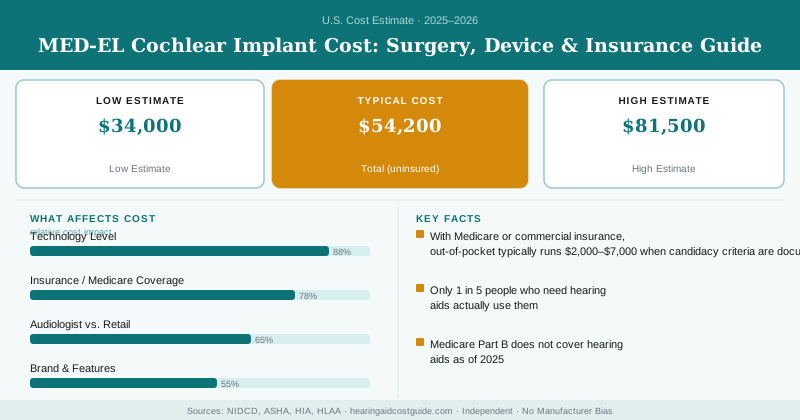
| Component | Low | Typical | High |
|---|---|---|---|
| MED-EL implant device | $18,000 | $23,000 | $28,000 |
| Surgeon/otologist fees | $3,500 | $6,000 | $10,000 |
| Anesthesia | $1,500 | $2,500 | $4,000 |
| Hospital/surgical facility | $8,000 | $15,000 | $25,000 |
| Audiologist candidacy evaluation | $500 | $1,200 | $2,500 |
| Activation & mapping (first year) | $1,500 | $3,000 | $5,000 |
| Aural rehabilitation | $1,000 | $3,500 | $7,000 |
| Total (uninsured) | $34,000 | $54,200 | $81,500 |
These estimates reflect 2025–2026 U.S. pricing. Regional variation is significant — academic medical centers in high-cost metros like New York, Boston, and San Francisco typically run 20–35% higher than community hospitals in lower-cost markets.
Current MED-EL Products
SYNCHRONY 2 implant system: MED-EL’s flagship internal implant with 3.0T MRI compatibility without magnet removal. The SYNCHRONY 2 is FDA-approved and widely used for standard cochlear implantation.
SYNCHRONY ABI: The auditory brainstem implant version, used when the cochlea or auditory nerve can’t be accessed.
Sound processors:
- SONNET 2: Behind-the-ear processor, suitable for most adults and older children
- RONDO 3: Single-unit processor that sits entirely on the head, no behind-ear component — popular with patients who wear glasses or prefer a lower-profile look
- KANSO 2: Off-the-ear processor (similar design to RONDO, Cochlear’s version)
EAS (Electric-Acoustic Stimulation): MED-EL’s DUET system combines a cochlear implant in the high-frequency range with a hearing aid for preserved low-frequency residual hearing. This is particularly relevant for patients with ski-slope hearing loss who retain some low-frequency hearing.
How Costs Compare to Other Brands
In practice, you don’t choose your CI brand the way you choose a hearing aid. Your surgeon has preferred brands based on training, clinical outcomes at their center, and device availability. Cost shouldn’t be the deciding factor between brands — but it’s worth knowing that costs are genuinely comparable:
| Manufacturer | Device Cost | Total Surgery Range |
|---|---|---|
| Cochlear Americas (Nucleus) | $20,000–$28,000 | $35,000–$80,000 |
| MED-EL (SYNCHRONY 2) | $18,000–$28,000 | $34,000–$82,000 |
| Advanced Bionics (HiRes Ultra) | $18,000–$27,000 | $34,000–$80,000 |
The differences are smaller than most people expect. Your total out-of-pocket after insurance is much more affected by your specific plan’s deductible and out-of-pocket maximum than by which device you receive.
Insurance and Medicare Coverage
Cochlear implants are covered by Medicare, Medicaid, and most commercial insurance plans when candidacy criteria are met. The standard audiological candidacy criteria include:
- Bilateral moderate-to-profound sensorineural hearing loss
- Limited benefit from optimally-fit hearing aids (typically less than 50% sentence recognition in the better ear)
- No medical contraindications to surgery
The American Speech-Language-Hearing Association (ASHA) notes that insurance denials for cochlear implants most often occur due to incomplete audiological documentation, not categorical coverage exclusions. If you receive a denial, it’s almost always worth appealing with a complete audiological workup and a letter of medical necessity from your surgeon.
What insurance typically covers:
- The device and surgical procedure
- Hospitalization (usually 1–2 days)
- Activation and initial mapping sessions
- Audiological follow-up for 12 months post-activation
What you may owe:
- Deductible and out-of-pocket maximum ($2,000–$7,000 for most plans)
- Aural rehabilitation beyond covered sessions
- Sound processor upgrades every 5–10 years
MED-EL’s BRIDGE warranty program offers upgrade pricing for patients who stay current with their protection plan. A unique MED-EL feature: their 3.0T MRI-compatible implant means you won’t need a magnet removal surgery if you need an MRI later in life — a real long-term value consideration for patients with other health conditions.
Financial Assistance Options
MED-EL’s BRIDGE Program: Includes loss-and-damage insurance for the external processor and upgrade assistance. Contact MED-EL’s patient services for current terms.
State vocational rehabilitation: If hearing loss impacts your employment, state VR offices can fund CI surgery as a work-related rehabilitation service.
Hospital charity care: Academic centers that perform MED-EL implants often have income-based financial assistance programs. A social worker at the hospital’s audiology or ENT department can walk you through the application.
Clinical trials: MED-EL periodically runs FDA clinical trials for new electrode configurations and EAS devices. Trial participants often receive devices at no cost. Check ClinicalTrials.gov for current MED-EL studies.
MED-EL sound processors are not compatible with Cochlear Americas or Advanced Bionics internal implants — and vice versa. Once implanted, you’re tied to that manufacturer’s external processor ecosystem for life. Confirm your center’s long-term service and upgrade support commitment for whichever brand you choose.
Bottom Line
MED-EL cochlear implant surgery costs $34,000–$82,000 uninsured, nearly identical to competing brands. With Medicare or commercial insurance, out-of-pocket typically runs $2,000–$7,000 when candidacy criteria are documented properly. MED-EL’s strengths — flexible electrode arrays, 3.0T MRI compatibility, and EAS capability — are clinical considerations your surgeon will weigh. Your job is to ensure the insurance documentation is complete and the prior authorization process starts 60–90 days before your scheduled surgery date.
Frequently Asked Questions
MED-EL cochlear implant surgery typically costs $30,000 to $55,000, which includes the device itself ($20,000–$40,000), surgical fees ($5,000–$15,000), anesthesia, and facility charges. The final cost varies based on your location, hospital, surgeon experience, and whether additional testing or imaging is needed.
Most major health insurance plans, including Medicare and Medicaid, cover cochlear implant surgery when medical criteria are met, though you typically pay a deductible ($500–$5,000) plus coinsurance (10–20% of remaining costs). If uninsured, you may qualify for manufacturer assistance programs or hospital financial aid to reduce costs from the full $30,000–$55,000.
Surgery typically takes 2–4 hours, and most patients go home the same day or after an overnight stay. You can return to light activities within 1–2 weeks, but should avoid strenuous exercise and water exposure for 3–4 weeks while your incision heals; activation (when the device is turned on) usually occurs 2–4 weeks after surgery.