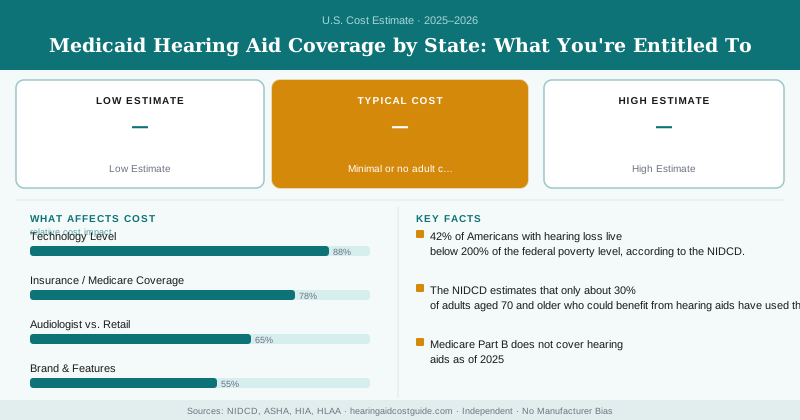
42% of Americans with hearing loss live below 200% of the federal poverty level, according to the NIDCD. For many of them, Medicaid is the only realistic path to affordable hearing aids. Whether it actually pays for aids — and how much — depends entirely on which state you live in.
Here’s the breakdown.
Federal vs. State Medicaid Rules
Medicaid requires states to cover hearing aids for children under 21 through the Early and Periodic Screening, Diagnostic and Treatment (EPSDT) mandate. There are no exceptions — if a child on Medicaid needs a hearing aid, the state must cover it.
For adults, it’s optional. States can choose to cover hearing aids as an optional benefit, cover them with strict limits, or exclude them entirely. The result is a patchwork where crossing a state line can mean the difference between $0 out-of-pocket and full retail price.
State Coverage Tiers (Adults)
| Coverage Level | States (Examples) | What’s Covered |
|---|---|---|
| Full coverage — both aids | California, New York, Illinois, Pennsylvania | $0 copay, both aids, premium tech included |
| Partial — one aid or limited allowance | Texas, Ohio, Georgia | One aid per ear, $500–$1,500 allowance |
| Limited — basic aids only | Florida, North Carolina, Virginia | Coverage for basic/entry-level only |
| Children only — adults excluded | Alabama, Mississippi, Tennessee | Adult coverage eliminated |
| Minimal or no adult coverage | Wyoming, Idaho, South Dakota | Hearing exam only, no aid coverage |
State-by-State Highlights
California (Medi-Cal): One of the most generous states. Covers both hearing aids for adults, including digital aids. Requires an audiological evaluation from a participating provider. Binaural coverage (both ears) is standard.
New York: Covers hearing aids for adults with demonstrated hearing loss. New York Medicaid partners with several audiologist networks. Coverage includes fitting and follow-up.
Texas (Texas Medicaid): Adult coverage limited in scope. One hearing aid per ear per five years for adults under certain managed care plans. Children’s coverage through CHIP and Medicaid is strong.
Florida: Adults covered only through certain Medicaid managed care plans (Statewide Medicaid Managed Care). Coverage varies by plan; some cover one basic aid, others exclude aids entirely.
Illinois: Comprehensive adult coverage through the Illinois Department of Healthcare and Family Services. Covers binaural aids for adults. Technology tier limits apply.
Ohio: Medicaid covers hearing aids for adults in managed care plans, but with a $1,500 per aid limit. Premium rechargeable or Bluetooth-enabled aids may require out-of-pocket top-up.
Pennsylvania: PA Medical Assistance covers one hearing aid per ear, with technology limits. Adults must have a qualifying audiologist evaluation first.
Medicaid benefits change during state budget cycles. A benefit that existed when this was written may have been modified. Before relying on coverage for a purchase, call your state Medicaid office or the MCO (managed care organization) handling your coverage and ask specifically: Does adult hearing aid coverage apply to my plan, what’s the per-aid dollar limit, and which providers are in-network?
Children: Coverage is a Federal Right
Under EPSDT (Early and Periodic Screening, Diagnostic, and Treatment), every child under 21 enrolled in Medicaid is entitled to hearing aids when medically necessary. This includes:
- Audiological evaluation
- Hearing aid fitting
- Both ears if bilateral loss is documented
- Replacement aids as the child grows
- Batteries and maintenance in many states
If your child’s Medicaid plan has denied a hearing aid, you have the right to appeal. EPSDT denials have been successfully overturned in administrative hearings in multiple states. Contact your state’s Medicaid ombudsman or a patient advocacy organization if a claim is denied.
How to Get Approved
Step 1: Get a comprehensive audiological evaluation from a Medicaid-participating audiologist. The audiogram must document the degree and type of hearing loss.
Step 2: Obtain a prescription or recommendation from an audiologist or ENT physician. Most state Medicaid programs require written medical necessity documentation.
Step 3: Your audiologist or hearing aid dispenser submits a prior authorization request to Medicaid. Include the audiogram, the recommended device model, and the medical necessity letter.
Step 4: Prior authorization approval (required in most states before the aid is ordered). Processing typically takes 2–6 weeks.
Step 5: Aid is fitted, and the claim is submitted directly by the provider. Your out-of-pocket cost is $0–$50 (or the plan’s applicable copay).
What Medicaid Won’t Cover
Even in states with good hearing aid coverage, expect these exclusions:
- Premium Bluetooth/streaming technology upgrades
- Extended warranties beyond the standard period
- Loss and damage insurance
- Accessories (TV streamers, remote controls, phone clips)
- Second hearing aids beyond the coverage limit per benefit period
If Your State Doesn’t Cover Adults
Don’t stop at Medicaid. Several parallel programs exist:
- VA benefits: If you’re a veteran, VA covers hearing aids with no income test for service-connected conditions.
- Vocational Rehabilitation: State VR programs cover hearing aids for adults whose hearing loss affects employment.
- LHHS programs: Local Lions Club, Quota International, and Starkey Hearing Foundation programs provide hearing aids to low-income adults in states where Medicaid won’t.
- Manufacturer programs: Phonak, Oticon, ReSound, and Starkey all have patient assistance programs for income-qualified individuals.
The NIDCD estimates that only about 30% of adults aged 70 and older who could benefit from hearing aids have used them. Cost is the leading barrier. Knowing your state’s Medicaid coverage rules — and the alternatives when coverage falls short — is the first step toward closing that gap.
Frequently Asked Questions
Hearing aids typically range from $1,000 to $6,000 per pair when purchased without insurance, depending on the style and technology level. Basic analog models may cost $1,000–$2,000, while advanced digital and rechargeable models can exceed $5,000 per pair. Many patients need two aids, doubling the total out-of-pocket expense.
Medicaid coverage for adult hearing aids varies significantly by state—some states cover the full cost, others cover partial costs ranging from $500–$1,500 per pair, and a few cover nothing at all. All states are federally required to cover hearing aids for children under 21, but adult coverage is optional and state-dependent. You should contact your state Medicaid office to confirm your specific eligibility and coverage limits.
The approval process typically takes 2–4 weeks after you submit your audiologist's prescription and required documentation to your state Medicaid program. Some states may expedite approval within 1–2 weeks if you meet urgent medical criteria, while others may take up to 6–8 weeks during peak periods. Once approved, you can usually obtain your hearing aids within 1–2 weeks.