Most patients assume misophonia is an ear problem. It isn’t — and that misunderstanding sends many people down expensive, unhelpful diagnostic pathways before they find treatment that actually works.
Misophonia is a strong emotional and physiological reaction — rage, panic, disgust, the overwhelming urge to flee — triggered by specific sounds. Classic triggers include chewing, breathing, pen clicking, and keyboard typing. The sounds don’t need to be loud. They just need to be the right sounds for that individual. Research published in the journal Current Biology in 2017 identified that misophonia involves atypical connectivity between the auditory cortex and areas responsible for emotional processing and the fight-or-flight response. It’s real, it’s neurological, and it’s treatable — but not cheaply.
What Misophonia Treatment Costs
| Treatment Type | Session Cost | Full Course Cost |
|---|---|---|
| Audiological evaluation (to rule out hyperacusis, tinnitus) | $250–$600 | One-time |
| Cognitive behavioral therapy (CBT) — full course | $100–$200/session | $1,500–$4,000 (12–20 sessions) |
| Dialectical behavior therapy (DBT) | $120–$250/session | $2,000–$5,000 |
| Tinnitus retraining therapy (TRT) adapted for misophonia | $150–$250/session | $2,000–$4,500 |
| Misophonia specialist program (specialized clinics) | $200–$400/session | $3,000–$8,000+ |
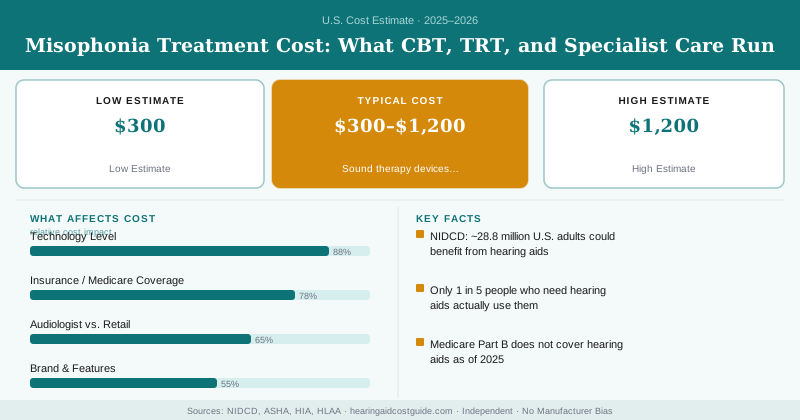
| Sound therapy devices (broadband noise generators) | — | $300–$1,200 |
Why Audiological Testing Comes First
Before starting any psychological treatment, an audiological evaluation rules out conditions that can mimic or co-occur with misophonia:
- Hyperacusis (reduced tolerance for sound volume generally)
- Tinnitus (perceived ringing or noise in the ears)
- Hearing loss (sometimes associated with auditory hypersensitivity)
These require different treatment approaches. A misophonia-focused audiologist or ENT can assess all three and point you to the right specialist. ASHA recommends that audiologists be part of the initial evaluation team whenever a patient presents with any sound-related distress.
Cognitive Behavioral Therapy: The Evidence-Based Core
CBT is the most extensively studied treatment for misophonia. A landmark 2019 randomized controlled trial published in Psychotherapy and Psychosomatics found that CBT reduced misophonia severity scores by an average of 30–50% in treated participants versus controls.
A typical CBT course for misophonia involves:
- Psychoeducation — understanding the neurological mechanism, reducing the sense that you’re “crazy”
- Cognitive restructuring — identifying and challenging distorted thoughts triggered by trigger sounds
- Exposure and response prevention (ERP) — gradually, carefully increasing tolerance for triggers
- Coping skills for acute distress (breathing, distraction, exit strategies)
Most patients complete 12–20 sessions over 3–6 months. Cost per session varies widely by provider type: psychiatrists charge most ($200–$400), licensed psychologists charge $150–$250, and licensed clinical social workers and counselors charge $100–$175. Insurance coverage depends on your mental/behavioral health benefits.
Insurance coverage is complex because misophonia doesn’t yet have its own diagnostic code in the DSM-5. Clinicians typically bill under:
- Anxiety disorder (F41.1) — the most common approach
- OCD-related disorder — if the intrusive nature of sound responses fits this framing
- Adjustment disorder — for milder presentations
Ask your therapist how they plan to code the treatment before starting. Check whether your plan covers the specific code, and whether you need a referral or prior authorization for behavioral health visits. Many plans cover 10–20 therapy sessions per year with a co-pay of $20–$60 per session after deductible.
Dialectical Behavior Therapy (DBT): For Severe Cases
DBT was originally developed for borderline personality disorder but has shown promise for misophonia cases marked by extreme emotional dysregulation — patients who have rage responses or relationship-destroying reactions to triggers. DBT emphasizes distress tolerance and emotional regulation skills that transfer directly to misophonia management.
DBT is typically more intensive and more expensive than standard CBT: a full program may involve both individual sessions and group skills training, running 6–12 months with total costs of $3,000–$8,000.
Sound Therapy: A Complementary Role
Some clinicians incorporate broadband noise generators (similar to those used for hyperacusis treatment) as background sound enrichment — not to treat misophonia directly, but to reduce the signal-to-noise salience of trigger sounds in the environment. At home, a white noise machine ($30–$200) can reduce trigger exposure without the clinical overhead.
Misophonia is not cured by simply avoiding triggers. Avoidance — leaving rooms, wearing noise-canceling headphones constantly, refusing to eat with family members — provides short-term relief but typically worsens the disorder over time by increasing sensitivity and narrowing tolerable environments. Evidence-based treatment moves toward gradual, structured exposure, not permanent avoidance. If a treatment program is built primarily around avoidance strategies, ask about the evidence base.
Finding a Misophonia Specialist
Misophonia is underserved in clinical practice. Most therapists have limited training in it. Look for:
- The Misophonia Association’s provider directory (misophonia-association.org)
- Clinicians who specifically list misophonia, hyperacusis, or tinnitus in their specialties
- University-affiliated hearing and balance centers, which often have multidisciplinary teams
- The ISNR (International Society for Neuroregulation and Research) directory
Telehealth has expanded access meaningfully — CBT for misophonia is well-suited to video sessions, which can improve access to the small number of genuinely specialized clinicians.
The Realistic Cost Picture
Expect to invest $2,000–$6,000 in treatment for a meaningful reduction in misophonia severity. That’s a 3–6 month commitment to therapy, potentially supplemented by audiological evaluation and sound therapy devices. Most patients see meaningful improvement within that timeframe but benefit from maintenance sessions beyond the initial course.
Treatment isn’t cheap. But compared to the occupational impairment, relationship damage, and quality-of-life costs that severe misophonia imposes over years, the investment in effective treatment is almost always worth making.
Frequently Asked Questions
CBT for misophonia typically costs $1,500–$4,000 for a full treatment course, depending on your location, therapist credentials, and number of sessions needed. Most patients complete treatment in 8–16 weekly sessions, with individual therapy sessions ranging from $100–$250 per hour.
Many health insurance plans cover CBT and specialist visits when misophonia is diagnosed by a licensed mental health professional, though coverage varies significantly by plan and insurer. You should expect to pay 20–50% out-of-pocket after insurance, and some plans may require pre-authorization or have annual mental health visit limits.
Most patients see meaningful improvement within 8–12 weeks of consistent CBT or tinnitus retraining therapy (TRT), though full treatment courses range from 3–6 months. The timeline depends on symptom severity, how consistently you practice coping techniques between sessions, and which treatment approach your specialist recommends.