Most motorcycle riders know about crash safety — helmet ratings, jacket armor, gloves. Far fewer know that highway riding without hearing protection is steadily destroying their hearing in a way that’s just as permanent, and a lot less dramatic. There’s no sudden impact. Just wind. For hours.
At 75 mph, the wind noise reaching a rider’s ear is roughly 100–103 dB. OSHA requires hearing protection for industrial workers exposed to 90 dB for more than 2 hours. A four-hour highway ride with no protection gives you a noise dose that NIOSH classifies as hazardous.
Here’s what motorcycle hearing protection actually costs, and what kind of protection actually works.
Why Wind Noise Is Different From Engine Noise
The engine on your bike — even a loud one — isn’t the primary hearing hazard. Wind turbulence from the airflow around your helmet is. At highway speeds, that turbulence creates broadband noise centered in the frequency range that most effectively damages the cochlea: roughly 500 Hz to 4 kHz.
The NIDCD reports that approximately 28.8 million American adults could benefit from hearing aids. Noise-induced hearing loss — including the kind from recreational exposure like motorcycle riding — is one of the leading preventable causes. The damage is cumulative. You won’t notice your high-frequency hearing slipping until it’s years gone.
A full-face helmet helps, but not enough. Research published in audiology literature shows that even riders wearing full-face helmets at 70 mph are exposed to 88–94 dB at the ear — still above the recommended 85 dB protection threshold for extended exposure. Open-face and half helmets are significantly worse.
Hearing protection does not impair your ability to hear traffic hazards. Wind noise is steady-state noise that your brain partially habituates to. Earplugs selectively reduce this broadband wind noise while leaving the frequency signature of horns, sirens, and sharp engine sounds comparatively intact. This is the consistent finding in rider safety research — and why most advanced rider training programs now recommend earplugs.
Motorcycle Hearing Protection Options and Prices
Disposable Foam Earplugs
The cheapest effective protection. Foam earplugs (Howard Leight MAX, 3M E-A-R, Moldex Pura-Fit) at NRR 29–33 are the most popular choice among everyday riders. They work. You can buy 200 pairs for $20–$30, toss them in a tank bag, and have fresh protection for every ride.
- Cost: $0.10–$0.50 each
- NRR: 29–33
- Downsides: Single-use, can be awkward to insert with gloves on, cylindrical shape less comfortable for extended wear
The 3M 1100 and Howard Leight Laser Lite (NRR 32, with a tapered shape that’s easier to insert) are the most popular among riders.
Flanged/Reusable Earplugs (Non-Filtered)
Reusable flanged plugs last 3–6 months with cleaning. They go in faster than foam — push and twist rather than roll and wait — which matters when you’re suiting up in a parking lot with gloves on.
- Cost: $5–$20 per pair
- NRR: 23–29
- Best picks: Mack’s Snore Blockers (NRR 32), 3M E-A-R Push-Ins (NRR 28)
Filtered High-Fidelity Earplugs
Filtered earplugs reduce all frequencies more evenly than foam, which means you lose less of the tonal content of sounds you actually want to hear. For riders who find that foam plugs make music, GPS, and communication systems hard to understand, filtered options are a better compromise.
- Etymotic ER20XS: $20–$25, NRR 14 (SNR 20). Excellent clarity, lower attenuation
- EarPeace HD Motorcycle: $20–$30, NRR 26. Comes with three filter levels
- Alpine MotoSafe: $18–$25, NRR 23 (SNR 25). Designed specifically for motorcyclists
- Crescendo Moto: $35–$45, NRR 13. High clarity, best if you want to hear well more than block maximum noise
| Protection Type | Price | NRR | Best Use Case |
|---|---|---|---|
| Foam disposable (box/200) | $15–$30 | 29–33 | Everyday/touring, maximum protection |
| Laser Lite / tapered foam | $0.25–$0.40 each | 32 | Easy gloved insertion |
| EarPeace HD Motorcycle | $20–$30 | 26 | Balance of protection + clarity |
| Alpine MotoSafe | $18–$25 | 23 | Moto-specific, speech clarity |
| Etymotic ER20XS | $20–$25 | 14 | Maximum clarity, lighter protection |
| Crescendo Moto | $35–$45 | 13 | Track days, city riding, awareness priority |
| Custom solid silicone | $150–$250 | 25–28 | Daily riders, touring, comfort |
| Custom filtered (musician style) | $200–$350 | 17–23 | Touring + communication clarity |
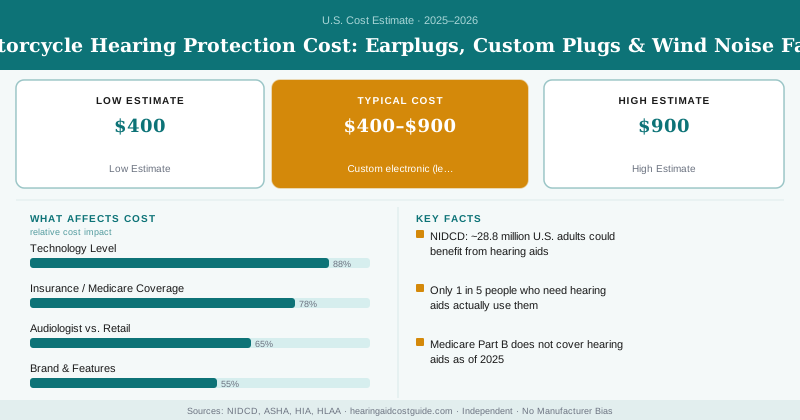
| Custom electronic (level-dependent) | $400–$900 | 20–25 | All-day touring, intercom users |
Custom-Molded Motorcycle Earplugs
If you ride more than a few times a month, custom-molded earplugs make economic and practical sense. They’re made from impressions taken at an audiology office, fit your exact canal shape, and can last 3–5 years.
Solid custom plugs ($150–$250): Maximum wind noise reduction, consistent seal, comfortable for 6–8 hour tours. Best for riders who prioritize protection over audio clarity.
Custom filtered plugs ($200–$350): Similar to musician earplugs — they include a flat-response filter that reduces all frequencies evenly. Better speech intelligibility, easier to use with Bluetooth helmet communication systems. Popular among touring riders.
Custom electronic plugs ($400–$900): Level-dependent compression. You hear ambient sound normally at low levels; at highway wind-noise levels, the electronics reduce the exposure. These are the top tier — comparable to what military aviation personnel use.
The audiologist impression appointment takes 20 minutes and typically costs $50–$100 per ear (often included in the product price). Finished plugs arrive in 1–2 weeks.
If you ride 3 days a week and use a fresh foam plug each ride: about $0.50/ride × 150 rides/year = $75/year. Custom earplugs at $250, lasting 4 years: $62.50/year. You break even in year four — and every ride from day one is dramatically more comfortable. For touring riders doing 10+ hour days, the comfort argument alone is decisive.
Helmets + Earplugs: The Right Combination
Helmet design affects how much wind noise reaches your ears, but even the best helmets don’t eliminate the problem at highway speed. Aeroquiet designs (Shoei GT-Air, Arai Corsair-X, AGV Sportmodular) reduce wind noise compared to older designs — but typically by 3–8 dB. That’s helpful, but it’s not a substitute for ear protection.
The practical combination most audiologists recommend for regular riders:
- Well-fitting helmet with a good chin strap seal
- NRR 25–29 earplug (foam for maximum protection; custom filtered for touring comfort)
- Windscreen or fairing appropriate to your riding style
If you’ve already noticed ringing after rides — that post-ride tinnitus that fades by the next morning — you’ve already crossed the threshold of damage. That temporary threshold shift signals that permanent damage is accumulating. See an audiologist for a baseline audiogram and protect what you have.
For riders who’ve noticed permanent hearing changes, explore noise-induced hearing loss treatment options and hearing aid costs.
Frequently Asked Questions
Wind noise at 65 mph on a motorcycle typically registers 95–100 dB at the rider's ear, and at 75–80 mph can reach 100–103 dB — well above OSHA's 85 dB threshold for mandatory hearing protection. Helmets reduce some wind noise but not enough: studies have shown that full-face helmets at 70 mph still expose riders to 88–94 dB depending on helmet fit and windscreen. Even with a full-face helmet, ear protection is recommended for any highway ride.
Yes — and they're recommended by audiologists and most motorcycle safety courses. Earplugs reduce wind noise (which is steady-state and harmful) more than they reduce other sounds, because the wind frequency range is different from the frequency range of sirens, horns, and engine sounds. Studies show that riders wearing NRR 25–29 earplugs maintain adequate awareness of traffic sounds while significantly reducing damaging wind noise exposure.
Disposable foam earplugs (NRR 29–33) are the most common choice and cost under $0.50 each. Reusable filtered earplugs like Etymotic ER20XS ($20–$25) or EarPeace HD ($20–$30) reduce wind noise while preserving more speech and signal clarity. Custom-molded motorcycle earplugs from an audiologist run $150–$350 and are the best long-term option for daily or touring riders who value fit, comfort, and consistent protection.