A foam earplug reduces sound by 20–30 dB — but it cuts high frequencies dramatically more than low frequencies. That’s fine if you’re using a jackhammer. It’s useless if you’re a musician who needs to hear a balanced mix while protecting your ears. The sound becomes muffled, your monitoring is off, and you end up pulling the plugs out anyway.
That’s why custom musician earplugs exist — and why musicians, sound engineers, teachers, and anyone who works in sustained loud environments pay $150–$350 for them instead of $0.30 for foam.
Custom Musician Earplug Cost Breakdown
| Component | Cost |
|---|---|
| Ear impression (at audiologist) | $50–$100 per pair |
| Custom earmold shell (acrylic or silicone) | $75–$150 per pair |
| ER attenuator filters (ER-9, ER-15, or ER-25) | $75–$150 per filter set |
| Full custom pair with impressions and filters | $150–$350 |
| Replacement filters only (if shell is intact) | $50–$100 per set |
| Off-the-shelf musician plugs (non-custom, e.g. Eargasm, EarPeace) | $15–$45 per pair |
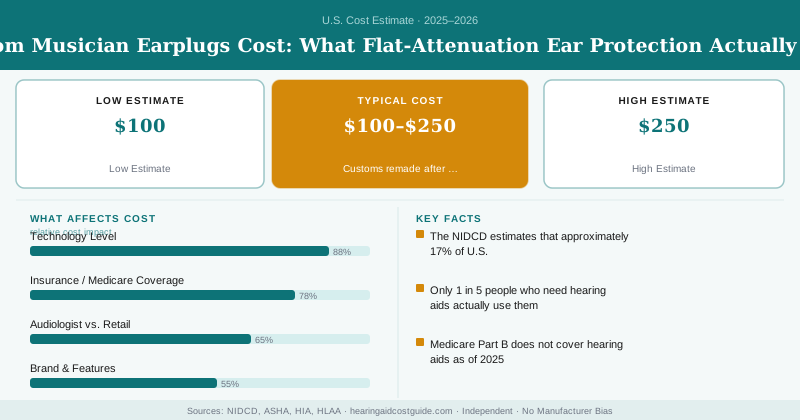
| Customs remade after significant ear canal change | $100–$250 |
What Makes Them Different: Flat Attenuation
Standard earplugs use acoustic mass to block sound — they reduce high-frequency sound (treble) far more than low-frequency (bass). The resulting muffled quality makes music sound distorted and monitoring unreliable.
Etymotic Research developed the ER attenuator system specifically for musicians. The filters use a tuned acoustic resonator to reduce all frequencies by the same amount — “flat attenuation.” ER-9 filters cut sound 9 dB. ER-15 cuts 15 dB. ER-25 cuts 25 dB. Music sounds like music, just quieter. You can actually monitor your own playing while protecting your hearing.
The NIDCD estimates that approximately 17% of U.S. adults aged 20–69 have hearing loss potentially caused by noise exposure — representing tens of millions of people. The music industry contributes meaningfully to that number. A 2006 ASHA study found that musicians were nearly four times more likely to develop noise-induced hearing loss than non-musicians. Those stats don’t improve when musicians work with inadequate protection.
ER-9: Stage performers in quieter acoustic ensembles, orchestral musicians, church musicians. Reduces exposure while preserving subtle dynamics. ER-15: Most working musicians — live stages, rehearsal rooms, club venues, drum practice. The most widely used filter. ER-25: Recording engineers at loud sessions, drummers, musicians near large PA systems, military musicians. Maximum protection with flat response. When in doubt, start with ER-15. Filters are interchangeable in most custom shells — you can swap to ER-9 or ER-25 without replacing the whole earplug.
The Process: Getting Custom Impressions
You need ear impressions to have custom earplugs made. This is a quick in-office procedure — 10–15 minutes at most. An audiologist or hearing instrument specialist fills your ear canal with impression material, lets it set, removes it, and sends the molds to a laboratory. Labs like Westone, Etymotic, or Sensaphonics manufacture the finished plugs and ship them within 2–3 weeks.
You can get impressions taken at:
- Audiologist offices (most reliable)
- ENT practices with audiology departments
- Some music conservatories and music schools that partner with audiologists
- Hearing aid dispensers (often the most affordable option)
Don’t skip the professional impression. Ill-fitting custom earplugs don’t attenuate evenly and can actually cause fit discomfort that makes you less likely to wear them. The $50–$100 impression cost is part of getting the product to work correctly.
OTC Musician Plugs: When They Work
Non-custom musician earplugs — brands like Eargasm ($35), EarPeace ($25), and Vibes ($25) — offer decent flat attenuation in a one-size-fits-most format. They’re not as good as customs. The fit isn’t as secure, isolation is slightly less consistent, and they can shift during performance.
But they’re dramatically better than foam earplugs for music listening, and they’re a reasonable starting point for musicians who aren’t sure they’ll use protection regularly. If you find yourself wearing them consistently, that’s when upgrading to customs makes financial sense.
| Protection Option | Cost | Attenuation Quality | Fit Security |
|---|---|---|---|
| Foam earplugs (10-pack) | $2–$5 | Poor (muddy, non-flat) | Good isolation, poor comfort |
| OTC musician plugs (Eargasm, EarPeace) | $15–$45 | Good flat attenuation | Moderate |
| Custom musician earplugs (ER-15, professional) | $150–$350 | Excellent, verified flat | Excellent — made to your ear |
| In-ear monitor system (professional, with isolation) | $300–$3,000 | Hearing protection + monitoring | Custom, highest tier |
In-Ear Monitors: The Professional Alternative
Many professional touring musicians use in-ear monitors (IEMs) instead of floor wedges — and custom IEMs serve double duty as both hearing protection and stage monitoring. Custom IEMs run $300–$3,000 depending on the driver configuration and manufacturer (Ultimate Ears, JH Audio, Sensaphonics are major players). They provide 25–35 dB of passive isolation while delivering exactly the mix the musician wants.
If you’re playing at the level where stage monitoring is a regular part of your workflow, custom IEMs may be a more versatile investment than standalone earplugs.
Musician earplugs don’t last forever. Silicone shells stay soft and effective for 3–5 years. Acrylic shells last longer but can crack. Replace filters immediately if you notice any degradation in sound quality — a damaged filter changes the attenuation curve. If your ears have changed shape significantly (significant weight change, age, or jaw structure changes), the seal may be compromised even if the shell looks fine.
Are Custom Musician Earplugs Covered by Insurance?
Typically not for musicians buying them for performance protection. Health insurance covers hearing protection devices primarily in occupational contexts where OSHA mandates it — and musicians are more often self-employed or gig workers outside traditional OSHA programs.
HSA and FSA accounts can be used to purchase hearing protection devices if they’re recommended by a physician or audiologist as medically necessary. If you have documented noise-induced hearing loss and an audiologist recommends protective earplugs, it’s worth running the purchase through your HSA/FSA. Your audiologist can provide the documentation needed.
The Bottom Line
Custom musician earplugs run $150–$350 all in — impressions, shell, and filters. They’re a one-time investment that lasts 3–5 years and can genuinely prevent the progressive hearing loss that ends careers and diminishes quality of life for working musicians. If you’re performing or rehearsing more than a few hours per week in amplified environments, they’re not optional protection. They’re basic maintenance.
Frequently Asked Questions
Custom musician earplugs typically cost $150–$350 per pair when purchased from an audiologist. This price includes the professional ear impression, custom mold creation, and insertion of flat-attenuation filters that preserve sound balance across frequencies, unlike standard foam plugs that muffle high frequencies.
Most health insurance plans do not cover custom musician earplugs because they're considered hearing protection rather than hearing correction or medical treatment. You'll typically pay the full $150–$350 out-of-pocket, though some performers may deduct them as a business expense on their taxes.
The process typically takes 1–2 weeks from your initial audiologist appointment to final fitting. Your audiologist will take a custom ear impression during the first visit, and the lab will manufacture your personalized molds before you return for delivery and adjustment.