Did you know that Costco’s Kirkland Signature hearing aids are built by Sonova — the exact same company that makes Phonak? Or that Costco’s Philips HearLink comes from Demant, which owns Oticon? Store-brand hearing aids aren’t knockoffs. They’re often the same engineering wearing a cheaper badge. Which raises an uncomfortable question: are you paying thousands extra for a logo?
Let’s pull back the curtain.
Name-Brand vs. Store-Brand: Pricing
| Factor | Name-Brand | Store-Brand |
|---|---|---|
| Price per pair | $4,000–$7,000 | $1,400–$2,200 |
| Maker | Major manufacturer | Same manufacturers, exclusive SKUs |
| Newest features | First to launch | Slightly behind |
| Fitting included | Usually | Usually (e.g., Costco) |
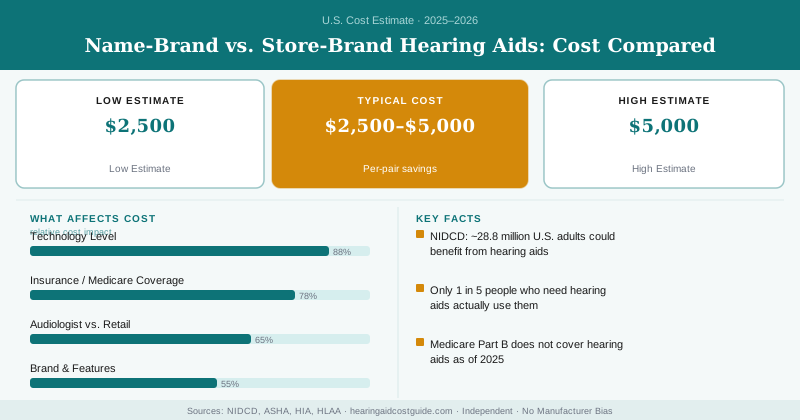
| Per-pair savings | — | $2,500–$5,000 |
The gap is real, and it’s not because the cheaper devices are inferior knockoffs. It’s because the same six manufacturers that dominate the premium market also build exclusive store-brand lines.
Who Actually Makes Hearing Aids
The global hearing aid market is controlled by a handful of parent companies — Sonova, Demant, WS Audiology, GN, and a few others. These same companies supply retailers’ store brands:
- Kirkland Signature (Costco) — made by Sonova, parent of Phonak
- Philips HearLink (Costco) — made by Demant, parent of Oticon
- Rexton (Costco) — made by WS Audiology, parent of Signia
- Jabra Enhance Pro (Costco) — made by GN, parent of ReSound
So a store-brand aid frequently shares chips, algorithms, and core engineering with its premium-branded cousin. Our Costco hearing aids cost guide maps these out in detail.
Store-brand hearing aids ($1,400–$2,200) are built by the same major manufacturers as name-brand devices ($4,000–$7,000) and often share core technology. You usually trade only the very newest features for savings of $2,500–$5,000 per pair. For most buyers, the store brand is the smarter spend.
What You Give Up
Store brands aren’t identical to flagships in every way. They’re typically built on slightly earlier-generation technology — last year’s chip rather than this week’s. You may miss the absolute newest noise-handling features or the latest connectivity tricks.
You’re also usually tied to that retailer for service. Buy a Kirkland aid at Costco, and Costco handles your adjustments — convenient if you have a location nearby, less so if you don’t. Name-brand aids can generally be serviced by any clinic carrying that brand.
When Name-Brand Is Worth It
The premium badge earns its keep if:
- You want the newest technology the day it ships
- Your loss is complex and you want a specialist’s full brand lineup
- You value an ongoing relationship with one private audiologist
- You need a specialized model (deep-insertion, extended-wear) a store brand doesn’t offer
For most typical age-related loss, though, those advantages are marginal next to thousands in savings.
“Store-brand” and “cheap amplifier” are not the same thing. Costco’s store brands are real, FDA-regulated prescription hearing aids fitted by licensed staff. Don’t confuse them with $40 personal sound amplifiers sold online, which aren’t regulated as hearing aids and can’t be tuned to your hearing loss. The savings come from cutting markup, not corners.
What the Numbers Say
Consumer Reports has repeatedly ranked Costco among the top-rated hearing aid retailers in the US based on member satisfaction. Meanwhile, the NIDCD reports only about 1 in 5 adults who could benefit from hearing aids use them, with cost the leading barrier — exactly the problem store brands help solve. A 2024 AARP report tied that barrier to people delaying treatment for years.
Who Should Buy Which
Buy store-brand if you have typical hearing loss, want excellent value, and have convenient access to the retailer. Buy name-brand if you need the newest tech, have a complex case, or want a long-term private-clinic relationship.
Bottom Line
Store-brand hearing aids are the same companies’ engineering at a fraction of the price — usually the savviest buy for everyday hearing loss. Pay up for name-brand only when the newest features or a specialist relationship genuinely matter to you. Compare both against the full prescription hearing aids cost range and our best hearing aids 2025 picks before deciding.
Frequently Asked Questions
Name-brand hearing aids typically cost $4,000–$7,000 per pair, while store-brand options from retailers like Costco range from $1,400–$2,200 for comparable technology. The price difference often reflects branding and distribution costs rather than significant differences in underlying engineering, since many store brands are manufactured by the same companies that make premium name-brand models.
Most traditional Medicare and employer health insurance plans do not cover hearing aids, leaving patients responsible for the full out-of-pocket cost. However, some Medicare Advantage plans and state Medicaid programs offer limited coverage (typically $500–$2,000 per pair), so it's worth checking your specific plan details with your insurer.
The typical hearing aid fitting process takes 1–2 weeks from initial hearing test to receiving your devices, though this varies by retailer and whether adjustments are needed. Once fitted, most users need 2–4 weeks of adjustment time to get comfortable with the new devices, though basic functionality begins immediately.