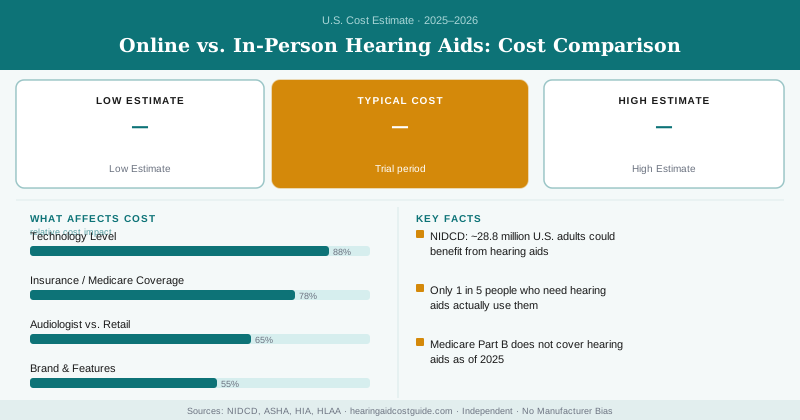
Buying hearing aids online can cut your cost by half or more. That’s the headline — and it’s true. But the savings come with strings, and whether those strings matter depends entirely on your hearing loss and how comfortable you are without a clinician in the room.
So let’s weigh both routes honestly.
Online vs. In-Person: The Cost Gap
| Factor | Online | In-Person Clinic |
|---|---|---|
| Price per pair | $1,000–$2,500 | $4,000–$7,000 |
| Hearing test | App-based or remote | In-clinic audiogram |
| Fitting | Self-fit or virtual | Hands-on, real-ear measurement |
| Follow-up care | Remote / limited | In-person, ongoing |
| Trial period | 45–100 days | 30–60 days typical |
That’s roughly a $2,500–$5,000 difference per pair. The online model strips out clinic overhead and bundled professional time — which is exactly where most of the in-person premium goes.
How Online Buying Works
Online brands — think Jabra Enhance, Eargo, MDHearing, Audien — ship devices to your door. Some include remote video appointments with licensed audiologists; others are fully self-fit through a smartphone app. The FDA’s 2022 OTC ruling supercharged this market by letting adults buy without a prescription.
You handle (or get remote help with) the hearing test and the fitting. For a tech-comfortable person with mild-to-moderate loss, that’s often plenty. Compare the landscape in our OTC hearing aid cost guide.
Online hearing aids cost $2,500–$5,000 less per pair than in-person clinic devices because you trade hands-on professional care for self- or remote fitting. That’s a great deal for mild-to-moderate loss and tech-comfortable buyers — but in-person care wins for complex loss and people who want a clinician’s hands on the fitting.
What In-Person Care Buys You
A clinic visit gets you a diagnostic audiogram, a physical ear exam, and a fitting verified with real-ear measurement — where the audiologist measures actual sound levels inside your ear canal and tunes accordingly. Research consistently shows real-ear-verified fittings outperform default programming. You also get ongoing, in-person adjustments as your hearing changes. Our audiologist visit cost guide covers what those appointments run.
For complex cases, that hands-on expertise isn’t optional — it’s the difference between a device that helps and one that gathers dust.
Online buying skips the medical exam. The American Speech-Language-Hearing Association recommends an in-person evaluation if you have one-sided loss, sudden loss, ear pain, drainage, dizziness, or visible wax blockage. Online hearing aids are for adults 18+ with perceived mild-to-moderate loss — not for diagnosing the cause of hearing problems.
The Trial Period Safety Net
Online brands often offer generous trials — 45 to 100 days — and free returns, which lowers the risk of buying sight-unseen. Read the fine print, though: some charge restocking fees, and shipping a device back is on you.
Who Should Buy Which
Buy online if your loss is mild-to-moderate, you’re comfortable with apps, and you want maximum savings. Buy in-person if your loss is significant, your case is medically complex, or you simply want a professional managing the process start to finish.
The NIDCD reports only about 1 in 5 adults who could benefit from hearing aids actually use them, and a 2024 AARP report names cost as the top barrier — which is precisely why the cheaper online route has exploded in popularity.
A Hybrid Option
Don’t forget the middle ground: warehouse retailers. Costco hearing aids pair in-person professional fitting with online-level pricing ($1,400–$2,200 per pair), giving you much of both worlds.
Insurance and Spending Accounts
One more cost wrinkle: how you pay. Both online and in-person hearing aids can usually be bought with HSA or FSA funds, since they’re qualified medical expenses. Traditional Medicare still doesn’t cover hearing aids, though many Medicare Advantage plans offer a hearing benefit — and those benefits are far more likely to apply at an in-network in-person provider than at an online retailer. If you have any hearing coverage through your insurer, that can flip the math back toward in-person buying, so check your benefits before assuming online is cheaper.
Common Mistakes to Avoid
The biggest online-buying mistake is skipping the trial-period test in real conditions. People set up the aids, decide they’re “fine” sitting quietly at home, then discover weeks later they don’t work in noise — after the return window closes. The biggest in-person mistake is the opposite: accepting the first quote without asking about unbundled pricing or comparing against a warehouse retailer. Both routes reward a little homework.
Bottom Line
Online wins on price and convenience; in-person wins on expertise and hands-on care. Match the route to your hearing loss and your comfort level — and whichever you choose, get a baseline hearing test first and compare against the full hearing aid cost picture.
Frequently Asked Questions
Online hearing aids typically cost $1,000–$2,500 per pair, while in-person clinic hearing aids range from $4,000–$7,000 per pair. This means buying online can save you $1,500–$4,500 or more per pair, though online options often come with limited professional support.
Most Medicare plans and private insurance policies do not cover hearing aids at all, leaving you responsible for the full cost out-of-pocket. Some employer-sponsored plans and state Medicaid programs may offer limited coverage, typically up to $500–$1,000 per pair, so check your specific policy before purchasing.
Online hearing aids can be ordered and delivered in 5–10 business days with minimal setup, though fitting adjustments happen via app or phone. In-person clinic purchases require an appointment for testing, fitting, and adjustments, typically taking 1–2 weeks from initial consultation to final fitting.