Most people assume the $200 hearing aids at the pharmacy are junk and the $5,000 pair from the audiologist is the only “real” option. That’s wrong on both counts — and the truth could save you thousands.
In October 2022, the FDA created a legal over-the-counter category for hearing aids, ending a rule that had been in place since 1976. No prescription. No clinic visit. The question now isn’t whether OTC aids are legitimate — it’s whether they’re right for you.
The Price Gap, Side by Side
| Category | Price Per Pair | Fit By | Best For |
|---|---|---|---|
| OTC — basic | $200–$600 | Yourself (app) | Mild loss, simple needs |
| OTC — mid/premium | $600–$1,600 | Yourself (app) | Mild-to-moderate loss |
| Costco (prescription-grade) | $1,400–$2,500 | Licensed specialist | Most adults wanting service |
| Prescription — entry to mid | $3,000–$5,000 | Audiologist | Moderate-to-severe loss |
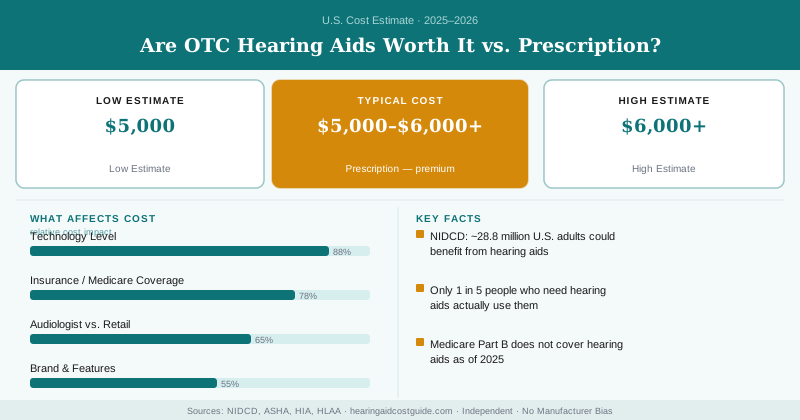
| Prescription — premium | $5,000–$6,000+ | Audiologist | Complex loss, full support |
What You’re Actually Paying For
The hardware inside an $800 OTC device and a $5,000 prescription device is sometimes closer than you’d think. The price difference largely reflects professional services: the audiogram, the hearing aid fitting, real-ear measurement, and years of follow-up adjustments bundled into prescription pricing.
The FDA created OTC aids specifically to reach the roughly 30 million American adults with untreated hearing loss — many of whom skipped treatment because of cost. According to the NIDCD, only about 1 in 5 people who could benefit from hearing aids actually uses them, and price has long been the top barrier.
When OTC Is Genuinely Worth It
- Have mild-to-moderate hearing loss (trouble in restaurants, asking people to repeat themselves)
- Are an adult comfortable using a smartphone app
- Want to try amplification without a $5,000 commitment
- Have a fairly symmetrical loss between both ears
- Mainly struggle with everyday conversation, not specialized listening situations
Consumer Reports has tested OTC models and found that several — Sony CRE, Jabra Enhance, Sennheiser — perform well on objective measures. They’re not toys. For the right person, a $1,000 OTC pair can deliver most of what a $4,000 prescription pair would.
When Prescription Is Worth Every Dollar
See an audiologist instead of buying OTC if you have severe or profound hearing loss, sudden hearing loss within 90 days, pain or drainage, dizziness, ringing in just one ear, or noticeably different hearing between ears. These can signal medical conditions that need treatment, not just amplification.
Prescription aids also win when you want the device tuned precisely to your hearing curve, ongoing professional adjustments, and help managing tricky listening environments. For complex losses, the customization isn’t a luxury — it’s the difference between hearing well and being frustrated.
The Middle Path Most People Miss
You don’t have to choose between cheap-and-DIY or expensive-and-professional. Costco fits prescription-grade pairs for $1,400–$2,500, with a hearing test, professional fitting, and three years of follow-up included. Consumer Reports has ranked it the top hearing aid retailer for member satisfaction multiple years running.
Frequently Asked Questions
Are OTC hearing aids actually worth it? For mild-to-moderate loss in an adult, often yes. The value at $200–$1,600 versus $3,000–$6,000 is real, as long as your loss fits the OTC profile.
What’s the core difference? Who fits them and who they’re for. OTC is self-fit for mild-to-moderate adult loss; prescription is professionally programmed and can handle severe loss.
Can OTC aids be adjusted professionally later? Sometimes. Some brands offer remote support, but many clinics won’t program a device they didn’t sell.
Do they last as long? Roughly the same 3–7 years, though OTC warranties tend to be shorter and long-term data is still limited since the category only launched in 2022.
The bottom line: OTC hearing aids are worth it when your loss is mild-to-moderate and your needs are straightforward. When your loss is more serious — or your ears are sending warning signs — the money you’d “save” on OTC isn’t a savings at all.
Frequently Asked Questions
For adults with perceived mild-to-moderate hearing loss, yes — OTC aids can be genuinely worth it. Consumer Reports testing has found that some models (Sony CRE, Jabra Enhance, Sennheiser) perform well on objective measures at a fraction of prescription pricing. At $200–$1,600 a pair versus $3,000–$6,000 for prescription, the value is real. But 'worth it' depends on your hearing profile: OTC aids skip the audiogram-verified fitting and real-ear measurement, so they may not match your exact hearing curve.
Three things: who fits them, who they're for, and price. OTC aids are self-fit using a smartphone app and are legally restricted to adults 18+ with mild-to-moderate loss. Prescription aids are programmed by an audiologist using your audiogram and verified with real-ear measurement, and they can handle severe-to-profound loss. The hardware is sometimes similar; the professional services and customization are what you pay extra for with prescription.
The FDA limits OTC aids to adults 18+ with perceived mild-to-moderate hearing loss. Skip them if you have severe or profound loss, sudden hearing loss within the past 90 days, pain or drainage from the ear, dizziness, ringing in only one ear, or very different hearing between your two ears. Those signs warrant a medical evaluation first. Children should always be seen by a pediatric audiologist.
Sometimes, but not always. Many audiologists won't program a device they didn't sell, and OTC aids are designed for self-adjustment through an app rather than clinical software. Some OTC brands (Jabra Enhance, Lexie) offer remote support from licensed professionals by phone or video. If you think you'll want ongoing professional care, a Costco or prescription route may serve you better.
Both typically last 3–7 years. OTC aids are newer to market (the FDA category launched in 2022), so long-term durability data is still thin, and warranties tend to be shorter — often 1 year versus 2–3 years for prescription aids. Rechargeable batteries in either type usually need servicing around the 3–4 year mark.
Costco. A pair runs $1,400–$2,500 including a hearing test, fitting by a licensed hearing instrument specialist, and three years of follow-up — well under typical prescription pricing of $3,000–$6,000. It's not OTC, but it delivers prescription-level fitting at close to OTC prices for many buyers.