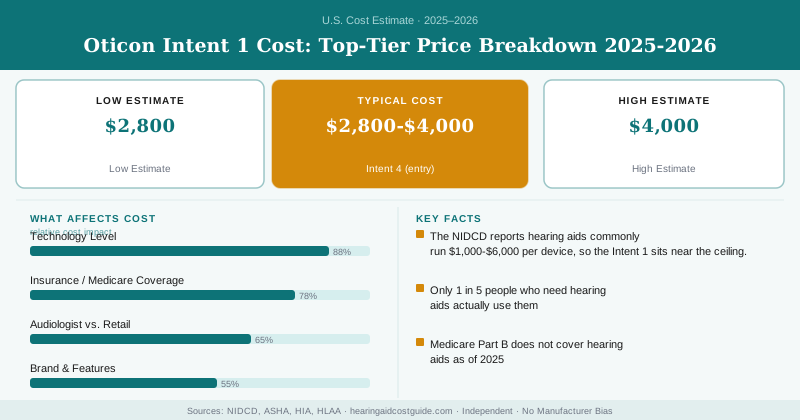
Wrong assumption number one: that “Intent 1” is the cheapest Oticon Intent. It’s the opposite. Oticon counts down — the Intent 1 is the flagship, the most expensive tier, running $3,000 to $5,000 per device. The Intent 4 is the budget end. People mix this up constantly, and it can cost them thousands.
Where the Intent 1 Sits
The Intent line is Oticon’s newest platform, built on the Sirius chip and released in 2024. The whole family — Intent 1, 2, 3, and 4 — shares the same hardware; what changes between tiers is how much of the processing and how many automatic programs are switched on. For the broader lineup, see our Oticon Intent overview.
The standout feature is the 4D Sensor, which reads your head movement, body movement, the surrounding soundscape, and your conversational activity to adjust the device on the fly. It’s the first mainstream hearing aid to use motion sensors this way for sound steering.
Intent 1 vs. the Rest of the Line
| Tier | Per Device | Per Pair (Est.) |
|---|---|---|
| Intent 1 (flagship) | $3,000-$5,000 | $6,000-$10,000 |
| Intent 2 | $2,400-$3,400 | $4,800-$6,800 |
| Intent 3 | $1,900-$2,700 | $3,800-$5,400 |
| Intent 4 (entry) | $1,400-$2,000 | $2,800-$4,000 |
The Intent 1 unlocks the full 4D Sensor responsiveness and the widest set of automatic environments. The lower tiers narrow those down.
Is the Flagship Worth It
The Intent 1 makes sense if you’re in constantly shifting environments — moving between quiet and loud, walking and sitting, one-on-one and group chats. The 4D Sensor shines when things change fast. If your days are more predictable, the Intent 2 or 3 saves you $2,000-$4,000 a pair with most of the benefit intact.
Keep the price in context. The NIDCD reports hearing aids commonly run $1,000-$6,000 per device, so the Intent 1 sits near the ceiling. And only about 1 in 5 Americans who could benefit from hearing aids actually wears them, per the Hearing Loss Association of America — cost is the top reason. Don’t overbuy.
Connectivity and Charging
The Intent 1 streams directly to iPhone and to many Android phones, and it ships rechargeable with a lithium-ion battery rated for a full day. If hands-free phone calls or TV streaming matter, our Bluetooth hearing aid guide covers what to expect.
The 4D Sensor relies on accurate fitting to your audiogram and your real ear measurements. Buying a flagship like this without professional prescription fitting wastes the very technology you paid a premium for.
Ways to Save
- Insurance / Medicare Advantage allowances can cut the out-of-pocket cost sharply.
- HSA/FSA funds qualify.
- Financing: many clinics offer interest-free terms — see our financing guide.
- Step down a tier if your lifestyle doesn’t demand the flagship.
Bottom Line
The Oticon Intent 1 is a genuine flagship with real innovation in the 4D Sensor. Budget $6,000-$10,000 for a pair with services. But “1” means top, not cheap — and for many people, a mid-tier Intent or another brand from our best hearing aids of 2025 is the smarter spend.
Frequently Asked Questions
The Oticon Intent 1 costs $3,000 to $5,000 per device, making it Oticon's flagship and most expensive tier in the Intent line. Most patients need two devices (one for each ear), so total out-of-pocket can reach $10,000 before insurance or manufacturer discounts.
Medicare does not cover hearing aids, including the Intent 1, leaving most seniors responsible for the full $3,000-$5,000 per device cost. Some private insurance plans and Medicaid programs in select states offer partial coverage, typically $500-$2,000 per ear, but you should verify your specific plan's hearing aid benefit before purchase.
Initial fitting and programming typically takes 1–2 hours at your audiologist's office, with follow-up adjustment appointments scheduled 2–4 weeks later and again at 6–8 weeks as you adapt. Most users reach stable, comfortable hearing with the Intent 1's 4D sensor technology within 4–6 weeks of regular daily use.