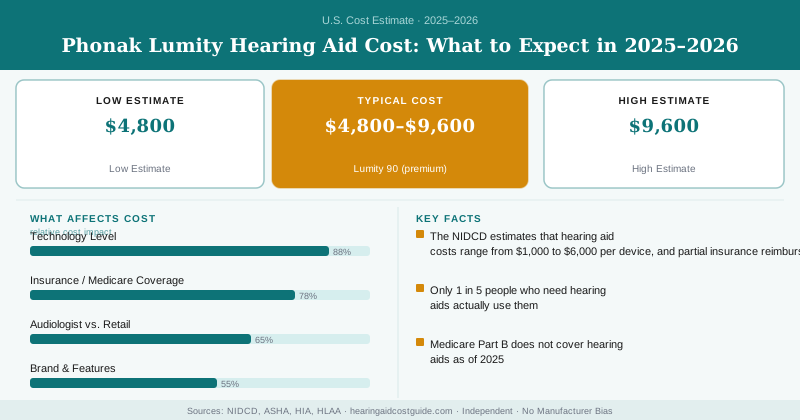
Phonak’s Lumity platform landed with a bold promise: better speech understanding in loud places. If you’ve been quoted $4,000–$9,600 for a pair, that number is real — but so is the gap between a basic Lumity 30 and the top-of-the-line Lumity 90. Here’s what’s actually driving the price.
What the Lumity Platform Is
Phonak launched its Lumity platform in late 2022, built around AutoSense OS 5.0 — the latest version of the company’s environment-sensing engine that automatically shifts the hearing aid’s focus based on what you’re doing. Standing in a quiet kitchen? It adjusts. Walking into a noisy restaurant? It adjusts again.
The headline feature is StereoZoom 2.0, which sharpens focus on a single voice when multiple people are talking at once. Independent clinical testing showed meaningful improvements in speech understanding in noise compared to the predecessor Phonak Paradise platform. That’s not marketing — it’s the kind of performance data audiologists point to when explaining the price tag.
Phonak Lumity Price Ranges
Phonak organizes the Lumity line into four technology tiers. Higher numbers mean more automatic features and better processing in complex listening situations.
| Model | Per Device | Per Pair (Est.) |
|---|---|---|
| Lumity 30 (entry) | $1,100–$1,800 | $2,200–$3,600 |
| Lumity 50 (basic) | $1,500–$2,200 | $3,000–$4,400 |
| Lumity 70 (advanced) | $1,900–$2,800 | $3,800–$5,600 |
| Lumity 90 (premium) | $2,400–$4,800 | $4,800–$9,600 |
These figures typically include professional services — fitting, follow-up adjustments, and a standard warranty. Some dispensers bundle in three years of service; others charge separately. Always ask what’s included before signing.
The Style Factor
Lumity comes in several physical styles, and the style affects price too.
- Audéo Lumity (receiver-in-canal): the most popular style, discreet, fits most hearing losses
- Naída Lumity (power BTE): built for severe-to-profound hearing loss, slightly larger
- Sky Lumity: designed for children and teens
- CROS/BiCROS Lumity: for single-sided deafness
The Audéo Lumity is what most adults end up with. It comes in rechargeable and standard battery versions, with rechargeable models adding roughly $200–$400 to the total.
What’s Driving the Premium?
The top tier adds features the lower tiers simply don’t have: full StereoZoom 2.0, improved dynamic noise cancellation, and the most sophisticated version of AutoSense OS 5.0. For someone who attends meetings, travels, or frequently dines out, those features translate into real-world benefit. For a quieter lifestyle, the Lumity 30 or 50 may be more than enough.
According to the Hearing Loss Association of America, roughly 48 million Americans have some degree of hearing loss, yet only about 1 in 5 who could benefit from hearing aids actually wears them. Cost is cited as the top barrier. Choosing the right tier — rather than automatically reaching for the 90 — can make hearing aids financially accessible without sacrificing sound quality.
Bundled vs. Unbundled Pricing
One thing worth asking your audiologist: is the price quoted bundled or unbundled?
- Bundled: Device + fitting + all follow-up appointments + warranty rolled into one price. Common at independent audiology clinics.
- Unbundled: Device cost only, professional services billed separately at each visit. More common at hospital-affiliated clinics.
Neither is inherently better, but bundled pricing is easier to budget. If you’re comparison shopping, make sure you’re comparing apples to apples.
Phonak Lumity vs. Competitors
Phonak competes directly with Oticon, Starkey, ReSound, and Signia at similar price points. The Lumity 90 typically runs $200–$600 more per pair than Oticon’s Intent or ReSound’s Omnia at the same tier — a reflection of Phonak’s AutoSense platform and its continued investment in speech-in-noise research.
If price is a significant concern, it’s worth knowing that Costco carries the Phonak brand under a different name (KirkLand Signature) at considerably lower prices, though with fewer follow-up services included.
Ways to Reduce the Cost
- Insurance: Some commercial plans and Medicare Advantage plans cover hearing aids. The NIDCD estimates that hearing aid costs range from $1,000 to $6,000 per device, and partial insurance reimbursement can cut that significantly.
- HSA/FSA: Hearing aids are a qualified medical expense. If you have a health savings account, use it.
- CareCredit or clinic financing: Many audiologists offer 12–18 months no-interest financing.
- Trial period: Phonak requires dispensers to offer a minimum 30-day trial. Take your time testing the aids in your real life.
Online-only Phonak sales exist but come without a licensed audiologist fitting. Hearing aids that aren’t properly fitted to your audiogram can actually make speech understanding worse. Always work with a credentialed audiologist for prescription devices.
Bottom Line
Phonak Lumity is a strong platform — particularly for active adults who spend time in noisy environments. Budget $4,000–$7,000 for a quality pair with professional services. If that’s out of reach, the Lumity 30 or 50 delivers solid performance at a more manageable price point. Shop around, ask about bundled pricing, and take full advantage of the trial period before committing.
Frequently Asked Questions
A pair of Phonak Lumity hearing aids typically costs $4,400 to $9,600, depending on the technology level you choose. Individual devices range from $2,200 to $4,800 per hearing aid, with the Lumity 30 at the lower end and the Lumity 90 at the premium end of the price spectrum.
Medicare Part B covers up to $200 per hearing aid once every 12 months, though many beneficiaries still pay $2,000+ out-of-pocket after this benefit. Private insurance coverage varies widely—some plans cover 50–80% of costs, while others cover nothing, so you should check your specific plan before purchasing.
After your purchase, plan for a fitting appointment that typically takes 1–2 hours, followed by 2–4 follow-up adjustment visits over the next 4–6 weeks as your audiologist fine-tunes the devices. Most users experience meaningful results within the first 2–3 weeks as their brain adjusts to the new hearing technology.