Phonak Paradise launched in 2020 as the Swiss manufacturer’s flagship platform — and it remains one of the strongest values in premium hearing aids, even as Phonak has since released the Lumity platform. If you don’t need the newest generation, Paradise pricing has dropped significantly, and the underlying technology is still excellent.
Here’s what Paradise costs today, which models are worth the difference, and how to decide between Paradise and the newer Lumity.
Phonak Paradise Prices in 2026
Phonak uses a level-numbering system for technology tiers: 90 is top of the line, 70 is advanced, 50 is standard, and 30 is essential. All are available in rechargeable (R) and battery-powered configurations.
| Model | Technology Level | Estimated Pair Price |
|---|---|---|
| Audéo Paradise P-90 R (rechargeable) | Premium | $4,500–$6,500 |
| Audéo Paradise P-70 R | Advanced | $3,500–$5,000 |
| Audéo Paradise P-50 R | Standard | $2,500–$4,000 |
| Audéo Paradise P-30 | Essential | $2,000–$3,200 |
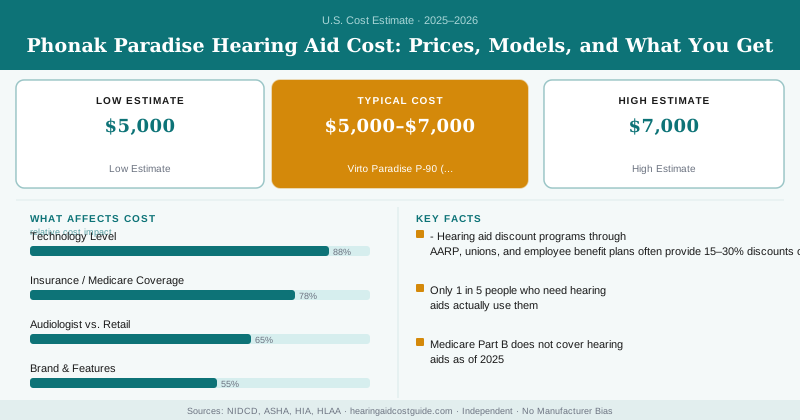
| Virto Paradise P-90 (in-ear custom) | Premium custom | $5,000–$7,000 |
These are bundled audiologist prices including fitting and follow-up. If you’re buying through Costco, the Kirkland Signature aids use related Phonak chipsets at $1,599/pair — a fraction of the cost with fewer support services.
What PRISM Chip Technology Delivers
The heart of every Paradise model is Phonak’s PRISM (Processing Real-time Intelligent Sound Management) chip. At the top tier (P-90), it performs 1,000 real-time analyses of your acoustic environment per second, adjusts to 200 distinct situations automatically, and applies directional microphone processing with 64 channels of frequency shaping.
In practice, this translates to:
- Strong performance in difficult listening environments like restaurants and parties
- AutoSense OS 4.0 — the system that automatically switches between 200 acoustic programs without manual input
- Bluetooth Classic connectivity to both iOS and Android (a notable advantage over older Phonak platforms that were iOS-only)
- Roger microphone compatibility — Phonak’s proprietary remote microphone system that wirelessly streams a speaker’s voice directly into the hearing aids, highly valued for classroom, conference, and one-on-one use in noise
Paradise vs. Lumity: Is the Upgrade Worth It?
Phonak’s current flagship is the Lumity platform, released in 2022. If your audiologist quotes both, here’s the honest comparison:
The Lumity’s headline addition is SpeechSensor — processing that scans for speech from all directions (not just in front), useful in group conversations where talkers are positioned around you. For most adults having one-on-one conversations or watching TV, the practical difference from Paradise is modest.
Lumity commands a $500–$1,500 per pair premium over comparable Paradise tiers.
Verdict: For most adults with typical social and work environments, Paradise P-70 or P-90 delivers 90%+ of Lumity’s real-world benefit at a meaningfully lower price. If you frequently participate in multi-directional group conversations (large dinners, classroom instruction, conference rooms), Lumity’s directional processing improvement is worth evaluating.
Phonak’s Roger remote microphone system is a significant advantage of the Paradise and Lumity platforms. Roger devices (pens, table microphones, clip-ons) stream a speaker’s voice directly to your aids in noisy environments where even premium hearing aids struggle.
Roger devices cost $200–$600 each and aren’t included in the hearing aid price. If your audiologist mentions Roger compatibility as a selling point, ask whether you actually need a Roger device for your lifestyle, and budget separately for it. Not everyone does.
Rechargeable vs. Battery (312 vs. R Variants)
Phonak Paradise comes in both rechargeable (R) and traditional size-312 zinc-air battery variants. The rechargeable version costs about $200–$400 more per pair.
The rechargeable case charges both aids fully in 3 hours and provides 16 hours of use — enough for a full waking day. A quick 15-minute charge delivers 3 hours of power.
For adults who find small battery handling difficult (a common issue with size 312 cells at about the diameter of a pencil eraser), the rechargeable R variant removes that friction entirely. Most new Paradise buyers choose it.
Insurance and Payment
NIDCD estimates 37.5 million American adults have some degree of hearing loss, and fewer than 30% of those who could benefit from hearing aids actually use them. Cost is the most-cited barrier. The good news on insurance: Medicare Advantage hearing benefits have expanded significantly since 2020. Many plans now offer $1,000–$2,500 per ear per benefit period toward prescription hearing aids — enough to meaningfully offset Paradise pricing.
Check your specific plan’s benefit before your appointment. Some plans contract with specific hearing care networks (NationsHearing, TruHearing, etc.) that negotiate reduced device prices from audiologists — which can make a P-70 or P-90 quite accessible if your plan uses one of these networks.
Don’t buy Paradise hearing aids from online resellers or gray-market sources. Phonak hearing aids are sold through licensed hearing care professionals who program them to your specific audiogram. An unprogrammed hearing aid is useless — it’s just an unamplified device sitting in your ear canal. The programming, fitting, and follow-up are as important as the hardware. Legitimate Paradise aids are programmed and fitted by an audiologist or hearing instrument specialist using Phonak’s Target fitting software.
Finding Paradise at Lower Prices
If the full audiologist price is beyond your budget:
- Costco Hearing Centers use Phonak-manufactured hardware (Kirkland Signature) at drastically lower prices — around $1,599/pair in 2025–2026.
- VA benefits — eligible veterans receive hearing aids at no cost through the VA, and Phonak is one of the contracted brands.
- Hearing aid discount programs through AARP, unions, and employee benefit plans often provide 15–30% discounts off audiologist pricing.
- Trade-in programs — if you’re upgrading from an older hearing aid, many audiologists offer credit toward new devices.
Paradise represents strong performance per dollar, especially in 2025–2026 as prices have normalized since launch. If the budget allows a P-70 or P-90, the real-world performance difference from basic hearing aids is substantial.
Frequently Asked Questions
Phonak Paradise hearing aids typically cost between $2,000 and $6,500 per pair, depending on the specific Audéo P model and features you choose. Prices have dropped significantly since the newer Lumity platform launched, making Paradise an excellent value option for those who don't need the latest generation technology.
Most traditional health insurance plans, including Medicare, do not cover hearing aids, leaving the full $2,000–$6,500 cost as your out-of-pocket responsibility. However, some supplemental insurance plans, workers compensation, or VA benefits may provide partial coverage; you should contact your specific plan to confirm eligibility.
Initial fitting and programming typically takes 1–2 hours at an audiologist's office, with follow-up adjustment appointments scheduled over the next 4–6 weeks as you acclimate to wearing the devices. Most users report needing 2–4 in-person visits to optimize comfort and sound quality for their specific hearing loss.