The $5,500 quote for a single Sphere Infinio looked like a typo when a patient showed it to me last fall. It wasn’t. Phonak’s flagship, released in late 2024, is one of the priciest prescription hearing aids on the U.S. market — and the reason comes down to a second computer chip living inside the device.
What Makes the Sphere Infinio Different
Most hearing aids use a single processor. The Sphere Infinio carries two: the standard Prism chip plus a dedicated DEEPSONIC chip built solely for AI-driven noise separation. Phonak calls the combined system Spheric Speech Clarity, and it runs a neural network designed to pull a single voice out of a loud crowd in real time.
Phonak claims the chip delivers up to 10 dB of signal-to-noise improvement in the toughest listening situations. That’s a big number. For context, every 1 dB gain in signal-to-noise ratio can meaningfully boost word recognition, according to research summarized by the American Speech-Language-Hearing Association (ASHA).
Sphere Infinio Pricing
| Tier | Per Device | Per Pair (Est.) |
|---|---|---|
| Infinio Sphere 70 | $2,600-$3,600 | $5,200-$7,200 |
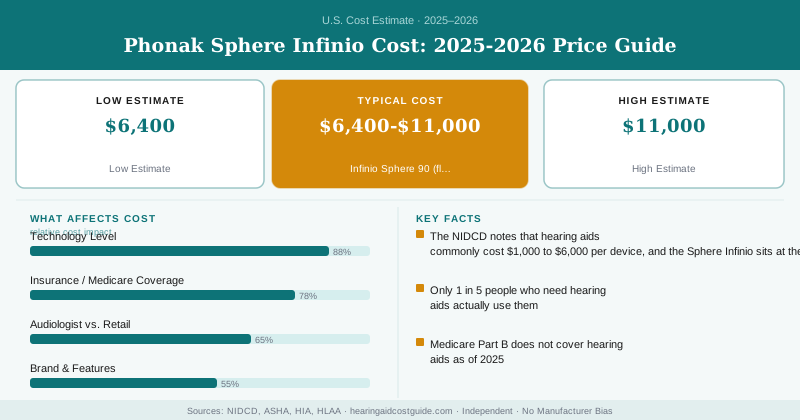
| Infinio Sphere 90 (flagship) | $3,200-$5,500 | $6,400-$11,000 |
Note that the Spheric Speech Clarity feature only ships on the Sphere models. Phonak also sells a non-Sphere “Infinio” line (Audeo Infinio) that skips the second chip and costs noticeably less — often $2,000-$3,800 per device.
Who Actually Needs It
If you spend hours each week in genuinely loud places — restaurants, conferences, busy worksites — the DEEPSONIC chip earns its keep. If your hard listening situations are occasional, a lower-tier device on Phonak’s Lumity platform likely gives you 90% of the benefit for thousands less.
I won’t pretend the price is small. The NIDCD notes that hearing aids commonly cost $1,000 to $6,000 per device, and the Sphere Infinio sits at the very top of that band. Make the chip work for your real life before you pay for it.
What’s Bundled In
Most U.S. dispensers fold professional services into the Sphere Infinio price — your fitting, follow-up tuning, and a three-year warranty. Compare that against any cheaper prescription option by asking exactly what’s included. A “lower” sticker price with services billed separately can end up costing more.
It’s rechargeable by default, with a lithium-ion cell rated for a full day on a charge plus streaming.
Don’t buy the Sphere 90 sight unseen online. The AI noise system needs precise fitting against your audiogram to work as advertised. A poorly fitted premium device performs worse than a well-fitted basic one.
Cutting the Cost
- Insurance and Medicare Advantage plans increasingly include a hearing-aid allowance — check yours before paying out of pocket.
- HSA/FSA funds cover hearing aids as a qualified medical expense.
- Clinic financing through CareCredit often runs 12-18 months interest-free; see our financing guide.
- Trial period: Phonak mandates a 30-day minimum. Test the noise features in your actual restaurants, not the quiet clinic.
Bottom Line
The Sphere Infinio is the best speech-in-noise device Phonak has ever shipped, and the dual-chip design backs that up. But you’re paying flagship money — budget $6,400-$11,000 a pair. If you don’t live in noise, step down a tier. To see where it lands against other 2025 releases, compare our best hearing aids roundup and the broader hearing aid cost overview.
Frequently Asked Questions
A single Phonak Sphere Infinio device costs between $3,000 and $5,500, depending on your audiologist, location, and whether additional features or warranties are included. A pair (both ears) typically ranges from $6,000 to $11,000 before insurance or manufacturer discounts.
Medicare does not cover hearing aids, leaving most seniors responsible for the full cost, though some Medicare Advantage plans offer $500–$3,500 annual hearing aid benefits. Private insurance rarely covers hearing aids either, though a small number of plans provide partial coverage of $500–$2,000 per device, so you should contact your insurer directly to confirm your out-of-pocket responsibility.
Your audiologist will conduct hearing tests, fit the devices to your ears, and program them using the Phonak smartphone app over 1–2 hours on your first visit. Most patients need 2–3 follow-up appointments over 4–6 weeks to adjust sound settings before you reach optimal hearing.