In 2010 you might have been told “just learn to live with it.” Today, if your tinnitus pulses in rhythm with your heartbeat, the standard of care is a proper workup — because pulsatile tinnitus can point to a treatable, sometimes serious, underlying cause. That’s the crucial difference from ordinary ringing. The NIDCD describes most tinnitus as a symptom without a single fixable source, but pulsatile tinnitus is the exception that demands investigation. Here’s what that investigation costs.
Pulsatile Tinnitus Workup Costs
| Test / Visit | Typical Cost (Before Insurance) |
|---|---|
| Initial physician or ENT visit | $200–$450 |
| Audiogram / hearing test | $0–$250 |
| Blood pressure and basic labs | $50–$200 |
| Carotid ultrasound | $250–$800 |
| MRI / MRA of head and neck | $1,000–$3,000 |
| CT angiography | $1,200–$3,500 |
| Catheter angiography (if needed) | $5,000–$15,000+ |
| Full workup (typical range) | $500–$5,000+ |
The spread is enormous because the workup is staged. Most people don’t need every test — your doctor orders them based on what the earlier, cheaper exams turn up.
Why Pulsatile Tinnitus Is Different
Regular tinnitus is a steady tone or hiss. Pulsatile tinnitus whooshes or thumps in sync with your pulse, which means it’s often tied to blood flow — narrowed arteries, a vascular malformation, high blood pressure, or pressure changes around the brain. Some of these are easily managed; a few are urgent. That’s exactly why the imaging exists, and why skipping the workup to save money is a bad gamble.
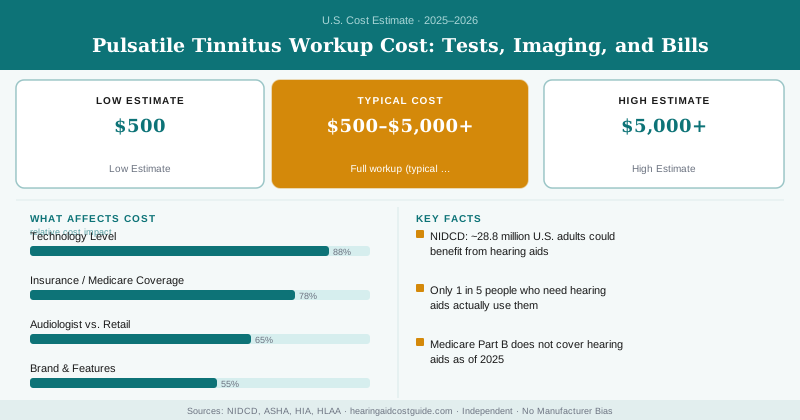
A pulsatile tinnitus workup runs $500–$5,000+, scaling with how much imaging you need. Unlike ordinary tinnitus, this type can signal a treatable vascular cause — so the workup is a medical necessity, not an optional upgrade. Don’t skip it to save money.
Where the Money Goes
The cheap part is the front end: a visit, a blood pressure check, an audiogram, basic labs. Many people get answers right there. If those raise a flag, imaging follows — and MRI/MRA or CT angiography is where costs jump into the thousands. Catheter angiography, the most invasive and detailed option, is reserved for cases that genuinely need it, which is why it’s both rare and expensive.
New, one-sided, or pulsing tinnitus — especially with vision changes, headaches, or dizziness — warrants prompt medical attention. This is not a wait-and-see situation, and it’s not something a supplement, app, or masker can address. Get evaluated.
How to Keep the Bill Down
- Start with the cheap tests. A thorough physician visit and audiogram often narrow things down before pricey imaging.
- Confirm coverage before imaging. MRI and CT angiography are usually covered when medically indicated, but pre-authorization matters. Call your insurer first.
- Ask about facility pricing. A freestanding imaging center is often far cheaper than a hospital for the same MRI.
- Get the right specialist. An ENT or neurologist can order tests efficiently instead of a scattershot approach.
After the Workup
If the workup finds a fixable cause, treating it may resolve the tinnitus entirely — money well spent. If it comes back clean (which is common), management shifts to the standard toolkit covered in tinnitus treatment cost, including sound therapy and, where hearing loss is present, hearing aids for tinnitus.
For ongoing distress, approaches like tinnitus retraining therapy help even when imaging is normal. And a baseline hearing test plus audiologist visit rounds out the picture.
The Bottom Line
Pulsatile tinnitus earns its workup. Yes, $500 to $5,000+ stings, but this is the one form of tinnitus where the imaging can find something genuinely worth treating. Start with the inexpensive tests, confirm insurance before the scans, and don’t let the price scare you out of an evaluation you actually need.
Frequently Asked Questions
A complete pulsatile tinnitus workup ranges from $500 to $5,000+, depending on which imaging studies are ordered. Basic audiometry and office exam cost $200–$500, while MRI or CT imaging adds $1,500–$3,500 per scan, and specialized tests like carotid ultrasound or angiography can push costs higher.
Most insurance plans cover medically necessary diagnostic imaging and audiology tests when ordered by a physician for pulsatile tinnitus, since it requires workup to rule out serious conditions. However, your out-of-pocket cost typically ranges from $500–$2,000 depending on your deductible, copays, and coinsurance, and imaging at out-of-network facilities may not be covered.
Initial office evaluation takes 30–60 minutes, but scheduling all necessary tests (audiology, imaging, possible specialist follow-up) typically spans 2–4 weeks. Most imaging appointments require 1–2 hours but are outpatient procedures, so you can usually return to normal activities the same day unless sedation is used.