Time is money — and with Ramsay Hunt syndrome, it’s also your hearing and your face. This condition is shingles that attacks the facial nerve near your ear, caused by the same chickenpox virus reactivating years later. It brings a painful ear rash, facial paralysis on one side, and often hearing loss and vertigo. What makes the cost story unusual is that treating it fast and aggressively in the first 72 hours dramatically improves the outcome — so this is one condition where you do not shop around to save a few dollars.
The NIDCD describes Ramsay Hunt as a cause of facial paralysis and hearing loss requiring prompt antiviral treatment, ideally within days of symptom onset.
Why Speed Matters More Than Price
Most ear conditions reward patience. This one punishes it. Starting antivirals and steroids early gives you the best shot at recovering facial movement and hearing. Delay, and the paralysis and hearing loss are more likely to be permanent — which leads to far higher long-term costs for rehabilitation, hearing devices, and facial therapy.
So the smart financial move is the opposite of usual: get to a doctor immediately, even urgent care or the ER, rather than waiting for an appointment to save money.
Cost Breakdown
| Treatment | Cost (No Insurance) |
|---|---|
| Urgent care or ENT visit (prompt diagnosis) | $150–$450 |
| ER visit (if severe / off-hours) | $1,000–$3,000+ |
| Antiviral medication (acyclovir/valacyclovir) | $30–$200 |
| Oral corticosteroid course | $20–$120 |
| Hearing test to assess loss | $50–$300 |
| MRI (if diagnosis unclear) | $400–$3,000 |
| Facial therapy / rehab (per session) | $75–$250 |
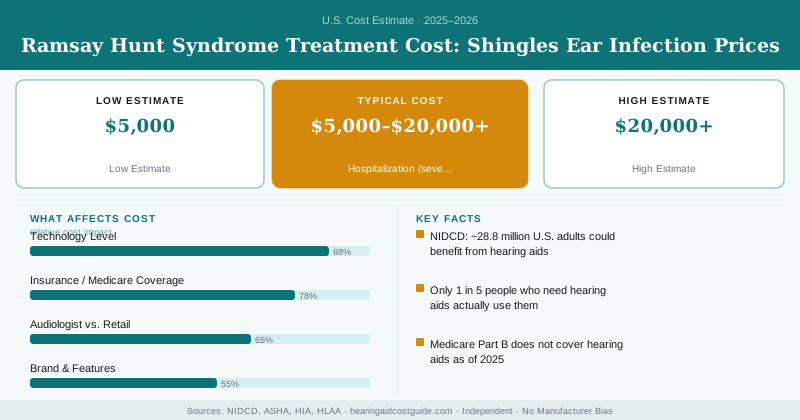
| Hospitalization (severe cases) | $5,000–$20,000+ |
The medications themselves are cheap. The expensive scenarios are an ER visit, imaging, or hospitalization for severe cases — and the long tail of rehab if the nerve doesn’t fully recover.
Caught early and treated as an outpatient, Ramsay Hunt costs $300–$3,000 — mostly a visit plus inexpensive antivirals and steroids. Severe cases needing the ER, imaging, or hospitalization run much higher. The single most cost-effective move is treating it within 72 hours, which protects your hearing and facial function.
The Hearing and Balance Costs
Ramsay Hunt can cause hearing loss and vertigo because the virus affects nearby nerves. After the acute phase, you’ll likely need a hearing test to see what was lost, and possibly an audiologist evaluation for ongoing symptoms. If the hearing loss is sudden and severe, the urgency overlaps with sudden hearing loss treatment — another condition where the treatment window is short.
If permanent hearing loss remains, the long-term cost may eventually include a hearing aid. That’s part of why early, aggressive treatment pays for itself.
Insurance Coverage
Ramsay Hunt is a serious diagnosed medical condition, so everything — visits, antivirals, steroids, imaging, hospitalization, and rehab — is covered by standard health insurance after your copays and deductible. The antivirals are inexpensive generics. This is unrelated to hearing aid coverage rules, though any resulting device need would fall under those.
Do not wait to see if a painful ear rash with facial droop “gets better on its own.” Ramsay Hunt is time-sensitive — every day of delay in starting antivirals lowers your odds of fully recovering facial movement and hearing. Trying to save the cost of an urgent visit can cost you permanent paralysis and far more expensive long-term rehab.
How to Manage the Cost Sensibly
- Don’t delay to save money — early treatment is both cheaper long-term and better for recovery.
- Use urgent care over the ER when appropriate. If symptoms are recognized and you can be seen promptly at urgent care, it costs far less than the ER.
- Get the shingles vaccine if eligible. Prevention is the ultimate cost saver; the vaccine sharply reduces shingles risk in older adults.
- Route rehab through insurance. Facial and vestibular therapy bill under your PT benefit.
Bottom Line
Ramsay Hunt syndrome flips the usual cost advice on its head: speed beats savings. Outpatient treatment is mostly a visit plus cheap antivirals and steroids, landing around $300–$3,000, while delay risks permanent facial paralysis, hearing loss, and a long, costly rehab tail. Get treated within 72 hours, document any hearing loss, and consider the shingles vaccine to avoid the whole ordeal in the first place.
Frequently Asked Questions
Total treatment costs typically range from $300 to $3,000 for outpatient care including antiviral medications, corticosteroids, and specialist visits. Hospitalization, if required for severe cases, can push costs to $5,000–$15,000+ depending on length of stay and imaging tests like MRI or audiograms.
Most health insurance plans cover antiviral medications and corticosteroids when diagnosed by a doctor, though your out-of-pocket cost depends on your deductible and copay structure—typically $20–$100 per specialist visit. Some plans may require prior authorization for IV antivirals or inpatient treatment, potentially delaying care during the critical 72-hour window.
Early aggressive treatment with antivirals and corticosteroids within 72 hours significantly improves recovery of facial nerve function and hearing preservation. Delays beyond this window reduce the chance of full recovery, potentially leading to permanent facial paralysis and hearing loss—making urgent diagnosis and immediate medication ($100–$400 for initial prescriptions) a cost-effective investment in long-term outcomes.