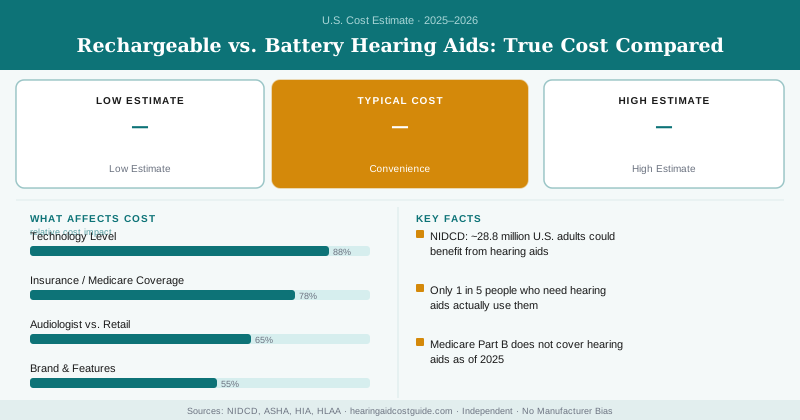
Disposable hearing aid batteries cost about $40–$100 a year. Doesn’t sound like much — until you multiply it across the five-year life of your aids and stack it against the higher sticker price of rechargeable models. The “cheaper” option isn’t always the one you’d guess. Here’s the math, laid out plainly.
Upfront and Ongoing Costs
| Cost Factor | Rechargeable | Disposable Battery |
|---|---|---|
| Added device cost | +$200–$400 per pair | $0 |
| Annual battery cost | ~$0 (charger included) | $40–$100 |
| Charger replacement | $100–$200 (rare) | N/A |
| 5-year battery spend | ~$0 | $200–$500 |
| Convenience | High | Lower |
Over five years, the two routes often land within a couple hundred dollars of each other. So this decision is really about convenience and lifestyle, not just dollars.
How the Math Shakes Out
Rechargeable aids cost more upfront — typically $200–$400 extra per pair — but you skip buying batteries. A disposable-battery user changes cells every 3–10 days depending on the size and usage, spending roughly $40–$100 a year. Across five years, that’s $200–$500 in batteries.
Net result: by year four or five, the rechargeable model usually catches up to or beats the disposable one on total cost. See our dedicated rechargeable hearing aid cost guide for a deeper breakdown.
Rechargeable hearing aids cost $200–$400 more upfront but eliminate the $40–$100/year battery expense. Over a typical 5-year lifespan the total cost is roughly a wash. Choose rechargeable for daily convenience; choose disposable batteries for lower upfront cost and easy swaps when power runs low.
Where Rechargeable Wins
No tiny batteries to fumble with — a real advantage if you have arthritis or dexterity issues. You drop the aids in a charging case overnight and they’re ready by morning. Most modern rechargeable aids deliver a full day, even with Bluetooth streaming. For older adults especially, ditching the fiddly battery doors is a meaningful quality-of-life upgrade.
Where Disposable Batteries Win
If your power runs out mid-day, you swap in a fresh cell in seconds — no waiting for a charge. That’s handy for long travel days, missed charging nights, or all-day events. Disposable models also cost less upfront, which matters if budget is tight. And there’s no built-in battery to degrade over the device’s life.
A rechargeable aid’s built-in lithium battery degrades over time, just like a phone’s. After 3–5 years it may hold noticeably less charge, and replacing it usually means sending the device to the manufacturer — it’s not a user-swappable part. Factor that into your long-term plan, especially if you keep aids longer than five years.
What the Market Is Doing
The industry has shifted hard toward rechargeable. Many of the newest premium models from major brands launch as rechargeable-first, with disposable-battery versions as an afterthought. The Hearing Industries Association has tracked rechargeable models climbing to a clear majority of new hearing aid sales in recent years, reflecting strong consumer demand for the convenience.
The underlying device technology is identical either way — you’re choosing a power source, not a different class of hearing aid. Both options exist across styles, from behind-the-ear to receiver-in-canal.
Who Should Choose Which
Go rechargeable if you value daily convenience, have dexterity challenges, or plan to keep your aids around five years or less. Go disposable if you want the lowest upfront cost, frequently face long days away from a charger, or expect to keep your devices well beyond five years.
Streaming Changes the Equation
Here’s a wrinkle worth knowing: heavy Bluetooth streaming drains power fast. If you stream phone calls, music, and TV audio all day, a rechargeable aid’s battery may run low before bedtime, and a disposable cell will need changing more often. If you’re a heavy streamer, ask your provider how the specific model handles a full day of streaming on one charge or one battery — real-world battery life with streaming is often shorter than the headline number on the box.
Environmental and Disposal Notes
A smaller consideration, but a real one for some buyers: disposable zinc-air batteries create ongoing waste — a couple of buyers’ worth can be hundreds of tiny cells a year — and should be recycled, not tossed in the trash. Rechargeable aids cut that waste dramatically over their life. If reducing waste matters to you, that tips the scale toward rechargeable, on top of the convenience.
Bottom Line
Over a full lifespan, the cost difference is small — so let your lifestyle decide. Rechargeable for convenience, disposable for flexibility and a lower entry price. Either way, compare against the broader hearing aid cost picture and check financing options if the upfront price is a stretch.
Frequently Asked Questions
Rechargeable hearing aids typically cost $200–$400 more per pair upfront than comparable disposable battery models. However, this premium is often offset within 2–3 years because disposable batteries cost $40–$100 annually, whereas rechargeable models have minimal ongoing battery expenses.
Most Medicare and private insurance plans do not cover the additional cost of rechargeable technology—they typically cover the base hearing aid cost only. You would pay the $200–$400 rechargeable upgrade out-of-pocket, though some plans may offer partial coverage depending on your specific policy.
Most rechargeable hearing aids fully charge in 3–4 hours and provide 24 hours of battery life, meaning you charge them overnight like a phone. You cannot wear them while charging, so you'll need to plan your charging routine around your daily schedule.