Picture this: you’ve just been told you need hearing aids, and your audiologist hands you a quote for $5,500. You go home, search online, and find what looks like the same brand on eBay for $180. Before you click “Buy It Now,” there’s something you need to know — something the listing doesn’t mention.
Refurbished hearing aids occupy a narrow niche between cheap OTC devices and expensive new prescription aids. Done right — certified manufacturer refurbishment with warranty — they’re a legitimate option. Done wrong — buying random used aids from a stranger online — they’re often a waste of money and potentially harmful.
Refurbished vs. New Hearing Aid Cost
| Option | Price Range | Warranty | Fitting Support |
|---|---|---|---|
| New OTC (entry) | $199–$599/pair | 1 year | Self-fit or app |
| New OTC (premium) | $600–$1,599/pair | 1–2 years | Self-fit or app |
| New prescription | $2,000–$7,000/pair | 1–3 years | Audiologist |
| Certified refurbished (manufacturer) | $500–$1,800/pair | 6–12 months | Varies |
| Certified refurbished (third-party) | $200–$1,200/pair | 3–6 months | Varies |
| Uncertified used (eBay, Craigslist) | $50–$600/pair | None | None |
Certified Manufacturer Refurbished: The Legitimate Option
When a patient returns hearing aids during their trial period, those devices go through the manufacturer’s certified refurbishment process — not just a wipe-down:
- Full electronic diagnostic
- Cleaned and sanitized
- Replaced wear components (dome, wax filter, battery door)
- Reprogrammed to factory defaults
- Tested to original specifications
- Repackaged with a new warranty (typically 6–12 months)
Where to find manufacturer-certified refurbished:
- Some audiology practices sell returned hearing aids at 20–40% discount with partial warranty
- HA Exchange (hearingaidexchange.com) — certified pre-owned devices with audiologist matching
- Some manufacturer direct programs — call the brand directly and ask about refurbished device availability
Certified refurbished devices from the current generation ($500–$1,800 per pair) can be an excellent value. You’re getting functional, current-generation technology at significantly reduced cost.
Third-Party Certified Refurbished Programs
Several programs specialize in this space:
Audient Alliance: Not refurbished per se, but provides income-qualifying access to new hearing aids at $400–$1,700/pair through participating audiologists.
National Hearing Aid Service: Repairs and refurbishes hearing aids; some refurbished inventory available at a discount.
Local audiology practices: Many practices have a handful of returned devices each year. Ask directly: “Do you have any certified returned hearing aids available at a discount?” You might be surprised.
The eBay / Facebook Marketplace Problem
This is where things go wrong. Used hearing aids sold by individuals — not certified programs — create a cascade of problems:
- Can’t be programmed to your audiogram without the original audiologist’s software and the brand’s proprietary programming hardware
- No warranty and no recourse when something breaks
- Sanitary concerns — ear devices are medical products; used ear tips and components carry real infection risk
- Counterfeit risk — fake hearing aids are sold online as branded products more often than you’d think
Here’s the part most people don’t realize: hearing aids are programmed to one specific person’s audiogram. If you buy a used Phonak on eBay, you’d need an audiologist with Phonak Target software and the device’s serial number to reprogram it to your hearing profile — and many audiologists won’t take on that liability. The HLAA notes that this programming barrier is one of the most misunderstood aspects of the used hearing aid market.
A hearing aid bought used on eBay is essentially a paperweight until it’s reprogrammed by an audiologist to your specific audiogram. Add the cost of programming ($150–$300) to the used device price, and you’re often within range of better alternatives — a new OTC device or a Costco device with professional fitting included.
Do the full math before buying from a non-certified source.
When Refurbished Makes Sense
Good candidates for certified refurbished hearing aids:
- Budget-constrained buyers who’ve confirmed mild or moderate hearing loss
- People who want to test hearing aids before committing to full new prescription pricing
- Buyers who found the same model new elsewhere but want to save 30–40%
- People who want professional fitting but can’t afford new prescription pricing
Not appropriate for:
- Severe or profound hearing loss requiring high-power devices
- Children (hearing needs change too quickly; refurbished devices may not keep pace)
- Anyone without a current audiogram — you genuinely can’t know whether the device will work for you
If a refurbished device source can’t tell you exactly what refurbishment steps were performed, what warranty is included, and which devices are available by specific model and generation — look elsewhere. Vague “refurbishment” claims without specifics are a yellow flag for inadequate reconditioning.
Older Technology: Not Worth It Below a Certain Year
Hearing aid technology has advanced dramatically in the last 5–7 years. Devices from 2017 or earlier typically lack:
- Bluetooth streaming (most models)
- Rechargeable batteries
- AI sound processing
- Smartphone app integration
- Current noise reduction algorithms
A 2017 premium hearing aid is functionally about equivalent to a 2025 entry-level new device — at best. When buying refurbished, confirm the device generation. Aim for 2021 or newer to get meaningful capability.
Frequently Asked Questions
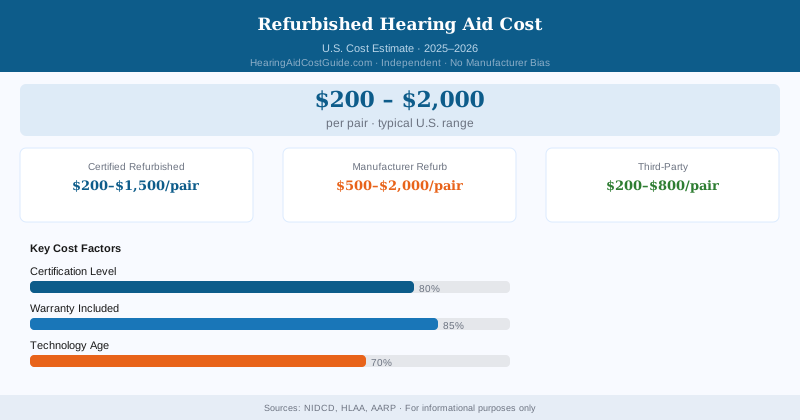
Refurbished hearing aids typically cost $200–$1,500 per pair, while new prescription hearing aids range from $2,500–$7,000 per pair. This means certified refurbished devices can save you 70–80% compared to buying new, though they come with potential trade-offs in warranty length and device lifespan.
Most insurance plans, including Medicare, do not specifically cover refurbished hearing aids—coverage policies apply the same way whether the device is new or refurbished. Some plans cover $0–$3,000 per ear for hearing aids regardless of condition, so you'll still be responsible for out-of-pocket costs that exceed your plan's limit, even with refurbished options.
Before purchasing, verify that the device comes with a minimum 1–2 year warranty from a certified seller, request documentation showing the device has been professionally cleaned and tested, and confirm the serial number matches FDA records. Avoid unmarked used devices from third-party sellers, as they may be counterfeit, damaged beyond repair, or incompatible with your hearing loss profile without professional fitting.