In 2019, getting your hearing aids adjusted meant driving to the audiologist, sitting in the booth, and waiting a week for an appointment. In 2026, you can have your audiologist fine-tune your aids from your living room — while you describe how the grocery store sounds too loud, in real time.
Remote hearing aid programming is real, it works, and it’s often free. Here’s what it costs, which devices support it, and when you still need an in-office visit.
Remote Programming Cost Overview
| Service Type | Typical Cost | Notes |
|---|---|---|
| Remote adjustment (included with purchase) | $0 | Most premium brands include remote access |
| Remote programming session (a la carte) | $50–$150/session | If not bundled, or changing providers |
| Telehealth audiology consultation | $75–$200/session | Full assessment via video |
| Remote hearing evaluation (screener) | $0–$50 | Some platforms free; not a diagnostic audiogram |
| Annual remote monitoring subscription | $0–$200/year | Varies by audiologist or platform |
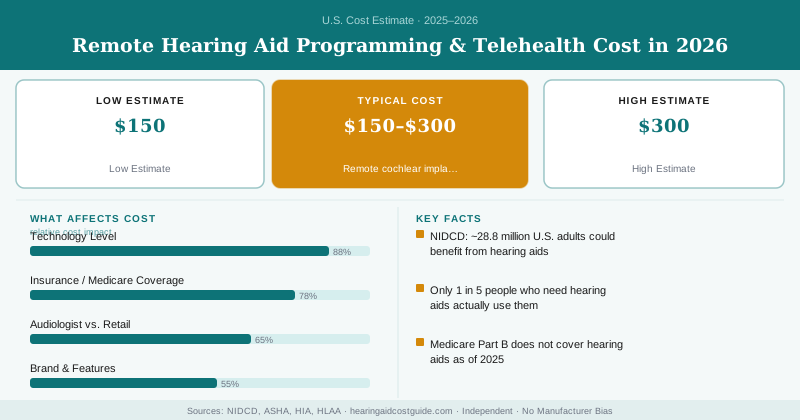
| Remote cochlear implant mapping | $150–$300/session | Specialist required |
How Remote Programming Works
Most modern hearing aids from major manufacturers — Phonak, Widex, Oticon, Signia, ReSound, Starkey — support remote fine-tuning through a paired smartphone app. Here’s the basic flow:
- You notice an issue — voices sound tinny in restaurants, or your TV program sounds flat.
- You message or video-call your audiologist through the manufacturer’s app.
- Your audiologist accesses your hearing aid settings remotely and pushes an adjusted program directly to your devices.
- You confirm the change sounds better. Done.
The whole process can take 10–15 minutes — no driving, no waiting room, no scheduling delay. For minor adjustments, it’s just as effective as an in-office visit.
Phonak’s Remote Support, ReSound’s Remote Care Live, Starkey’s Hearing Care Anywhere, and Oticon’s RemoteCare all function this way. The audiologist sees your current settings, can run a live feedback test in some platforms, and adjusts in real time.
Phonak, Widex, Oticon, Signia, ReSound, and Starkey all offer real-time remote adjustment as a standard feature of their current premium and mid-tier lines. Costco-branded aids (Jabra Enhance Pro, Philips HearLink) have more limited remote capabilities. OTC hearing aids like Jabra Enhance Plus and Lexie offer self-fitting apps but no audiologist-driven remote programming — you’re adjusting on your own.
When Remote Programming Is Free
If you purchased prescription hearing aids from a private audiologist who bundles aftercare — common in the “bundled pricing” model — your remote adjustment sessions are already included in the price you paid. You can request adjustments via the app as often as needed during your service period (typically 2–3 years).
ASHA (the American Speech-Language-Hearing Association) supports teleaudiology as a legitimate service delivery model, and published guidelines in 2023 clarifying that remote hearing aid verification and adjustment can meet the same clinical standards as in-office care when properly performed.
If you purchased hearing aids at a different provider or bought online, you’ll typically pay per remote session: $50–$150 per adjustment.
Telehealth for Audiology Beyond Adjustments
Remote care has expanded beyond simple adjustments. Full telehealth audiology consultations — including reviewing audiogram results, discussing treatment options, or counseling on communication strategies — now run $75–$200 per session. Platforms like Sound Relief, TeleAudiology, and Audicus offer these services directly to consumers.
The NIDCD-funded research on teleaudiology has shown that patient satisfaction with remote audiological care is comparable to in-person care for a majority of routine follow-up needs. The pandemic accelerated adoption substantially — and both audiologists and patients have largely kept using remote options even when in-person became available again.
Remote programming is not a substitute for in-person care in these situations: initial hearing aid fitting (you need real-ear measurement verification), significant changes in hearing level (requires a new audiogram), ear pain or drainage, or cochlear implant mapping. These require in-person visits. Don’t rely exclusively on remote adjustments if your hearing seems to be getting worse — get a new audiogram, not just a program tweak.
Medicare and Insurance Coverage
Medicare Part B covers telehealth audiology services that a physician orders, including remote follow-up consultations when conducted via two-way video communication. Coverage expanded during COVID and has been extended through 2026. Standard Part B cost-sharing applies: 20% after your deductible.
Commercial insurance varies. Some plans cover telehealth audiology at parity with in-person visits; others apply separate telehealth cost-sharing. Check your plan’s telehealth policy before scheduling.
Self-Programming: A Different Animal
Some audiophile-minded consumers purchase programming cables and software to self-program older hearing aids using open-source tools like NOAH or manufacturer-specific fitting software. This is technically possible with certain older Phonak, Siemens, and Oticon aids. The cost is $100–$500 for cables and software.
This is a niche option that requires significant technical comfort and carries real risk of miscalibration. It’s not something to undertake without a strong technical background and a solid understanding of audiograms. Most audiologists don’t recommend it — and it voids any remaining service agreement.
The Practical Picture
Remote programming is one of the genuine quality-of-life improvements in modern hearing care. For the majority of routine adjustments after the initial fitting, it saves time, costs nothing extra if bundled, and gets you better outcomes faster because you can flag issues immediately instead of waiting two weeks for an appointment. Use it — and ask your audiologist specifically whether remote adjustment is included before you commit to any purchase.
Frequently Asked Questions
Remote hearing aid programming typically costs $0–$150 per session, with many audiologists offering it free as part of your hearing aid package or annual care plan. Some practices charge $50–$100 for standalone remote adjustments if you're not a current patient or have exhausted your included sessions.
Most insurance plans, including Medicare and private coverage, treat remote programming the same as in-person adjustments and cover it under your hearing aid benefit or audiology visit allowance. However, you'll typically pay the same copay or coinsurance as an office visit, usually $20–$50, and coverage depends on whether your plan covers hearing aid services at all.
Major brands like Starkey, ReSound, Signia, Oticon, Phonak, and Widex all offer remote programming through their mobile apps or computer software—you'll need only your smartphone, tablet, or computer with internet access. Your audiologist initiates the session from their end, and most adjustments take 15–30 minutes without requiring any additional hardware beyond what you already own.