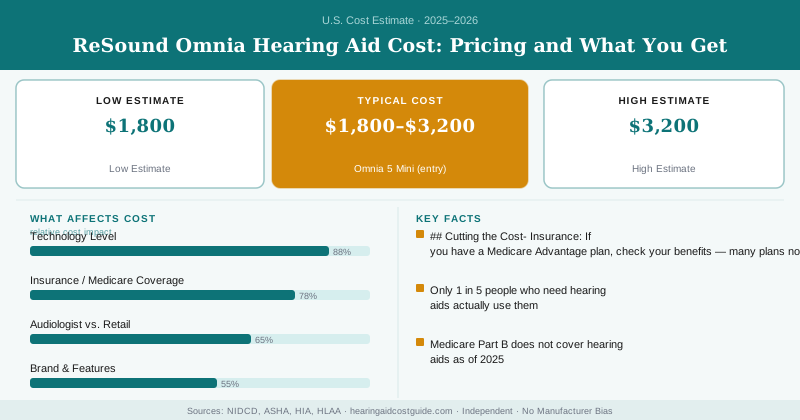
42% of first-time hearing aid buyers say they wish they’d done more research before purchasing. If you’re looking at ReSound Omnia and wondering whether it’s worth the price tag — or how it stacks up against the Nexia that replaced it — this guide walks through everything you need to know.
ReSound Omnia: Background
ReSound launched Omnia in 2022 as its flagship platform. It was a significant update over the earlier ReSound ONE, with improved directionality, better speech understanding in wind, and an expanded Bluetooth ecosystem. In late 2023, ReSound introduced the Nexia as the next-generation platform — but Omnia remains widely available and is often priced more aggressively now that Nexia is on the market.
If your audiologist offers both, Omnia is frequently the better value.
ReSound Omnia Price Ranges
ReSound uses a three-tier system: 9 (premium), 7 (advanced), and 5 (standard). All tiers use the same core Omnia processor; what changes is the number of active channels and the sophistication of the noise-reduction algorithms.
| Model | Per Device | Per Pair (Est.) |
|---|---|---|
| Omnia 9 (premium) | $2,200–$4,500 | $4,400–$9,000 |
| Omnia 7 (advanced) | $1,700–$2,800 | $3,400–$5,600 |
| Omnia 5 (standard) | $1,200–$2,000 | $2,400–$4,000 |
| Omnia 5 Mini (entry) | $900–$1,600 | $1,800–$3,200 |
Prices include professional fitting and follow-up at most clinics. Some hospital-based audiology departments unbundle these costs, so you’ll pay for each appointment separately. Ask upfront.
Style Lineup
Omnia comes in several form factors:
- Omnia Rechargeable (RIE): The most popular choice. No batteries, USB-C charging case included.
- Omnia Standard (battery): Uses size 312 batteries; slightly smaller profile.
- Omnia microRIE: Ultra-discreet receiver-in-ear style, battery-powered.
- Omnia BTE: For more severe hearing losses; larger, more powerful.
The rechargeable model adds roughly $200–$400 to the price but saves money on batteries over time (batteries cost $50–$100 per year per pair for typical wearers).
What Sets Omnia Apart
ReSound’s core design philosophy is “Organic Hearing” — the idea that hearing aids should support the brain’s natural sound processing rather than replace it. Omnia uses 360-degree sound capture with a microphone on the ear instead of only pointing outward, which means better awareness of sound coming from behind you. For people who value situational awareness — parents, outdoor walkers, anyone in meetings — this distinction matters.
ReSound’s app integration is widely praised. The ReSound Smart 3D app (iOS and Android) allows direct Bluetooth streaming from iPhones, Android phones, and even select Android devices that support ASHA (Audio Streaming for Hearing Aids). That’s useful for phone calls, music, and TV streaming — all without an intermediate device.
Omnia vs. ReSound Nexia
ReSound Nexia (2023) succeeds Omnia with improved processing and a smaller form factor for some styles. Expect Nexia to run $400–$800 more per pair at equivalent tiers. If you’re not pursuing the absolute latest technology, Omnia at a reduced price is often the smarter buy — especially for Omnia 7 vs. Nexia 5, where you can get more features for less.
How Cost Compares Across Major Brands
ReSound Omnia 9 is competitive with Phonak Lumity 70, Starkey Evolv AI 2000, and Signia Pure Charge&Go IX. All deliver excellent premium-tier performance. ReSound’s edge tends to be Bluetooth versatility; Phonak’s is speech-in-noise processing; Signia’s is its own-voice processing for new wearers.
The NIDCD reports that hearing aid users who wear their devices consistently show improvements in communication, mental health, and quality of life. Getting the right fit at the right price matters more than brand loyalty.
Cutting the Cost
- Insurance: If you have a Medicare Advantage plan, check your benefits — many plans now cover $500–$2,500 per pair. ASHA reported in 2023 that MA hearing benefits have expanded significantly since 2020.
- HSA/FSA: Fully qualified. Use your annual contribution before year-end.
- Trial period: ReSound requires a minimum 30-day trial through licensed dispensers. Test in every environment you actually live your life in.
- Costco: ReSound has sold devices through Costco’s Hearing Centers under various model names at $1,400–$2,000 per pair — a significant discount with reduced service bundling.
Avoid purchasing ReSound Omnia from eBay or unofficial online sellers. These devices can’t be properly programmed to your audiogram without manufacturer authorization, and the warranty won’t transfer. A cheaper price online often costs more in the long run.
Bottom Line
ReSound Omnia 7 or 9 pairs typically run $3,400–$9,000 with professional services. Now that Nexia is current, Omnia pricing has become more negotiable — which makes it an excellent value pick. Ask your audiologist to compare Omnia 9 and Nexia 7 side by side; you might get more for your money than you’d expect.
Frequently Asked Questions
ReSound Omnia hearing aids cost between $1,600 and $4,500 per device, depending on the technology level and features you select. Most patients purchase a pair (two devices), which means total out-of-pocket costs typically range from $3,200 to $9,000 before insurance or manufacturer discounts.
Medicare does not cover hearing aids, leaving most seniors responsible for the full cost; however, some Medicare Advantage plans offer partial or full coverage up to $2,000–$3,000 per pair. Private insurance coverage varies widely, with some plans covering $500–$2,000 per device annually, so you should contact your specific plan to confirm your out-of-pocket responsibility.
The typical fitting process takes 1–2 weeks from your initial audiologist appointment to picking up your devices, though some providers offer same-day fittings. Once you receive your Omnia aids, most users need 2–4 weeks of adjustments as your audiologist fine-tunes settings and you adapt to wearing them.