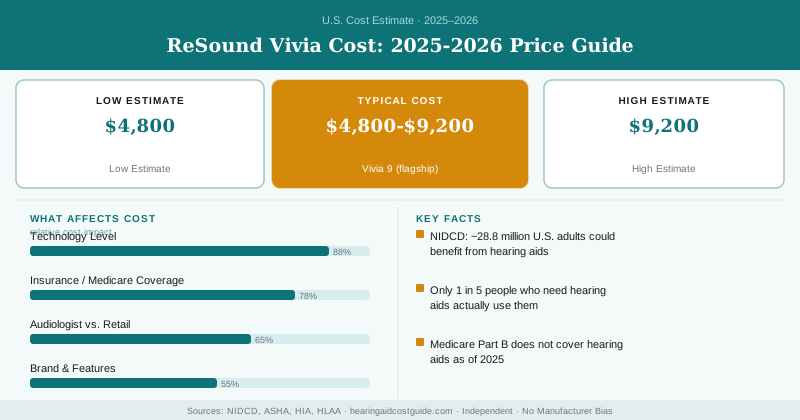
In 2010 a flagship hearing aid topped out around $3,000 a pair and processed sound with basic digital filters. Today ReSound’s Vivia pair can hit $9,200 — and it runs a deep neural network trained on millions of sound scenes. That’s the leap, and it’s a big part of why the price climbed.
What Vivia Brings
ReSound launched Vivia in 2024 as its new flagship platform, succeeding the Nexia line. The centerpiece is a dedicated Deep Neural Network (DNN) chip — separate silicon devoted to AI-based speech-in-noise processing, trained on a massive library of real-world sound environments to pick voices out of chaos.
ReSound also pushed Vivia toward an ultra-small RIC form factor with all-day rechargeability, aiming at people who want the help without the bulk. According to the Hearing Loss Association of America, roughly 48 million Americans have hearing loss but only about 1 in 5 candidates wears aids — discreet, capable devices like Vivia are partly aimed at closing that gap.
Vivia Pricing
| Tier | Per Device | Per Pair (Est.) |
|---|---|---|
| Vivia 5 (entry) | $1,500-$2,200 | $3,000-$4,400 |
| Vivia 7 (mid) | $1,900-$2,800 | $3,800-$5,600 |
| Vivia 9 (flagship) | $2,400-$4,600 | $4,800-$9,200 |
The tier number sets how much DNN processing and how many automatic environments you unlock. Professional services are usually bundled into the price.
The dedicated DNN chip is Vivia’s real advantage, and it lives in the Vivia 9. If you struggle most in noise, the flagship is where the money goes to work. For quieter routines, the Vivia 5 or 7 still uses the same platform and saves you a few thousand dollars per pair.
Connectivity Strengths
ReSound built its reputation on excellent connectivity, and Vivia continues it: direct streaming to iPhone and many Android phones, plus Auracast-ready Bluetooth LE Audio. For details on how that compares across brands, see our Bluetooth hearing aid guide. The small RIC ships rechargeable for all-day battery life.
A DNN-driven device only performs as well as its fit. Buying Vivia without a licensed audiologist doing real-ear verification leaves performance on the table — and the AI can’t compensate for a bad fit.
Bringing the Cost Down
- Insurance / Medicare Advantage: many plans include a hearing allowance.
- HSA/FSA: hearing aids qualify as a medical expense.
- Financing: interest-free clinic plans are common; see our financing guide.
- Tier choice: match the tier to your real listening demands, not the brochure.
Bottom Line
ReSound Vivia is a top-tier 2024-2025 platform with a genuine dedicated AI chip and class-leading connectivity. Budget $4,800-$9,200 for a flagship pair with services, less at the lower tiers. If you want to see how it stacks against Phonak, Oticon, and the rest, read our best hearing aids of 2025 and the broader hearing aid cost guide.
Frequently Asked Questions
A pair of ReSound Vivia hearing aids costs $4,400 to $9,200, with individual devices ranging from $2,200 to $4,600 each depending on the specific model and features. The price reflects the advanced Deep Neural Network chip that processes sound using algorithms trained on millions of sound scenes, a significant upgrade from earlier ReSound platforms like the Nexia line.
Most traditional health insurance plans do not cover hearing aids, though Medicare Part B covers 80% of the cost after you meet your deductible if purchased through a Medicare-enrolled provider. Many employers offer hearing aid benefits through supplemental plans or flexible spending accounts (FSAs), which can offset $500 to $2,000 of the out-of-pocket cost; you should check your specific plan documents.
Initial fitting and programming typically takes 1 to 2 hours at an audiologist's office, followed by a 30-day trial period during which you can return them for a refund if unsatisfied. Most users require 2 to 4 follow-up adjustment appointments over the first month to optimize settings for their hearing loss and lifestyle, though the Deep Neural Network technology often requires fewer adjustments than older models.