In 2010, a top-tier hearing aid pair from either of these brands ran around $4,000. Today it’s closer to $6,000 — and ReSound and Phonak are still the two names your audiologist is most likely to recommend. They’re both excellent. They just chase slightly different strengths, and that’s what should decide your purchase.
Here’s the head-to-head.
ReSound vs. Phonak: The Numbers
| Tier | ReSound (Nexia/Omnia) | Phonak (Lumity/Sphere) |
|---|---|---|
| Premium (per pair) | $5,200–$6,800 | $5,500–$7,000 |
| Mid-tier (per pair) | $4,000–$5,000 | $4,000–$5,000 |
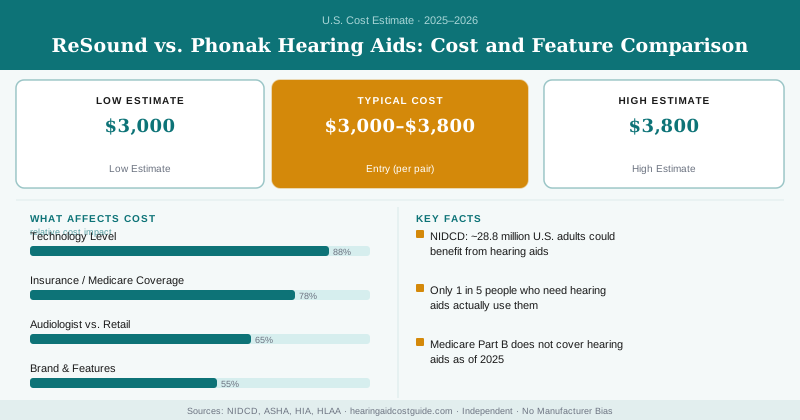
| Entry (per pair) | $2,900–$3,800 | $3,000–$3,800 |
As with most premium brands, the pricing is close enough that it shouldn’t be your deciding factor. Both sell through licensed audiologists, and both typically bundle fitting and follow-up into the quote.
Connectivity: ReSound’s Apple Edge
ReSound, owned by GN, built its reputation on Apple integration. Its devices were among the earliest “Made for iPhone” hearing aids, and they still stream audio and calls from iPhones beautifully. If you live in the Apple ecosystem, ReSound is a natural fit. Newer ReSound models added broad Android streaming too, narrowing the old gap.
Phonak counters with the most universal Bluetooth in the business — its aids pair with practically any phone, and they handle hands-free calling without an extra accessory. If you switch between Android and iPhone, Phonak is the smoother choice.
Sound and Noise Handling
Phonak’s recent Sphere model added a dedicated AI processor to separate speech from background noise — a real advantage in loud restaurants. ReSound emphasizes a natural, spacious sound through its “M&RIE” microphone-in-receiver design, which uses your own ear’s acoustics to localize sound more naturally.
Translation: Phonak tends to win for raw clarity in noise; ReSound tends to win for natural spatial awareness. Neither is universally better — see our hearing aid styles explained guide for how form factor also shapes sound.
ReSound and Phonak cost about the same at every tier. Pick ReSound for the most natural, spatial sound and tight Apple integration; pick Phonak for universal Bluetooth and the strongest speech-in-noise performance. Demo both with the same audiologist before deciding.
Rechargeability
Both brands offer rechargeable models with all-day battery life, plus traditional disposable-battery options for people who prefer swapping cells. Rechargeable versions usually add $200–$400 to the price but save on battery costs over the device’s life.
Why These Cost So Much
It’s a fair question, and the answer isn’t just greed. Hearing aids carry years of R&D, professional services, and small-batch manufacturing baked into the price — we unpack it fully in why hearing aids are so expensive. The NIDCD reports about 28.8 million US adults could benefit from hearing aids, yet only roughly 1 in 5 who’d benefit have ever used them, with cost cited as the leading barrier.
Brand reputation won’t save a bad fitting. Studies consistently show that hearing aids verified with real-ear measurement outperform those programmed by software defaults alone. Whether you choose ReSound or Phonak, confirm your audiologist performs real-ear measurement — it matters more than the logo.
Cheaper Versions of the Same Tech
Here’s an insider tip: Phonak’s parent Sonova supplies Costco’s Kirkland Signature aids, and ReSound’s parent GN supplies Costco’s Jabra Enhance Pro line. If you don’t need the absolute latest features, Costco hearing aids deliver closely related technology for thousands less per pair.
Service, Warranties, and Repairs
One factor buyers overlook: long-term service. Both brands carry standard warranties of two to three years, and both have wide US service networks, so finding someone to adjust or repair your aids later isn’t a problem with either. Phonak’s huge dealer footprint means parts and support are easy to track down almost anywhere. ReSound’s network is similarly broad. Whichever you pick, ask your provider exactly what the warranty covers — loss, damage, and repairs are sometimes priced separately, and that can add a few hundred dollars over the device’s life.
Style and Fit Options
Both brands sell the full range of styles — receiver-in-canal, behind-the-ear, and custom in-ear models. ReSound’s M&RIE receiver is a standout for natural sound, while Phonak offers everything from tiny invisible-in-canal aids to powerful behind-the-ear units for severe loss. If discretion or a specific fit matters to you, confirm the exact model — not just the brand — supports it before you commit.
Bottom Line
You won’t go wrong with either. Choose ReSound for natural spatial sound and seamless iPhone use; choose Phonak for universal connectivity and best-in-class noise handling. Demo both in a genuinely noisy room, insist on real-ear measurement, and let your own ears — not the price tag — make the call.
Frequently Asked Questions
Premium hearing aids from ReSound (Nexia/Omnia) and Phonak (Lumity/Sphere) both cost $4,500–$7,000 per pair in 2025, depending on the specific model and features. Entry-level models from these brands typically start around $2,500–$3,500 per pair, while top-tier options can reach $7,000 or more.
Coverage varies significantly by insurance plan; Medicare does not cover hearing aids for adults, though some Medicare Advantage plans offer limited benefits ($0–$3,000 annually). Private insurance coverage is rare, though some employers offer hearing aid benefits through supplemental plans—check your specific policy for out-of-pocket costs, which typically range from $1,000–$5,000 per pair after any benefits.
Initial fitting and programming typically takes 1–2 hours at your audiologist's office, with follow-up adjustment appointments scheduled over the next 4–6 weeks to fine-tune settings. Most users experience a full adjustment period of 4–8 weeks before their hearing aids feel natural and optimized for their hearing loss.