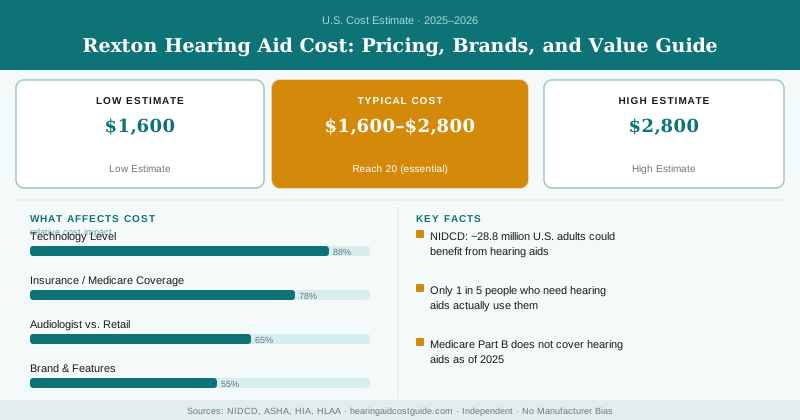
In 2010, a pair of mid-tier hearing aids cost around $4,000. Today, a comparable Rexton device with Bluetooth streaming, rechargeable batteries, and AI-based noise reduction costs $2,400–$5,000 for a pair. That price compression is real — and Rexton is one of the brands making it happen.
What Is Rexton?
Rexton is a hearing aid brand owned by WS Audiology — the same parent company as Signia and Widex. That matters: Rexton devices share chip technology with Signia, which is one of the top-five hearing aid brands globally. Rexton is typically positioned as WS Audiology’s value-oriented brand, which means similar processing at a lower consumer price.
You’ll also find Rexton-branded devices at Sam’s Club Hearing Centers — one of the few warehouse retail options that carries prescription hearing aids from a major manufacturer.
Rexton Hearing Aid Prices
Rexton’s current lineup centers on the Reach platform (launched 2022) and the older BiCore platform.
| Model | Per Device | Per Pair (Est.) |
|---|---|---|
| Reach 80 (premium) | $2,000–$3,800 | $4,000–$7,600 |
| Reach 60 (advanced) | $1,600–$2,800 | $3,200–$5,600 |
| Reach 40 (standard) | $1,200–$2,000 | $2,400–$4,000 |
| Reach 20 (essential) | $800–$1,400 | $1,600–$2,800 |
Sam’s Club Hearing Centers typically sell Rexton devices at $1,400–$2,800 per pair — below what most independent audiologists charge — but with a more limited service package.
The Sam’s Club Factor
Sam’s Club and Costco have changed the math for many buyers. At Sam’s Club Hearing Centers, you can purchase Rexton prescription hearing aids fitted by a licensed hearing instrument specialist (not always an audiologist) at prices that undercut traditional clinics by 30–50%.
What you give up: more limited follow-up appointment availability, fewer style options, and in some cases a hearing instrument specialist rather than a doctoral-level audiologist. For straightforward mild-to-moderate hearing loss, that trade-off is often reasonable. For complex audiograms or conditions like single-sided deafness, a full audiology clinic is worth the premium.
Rexton’s Reach platform uses the same core chip architecture as Signia’s Pure Charge&Go series. The primary differences are brand positioning, fitting software customization options, and the professional channel they’re sold through. If your audiologist has told you Signia is “better” than Rexton, they may simply be reflecting the brand hierarchy rather than a meaningful technical gap in the device itself.
Rexton Reach: What the Platform Does
Rexton Reach delivers several features worth knowing:
- Direct Bluetooth streaming: Works with both iPhone and Android (Android via ASHA protocol)
- Rexton Smart Direct app: Volume and program control from your phone
- Rechargeable option: 3-in-1 Charger included with rechargeable models
- Telecoil: Available on select models for loop system compatibility in theaters, churches, and airports
- MyData Learning: The hearing aid learns your volume preferences over time and begins adjusting automatically
Style Options
Rexton Reach is available in:
- RIC M-CORE R (rechargeable receiver-in-canal): Most popular style
- RIC M-CORE 312 (battery version)
- BTE M-CORE: For more severe hearing losses
- Custom ITE/CIC: Less commonly available through Sam’s Club; typically through independent clinics
How Rexton Compares to Signia
Since they share chip technology, the performance comparison is genuinely close. A Signia Pure Charge&Go X 7 and a Rexton Reach 60 are more alike than their price difference suggests. Signia’s Own Voice Processing (OVP) feature — which reduces the distorted sound of your own voice when you first start wearing hearing aids — is one area where Signia has more investment.
According to the HLAA (Hearing Loss Association of America), adult-onset hearing loss affects more than 48 million Americans. Getting into hearing aids at a realistic price point — even if that means choosing Rexton over a more expensive brand — is consistently more beneficial than delaying treatment.
Who Should Consider Rexton
Rexton is a good fit if:
- You want a prescription hearing aid at a meaningfully lower price than premium brands
- You’re comfortable with Sam’s Club or similar service models
- You have mild-to-moderate hearing loss without complex audiological needs
- You’ve been quoted $6,000+ for Signia or Phonak and want to explore alternatives
The NIDCD reports that the average cost of hearing aids ranges from $1,000 to $6,000 per device — Rexton Reach consistently sits toward the lower end of that range for a prescription device.
Sam’s Club Hearing Centers employ hearing instrument specialists, not audiologists. For complex hearing losses, auditory processing disorders, or tinnitus, seek out a Doctor of Audiology (Au.D.) for a comprehensive evaluation before purchasing any hearing aid — including Rexton.
Bottom Line
Rexton Reach offers solid prescription hearing aid performance at a price point that’s genuinely accessible. Pairs run $2,400–$7,600 depending on tier and where you purchase. For straightforward hearing loss and value-focused buyers, Rexton is worth a serious look — particularly if you’re near a Sam’s Club Hearing Center or an audiologist who carries the brand.
Frequently Asked Questions
A pair of Rexton hearing aids typically costs $2,400–$5,000, depending on the technology platform and features. Individual devices range from $1,200–$3,800 per hearing aid, with mid-tier models offering modern features like Bluetooth streaming, rechargeable batteries, and AI-based noise reduction at the lower end of that range.
Medicare does not cover hearing aids, leaving most seniors responsible for the full out-of-pocket cost. Some private insurance plans and employer-sponsored benefits offer partial coverage of $500–$2,000 per pair, though many plans exclude hearing aids entirely; you should contact your specific insurance provider to confirm coverage eligibility.
After purchasing Rexton hearing aids, the fitting and adjustment appointment typically takes 1–2 hours with an audiologist. Most users can start wearing their devices the same day, though it usually takes 2–4 weeks of daily use for your brain to fully adjust to amplified sound and for the audiologist to make fine-tuning adjustments.