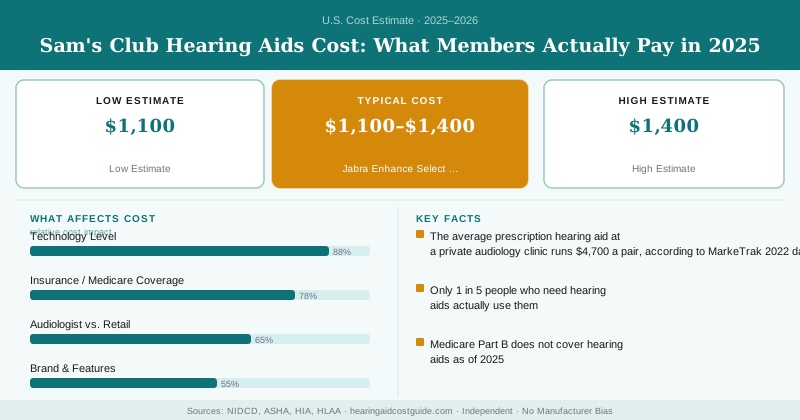
A Sam’s Club membership runs $50 a year. The average prescription hearing aid at a private audiology clinic runs $4,700 a pair, according to MarkeTrak 2022 data. So it makes sense that millions of people are asking: can I just buy hearing aids at Sam’s Club and save a couple thousand dollars?
The short answer is yes — with some important caveats. Here’s what the pricing looks like, what you actually get, and where Sam’s Club fits relative to other retail options.
Sam’s Club Hearing Aid Price Ranges
| Product / Tier | Price Per Pair | Technology Level |
|---|---|---|
| OTC Elsa (entry-level) | $600–$900 | Basic |
| Rexton Mosaic M-4 | $1,400–$1,800 | Mid-range |
| Rexton Mosaic M-6 | $1,800–$2,400 | Advanced |
| Rexton Mosaic M-8 | $2,400–$3,000 | Premium |
| Jabra Enhance Select (OTC) | $1,100–$1,400 | Mid-range OTC |
Prices can vary slightly by location and membership status. Sam’s Plus members sometimes receive an additional discount of $50–$100 off hearing aids.
What’s Included
Sam’s Club hearing center packages typically bundle:
- Comprehensive hearing evaluation (free for members in most locations)
- Hearing aid fitting and programming
- 45-day trial period with full refund
- One year of follow-up adjustments
- 3-year manufacturer warranty
- One set of batteries or charging cable
That’s a solid package. Private audiology clinics often charge $200–$400 just for the evaluation and fitting appointment, and some unbundle follow-up visits on top of the device price.
Sam’s Club partners with Rexton, a brand owned by the same parent company (WS Audiology) as Signia and Widex. This means the underlying technology is from a top-five global manufacturer — not a budget no-name supplier. The in-center models are prescription devices programmed by licensed hearing instrument specialists on site.
Sam’s Club vs. Costco: The Real Comparison
Most people shopping Sam’s Club are also looking at Costco. Here’s a fair side-by-side:
| Factor | Sam’s Club | Costco |
|---|---|---|
| Entry hearing aid price | ~$600–$900/pair | ~$1,400–$1,800/pair |
| Premium option | ~$2,400–$3,000 | ~$2,500–$3,500 |
| Staff credential | Hearing instrument specialist | Licensed fitter (varies) |
| Trial period | 45 days | 180 days |
| Number of locations | ~580 | ~550 |
| Brands offered | Rexton, Jabra, Elsa | Kirkland, Philips, ReSound |
Costco’s 180-day trial is genuinely exceptional — six months to decide if the aids work for you. Sam’s 45 days is standard but competitive. On price, Sam’s tends to be slightly lower at the entry tier; the two converge at the premium level.
Neither club employs audiologists (Au.D.) by default. If you have complex hearing loss, severe-to-profound loss, or you need real-ear measurements and detailed programming, a licensed audiologist adds clinical expertise these centers typically don’t provide.
What the NIDCD Data Tells You About Average Purchasers
The National Institute on Deafness and Other Communication Disorders estimates that only about 1 in 5 people who could benefit from hearing aids actually wears them. Cost is consistently cited as the top barrier. At $600–$3,000 at Sam’s Club versus $4,000–$7,000 at a private clinic, the math is compelling for most first-time buyers with mild-to-moderate loss.
ASHA (American Speech-Language-Hearing Association) data from 2023 shows that people 65 and older are the fastest-growing segment of new hearing aid users. That demographic is also disproportionately cost-sensitive and already holds warehouse-club memberships. Sam’s Club’s model directly addresses their situation.
The Fine Print on OTC Options at Sam’s
Since the FDA’s 2022 OTC ruling, Sam’s Club has expanded its no-prescription shelf offerings. The Jabra Enhance Select line — sold online and in some clubs — starts around $1,100/pair and can be self-fitted via smartphone app. No appointment required.
OTC hearing aids are only appropriate for mild-to-moderate hearing loss in adults 18 and older. They are not a substitute for medical evaluation if you have sudden hearing loss, ear pain, drainage, or significant asymmetric loss. Those symptoms need an ENT or audiologist first.
Don’t skip the hearing test. Sam’s Club offers free hearing evaluations for members. Even if you plan to buy OTC aids elsewhere, take advantage of this. A baseline audiogram tells you the severity and configuration of your loss — information that helps you choose the right device and detect any medically treatable cause.
Does Insurance Work at Sam’s Club?
Sam’s Club hearing centers accept many insurance plans and can help you apply benefits toward your purchase. Medicare Advantage plans with hearing benefits — which now cover roughly 85% of MA enrollees — often reimburse $500–$2,500 per ear, which can dramatically lower your out-of-pocket.
HSA and FSA funds can be used for prescription hearing aids at Sam’s Club. OTC aids purchased without a prescription may or may not qualify depending on your plan’s specific rules — check before you buy.
Bottom Line
Sam’s Club is a legitimate, cost-effective option for adults with mild-to-moderate hearing loss who want professionally fitted prescription devices without the premium clinic markup. You’ll get real brand-name technology (Rexton = WS Audiology), professional fitting, and a 45-day trial for $600–$3,000 per pair.
If you have complex loss, past ear surgery, or need advanced audiological care, start with an audiologist. But for straightforward cases, Sam’s Club delivers solid value — and that $50 membership pays for itself quickly.
Frequently Asked Questions
Sam's Club hearing aids typically range from $600 to $3,000 per pair, depending on the style and technology level you choose. This is significantly lower than the average $4,700 price tag at private audiology clinics, though you'll also need a $50 annual Sam's Club membership to access their hearing aid services.
Most traditional health insurance plans do not cover hearing aids, whether purchased at Sam's Club or elsewhere, since hearing aids are typically classified as durable medical equipment rather than medical devices. However, some Medicare Advantage plans and specialized hearing insurance may offer partial coverage; you should contact your insurance provider directly to confirm your specific benefits and out-of-pocket costs.
Yes, you will need a hearing evaluation performed by an audiologist at Sam's Club before purchasing hearing aids to determine your prescription and ensure the devices are appropriate for your hearing loss. The entire process, including the hearing test and fitting, typically takes 1-2 hours, and most Sam's Club locations can complete it on the same day or within a few days depending on availability.