Free. That’s what a surprising amount of quality sign language instruction costs families of deaf children — if they know where to look. A community-college ASL course might run a few hundred dollars, but the same family could access free signing instruction through their state’s early-intervention program. The price you pay for ASL classes depends almost entirely on how you access them.
Here’s the full menu, from free to premium, and how to learn American Sign Language without spending more than you need to.
What ASL Instruction Costs
ASL classes come in every format imaginable — group courses, private tutors, apps, and early-intervention family services. The prices reflect that range.
| Option | Cost |
|---|---|
| Early-intervention family ASL (Part C) | Often $0 |
| Community college ASL course | $100–$600 per course |
| Private ASL tutor | $30–$80 per hour |
| Online subscription/app | $10–$30 per month |
| Deaf-community workshop | $0–$50 |
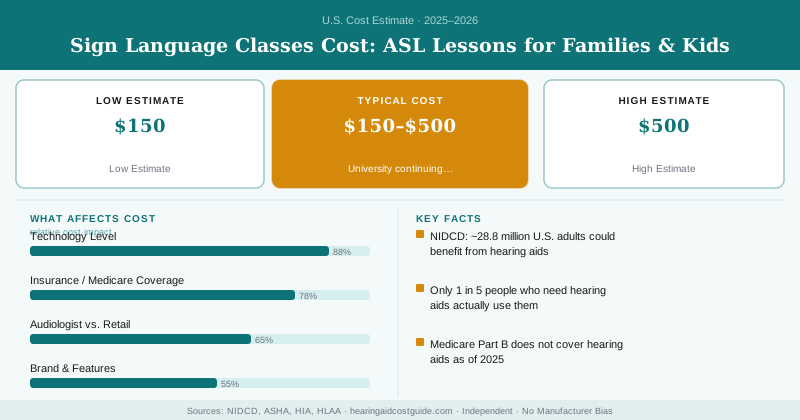
| University continuing-ed class | $150–$500 |
The Free Route Most Families Miss
If your child is under three and identified with hearing loss, your state’s early-intervention program under IDEA Part C often includes family sign language instruction at no cost. This is one of the most underused benefits out there. A deaf mentor or instructor may come to your home and teach the whole family.
The CDC’s EHDI framework emphasizes early language access for deaf infants, and many states fund family ASL precisely because research shows that early exposure to a complete language — signed or spoken — drives better outcomes. Our early intervention cost guide explains how to tap into Part C.
Before paying for ASL classes, ask your early-intervention coordinator about free family sign language services under IDEA Part C. Many families pay for community-college courses without realizing they qualified for free in-home instruction.
Why the Whole Family Should Learn
The NIDCD highlights that consistent, full language access early in life is critical for deaf children’s development. A child who signs but lives with a family that doesn’t has limited daily language exposure. That’s why instructors push for family-wide learning, not just lessons for the child.
Apps and online courses are great supplements, but they rarely build conversational fluency on their own. If ASL is your family’s primary language plan, prioritize live instruction with a deaf or fluent instructor over app-only learning.
Pairing ASL With Other Choices
Families don’t always pick one path. Some combine signing with spoken-language development and amplification. If your child also uses hearing devices, our pediatric hearing aid cost guide covers that side, and our deaf education services cost guide explains how bilingual ASL/English schooling fits in.
How to Learn ASL Affordably
- Ask early intervention or your school district about free family ASL services first.
- Check whether your local library, community center, or Deaf community organization offers free or low-cost classes.
- Use apps and online courses as daily practice between live lessons.
- Look for community-college courses that may also earn credit if you want formal recognition.
- Attend local Deaf events — immersion with native signers accelerates learning faster than any class.
A pediatric audiologist or early-intervention coordinator can point you toward local signing resources, since they work with deaf families regularly.
Bottom Line
Sign language classes range from completely free through early intervention and community programs to a few hundred dollars for formal courses. Start with the free Part C and community options, supplement with an app, and prioritize live instruction if ASL is your family’s primary language plan.
Frequently Asked Questions
ASL classes range from free to $200+ depending on the provider. Free options include state early-intervention programs for families with deaf children, while community college courses typically cost $100–$300 per semester, and private instruction ranges from $50–$200 per hour.
Most health insurance plans do not cover ASL classes as a general expense, but families with deaf children may qualify for free or subsidized instruction through state early-intervention programs (ages 0–3) and special education services (ages 3+) at no out-of-pocket cost. Speech and audiology services related to hearing loss may have separate coverage, so check your plan details.
Families can access free sign language classes through state early-intervention programs, school district special education departments, community colleges (often $100–$300 per course), libraries, and nonprofit organizations focused on deaf services. Most states offer free ASL instruction to families of deaf children under age 3 through early-intervention programs.