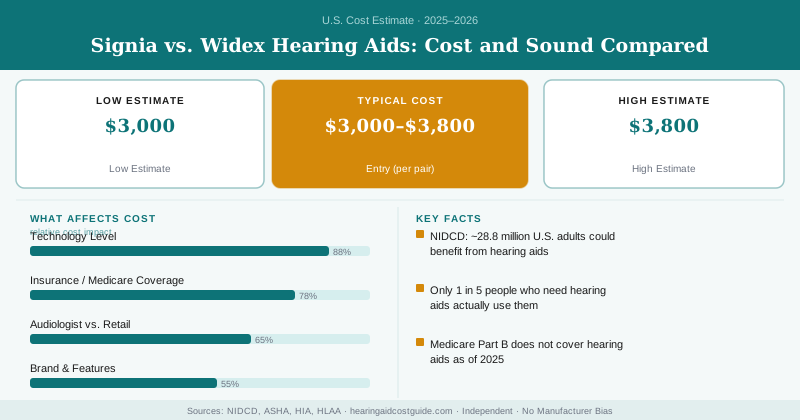
What does a premium hearing aid actually cost in 2025? For both Signia and Widex, the answer lands somewhere between $4,000 and $6,800 a pair. Here’s a twist most shoppers don’t realize: these two brands are now owned by the same parent company, WS Audiology — yet they still build genuinely different-sounding products. Choosing between them comes down to your ears, not a balance sheet.
Let’s get into it.
Signia vs. Widex: Price Comparison
| Tier | Signia (IX/AX) | Widex (Moment/SmartRIC) |
|---|---|---|
| Premium (per pair) | $5,000–$6,800 | $5,000–$6,500 |
| Mid-tier (per pair) | $4,000–$5,000 | $4,000–$5,000 |
| Entry (per pair) | $2,800–$3,800 | $3,000–$3,800 |
Same parent, similar prices. As with the other premium brands, the cost difference at a given tier is small — so let your listening needs drive the decision. Both are fitted by licensed audiologists and usually quoted with care bundled in.
Two Distinct Sound Signatures
Despite the shared ownership, Signia and Widex sound noticeably different.
Signia (formerly Siemens) is known for natural own-voice processing — its “OVP” feature tackles the “echo in a barrel” sensation new wearers often hate when they hear themselves talk. The Signia IX line also splits and tracks multiple speakers in groups, a strength in busy social settings. The slim Styletto models also lean into discreet, modern styling.
Widex built its name on the most natural, music-friendly sound in the industry. Its “PureSound” technology cuts processing delay to near zero, so audio feels live rather than synthesized. Musicians and audiophiles disproportionately choose Widex for exactly this reason.
Signia and Widex are owned by the same parent (WS Audiology) and cost about the same. Choose Signia for excellent own-voice handling and multi-speaker tracking in groups; choose Widex for the most natural, low-latency sound — especially if you love music.
Connectivity and Streaming
Both offer direct Bluetooth streaming to smartphones and rechargeable options with all-day battery life. Widex pioneered a clever feature that lets you save personalized listening profiles and even crowdsource settings from other users. Signia leans on a polished app with remote audiologist tuning. For TV audio, both sell add-on streamers in the $200–$300 range, typically not included in the device quote.
Style Options
If discretion matters, both make a range of styles — from behind-the-ear to slim receiver-in-canal. Signia’s Styletto in particular targets buyers who want their aids to look like modern earbuds rather than medical devices.
Why the Price Tags Run High
Premium hearing aids aren’t cheap, and the NIDCD reports cost is the top reason adults delay treatment — only about 1 in 5 who could benefit from hearing aids have ever used them. A 2024 AARP analysis found Americans wait nearly a decade on average between noticing loss and acting. We break down the pricing in why hearing aids are so expensive.
Don’t buy on brand loyalty or marketing buzzwords. The single biggest predictor of satisfaction is a proper fitting verified with real-ear measurement — not whether the box says Signia or Widex. Insist your audiologist performs it, and use your trial period to compare both in real-world noise.
A Cheaper Path to Similar Tech
WS Audiology also supplies Costco’s Rexton line, which shares engineering with Signia. If you want comparable performance without the premium-clinic price, Costco hearing aids can save you thousands per pair. Otherwise, compare against the broader prescription hearing aids cost range.
Who Should Choose Which
Choose Signia if you’re frequently in groups, bothered by hearing your own voice through aids, or you want a slim, modern look. Choose Widex if you listen to a lot of music, play an instrument, or simply prize the most natural, undistorted sound. For everyday age-related loss in moderate settings, both will serve you well — so the trial period is your best tool for picking.
Don’t Skip the Trial
Both brands’ fitting providers offer trial periods, typically 30 to 60 days. Use it aggressively. Wear each option in the environments where you actually struggle — the noisy restaurant, the family gathering, the place of worship with bad acoustics. A spec sheet can’t tell you how a device handles your specific ears in your specific life. Two weeks of real-world wear will tell you more than any brochure.
Bottom Line
Both are top-tier, both cost about the same, and both come from the same parent — yet they sound different. Pick Signia for natural own-voice and group-conversation tracking; pick Widex for the most lifelike, music-grade sound. Demo each during your trial period before committing, and check financing if the price stings.
Frequently Asked Questions
Premium hearing aids from both Signia and Widex typically range from $4,000 to $6,800 per pair in 2025. The exact price depends on the specific model, technology tier, and features you choose, with more advanced models at the higher end of that range.
Original Medicare does not cover hearing aids, leaving most beneficiaries responsible for the full out-of-pocket cost. However, some Medicare Advantage plans and private insurance policies do offer partial or full coverage; contact your specific plan to verify benefits, as coverage varies widely by plan and state.
The typical timeline is 2–4 weeks from your initial hearing test to receiving your fitted devices. This includes a comprehensive hearing evaluation, device programming, adjustments during a fitting appointment, and any follow-up appointments needed to optimize sound quality for your ears.