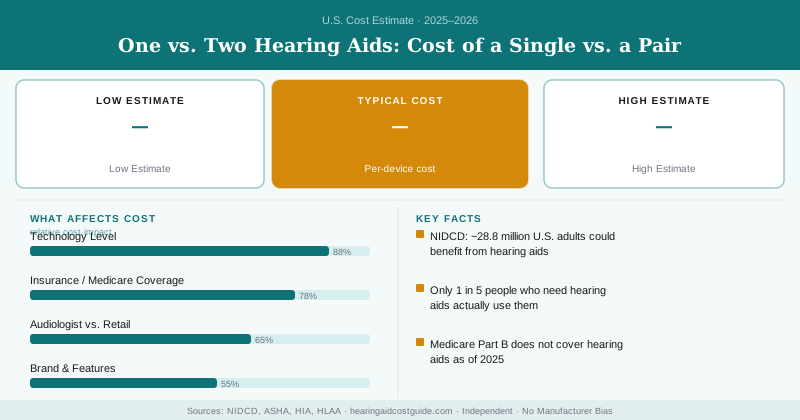
Buying one hearing aid instead of two cuts your cost roughly in half. Tempting, right? For a lot of shoppers staring at a $6,000 quote, going single feels like the obvious way to save. Sometimes it’s the right call. More often, it leaves real benefit on the table. Here’s how to know which camp you’re in.
Single vs. Pair: The Cost
| Factor | Single Hearing Aid | Pair |
|---|---|---|
| Price | $1,000–$3,500 | $2,000–$7,000 |
| Best for | One-sided loss | Loss in both ears |
| Sound localization | Limited | Strong |
| Speech in noise | Weaker | Better |
| Per-device cost | Sometimes higher | Often discounted |
The pair costs more, obviously — but not always exactly double. Many providers discount the second aid, and a few (like Costco) only sell in pairs.
When One Hearing Aid Is Right
A single aid genuinely makes sense if your hearing loss is truly one-sided — normal hearing in one ear, reduced in the other. There’s no benefit to amplifying an ear that hears fine. It can also be a reasonable budget compromise if you simply can’t afford two and have to start somewhere.
For a clear, lopsided audiogram, one aid is the correct medical choice, not just the cheaper one.
A single hearing aid ($1,000–$3,500) is the right choice when only one ear has hearing loss. But if both ears are affected — the most common situation — a pair ($2,000–$7,000) delivers far better speech understanding in noise and sound localization. Don’t go single just to save money if you have loss in both ears.
Why Two Usually Wins
Here’s the part that surprises people: your brain uses both ears together to locate sounds and pick speech out of noise. That’s called binaural hearing. Wear an aid in only one ear when both need help, and you lose much of that advantage — you’ll struggle to tell where sounds come from and find busy rooms harder than necessary.
There’s also a documented phenomenon called auditory deprivation: leave a hearing-impaired ear unaided for years and its ability to process speech can actually decline from disuse. Treating both ears helps keep both sharp. We cover the broader pricing in our bilateral vs. monaural hearing aid cost guide.
Sudden hearing loss in one ear is a medical emergency, not a reason to buy a single hearing aid. If hearing drops quickly in one ear — especially with ringing or fullness — see a physician within days, as prompt treatment can sometimes restore it. Don’t try to “fix” sudden one-sided loss with an off-the-shelf device.
What the Research Shows
Most adult hearing loss affects both ears — it’s typically age- or noise-related and symmetric. The NIDCD reports about 28.8 million US adults could benefit from hearing aids, and the large majority of those have loss in both ears. The American Speech-Language-Hearing Association generally recommends two aids when both ears are impaired, precisely because of the binaural benefits.
So while a single aid saves money today, it often means worse real-world hearing — the opposite of why you’re buying.
The Budget Workaround
If a pair is genuinely out of reach, you have better options than buying just one for a two-eared loss. Look at lower-cost routes: OTC hearing aids or Costco hearing aids can get you two devices for the price of one premium single. And financing can spread the cost of a pair over manageable payments.
Who Should Buy Which
Buy one if your loss is clearly one-sided. Buy a pair if both ears are affected — which is most people. If budget is the only thing pushing you toward a single aid for two-eared loss, switch to a cheaper pair instead.
Bottom Line
A single hearing aid is the right answer for genuine one-sided loss and a poor compromise for everything else. When both ears need help, two aids deliver dramatically better hearing in real life. Don’t sacrifice that to save money — find a cheaper pair instead. See the full hearing aid cost range to plan your budget.
Frequently Asked Questions
A single hearing aid typically costs $1,000–$3,500, while a pair runs $2,000–$7,000. Buying one hearing aid instead of two cuts your cost roughly in half, though you may sacrifice hearing benefits in both ears.
Coverage varies significantly by plan; Medicare does not cover hearing aids, while some private insurers and Medicaid programs in certain states offer partial coverage ranging from $500–$2,000 per ear. Most patients pay out-of-pocket for at least a portion of the cost, so it's worth checking your specific policy before making a purchase.
A single hearing aid is appropriate only for one-sided hearing loss, where you have normal or near-normal hearing in one ear and significant loss in the other. If you have hearing loss in both ears, purchasing a pair ensures balanced sound and better directional hearing, making it the recommended choice despite higher upfront costs.