Walk into a classroom where a teacher uses a sound field system, and the difference is immediately obvious. The teacher’s voice comes from everywhere at once — clear, evenly distributed, no “front row advantage.” Every student hears equally, whether they’re sitting by the door or across the room.
Sound field amplification isn’t just for students with hearing loss. But it’s transformative for them. Here’s what these systems cost and how they work.
Sound Field System Cost by Category
| System Type | Cost Range | Typical Use |
|---|---|---|
| Basic portable sound field system | $300–$600 | Small classrooms, home offices |
| Mid-range classroom system (1 speaker) | $600–$1,200 | Standard classroom, speaker + teacher mic |
| Multi-speaker classroom system | $1,200–$2,500 | Large classrooms, conference rooms |
| Personal desktop sound field unit | $200–$500 | One-on-one, desktop settings |
| Portable PA system (repurposed) | $150–$400 | Budget option, less specialized |
| Professional installation (additional) | $200–$800 | Wiring, mounting, setup |
How Sound Field Systems Work
A sound field amplification system consists of:
- A wireless microphone worn by the teacher or presenter (lapel, handheld, or headset)
- An amplifier/receiver that processes the signal
- One or more loudspeakers strategically placed around the room
The speaker’s voice is amplified 8–10 dB above ambient noise — enough to make speech clearly intelligible at the back of a typical classroom. Unlike personal FM systems (which go directly to one student’s hearing aids), sound field systems benefit everyone in the room.
Who Benefits from Sound Field Systems
Children with Hearing Loss in Mainstream Classrooms
A child with mild-to-moderate hearing loss in a standard classroom loses a significant amount of spoken instruction — especially at the back of the room or when the teacher turns toward the board. ASHA research shows students in rooms with sound field amplification demonstrate better attention, fewer requests for repetition, and improved academic outcomes.
Adults with Hearing Loss
Home settings with sound field setups — a desktop speaker system connected to a microphone worn by a family member — can help in living rooms, kitchens, and common areas where distance and ambient noise interfere with hearing.
All Students (Incidentally)
The American Speech-Language-Hearing Association (ASHA) notes that all students — not just those with hearing loss — benefit from improved speech intelligibility in classrooms. Teachers also report less vocal fatigue when using sound field amplification.
For K-12 students with hearing loss covered under an IEP, sound field amplification systems may be provided at no cost to the family under IDEA. Schools are required to provide assistive technology when it’s identified in a student’s IEP. Request an assistive technology evaluation through your school’s special education office before purchasing privately.
Top Brands and Typical Prices
- LightSpeed Technologies (Redcat): $600–$1,200. Most widely used in US classrooms. Simple setup, excellent clarity.
- Phonak Roger DigiMaster: $1,500–$2,500. Integrates with Roger hearing system. High end.
- FrontRow ProEd: $700–$1,500. Popular in K-12 settings.
- Califone PresentationPro: $300–$600. Budget-friendly for smaller rooms.
Home Use: Is It Worth It?
A sound field system for home use is less common but genuinely useful in specific situations:
- Living with a family member who is hard of hearing and resists wearing aids
- Watching TV in a shared room where one person needs amplification
- Teaching or tutoring from home with a student who has hearing challenges
A desktop unit ($200–$400) or a small Bluetooth PA system can serve this purpose without the full classroom setup cost.
A sound field system is not a substitute for properly fitted hearing aids. If a child or adult with confirmed hearing loss hasn’t been evaluated for hearing aids, start there. Sound field systems complement hearing aids — they don’t replace them.
Maintenance and Ongoing Costs
- Microphone batteries: $10–$30/year
- Replacement microphone: $50–$200 if lost or damaged
- Speaker replacement: Rarely needed, but $100–$400 if required
- Annual maintenance: Typically none for quality systems
The Bottom Line
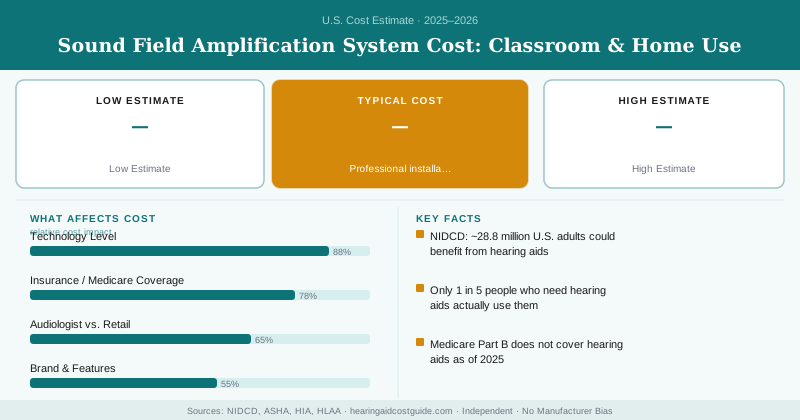
Sound field amplification systems cost $300–$2,500 depending on scope. For classrooms serving students with hearing loss, they’re one of the highest-impact, lowest-effort accommodations available. For individual adults, a smaller personal unit ($200–$400) can improve daily listening without the full classroom setup cost. If a child is in school and struggling to hear instruction, pursue IEP-funded options before spending out of pocket.
Frequently Asked Questions
Sound field amplification systems typically range from $300 to $2,500 depending on the type and quality. Basic classroom systems with a wireless microphone and single speaker start around $300–$800, while more advanced multi-speaker setups for larger spaces or homes cost $1,500–$2,500. Installation and setup may add $100–$300 to the total cost.
Most health insurance plans do not cover sound field amplification systems because they are considered classroom or environmental accommodations rather than medical devices. Schools typically purchase these systems through their special education or accessibility budgets, while individuals buying for home use usually pay out-of-pocket. Some Medicaid programs may cover systems prescribed for individuals with documented hearing loss, so it's worth contacting your state Medicaid office to verify.
Basic sound field systems can be set up and operational in 15–30 minutes with minimal technical knowledge, requiring only a microphone, amplifier, and speakers to be connected. More complex classroom installations with multiple speakers and wireless connectivity typically take 1–2 hours and may benefit from professional installation by an audiovisual technician ($100–$200). Most systems require no ongoing maintenance beyond occasional battery replacement and speaker cleaning.