What does stapedectomy actually cost without insurance? The short answer: anywhere from $8,000 to $20,000 or more, depending on your surgeon, facility, and anesthesia situation. The longer answer requires understanding what you’re paying for — and whether surgery makes more sense than a high-quality hearing aid for your specific case.
Stapedectomy is a microsurgical procedure that replaces the stapes — the smallest bone in the human body — with a tiny prosthesis. It’s performed to treat otosclerosis, a condition where abnormal bone growth around the stapes causes progressive conductive hearing loss. According to the Otolaryngology–Head and Neck Surgery Foundation, otosclerosis affects roughly 1% of the U.S. population and is the most common cause of progressive hearing loss in adults with normal-appearing eardrums.
Stapedectomy Cost Breakdown
| Cost Component | Low | Typical | High |
|---|---|---|---|
| Surgeon fee | $2,500 | $4,000 | $8,000 |
| Facility fee (ambulatory surgery center) | $3,000 | $5,500 | $9,000 |
| Anesthesia | $800 | $1,500 | $2,500 |
| Pre-op testing (audiometry, CT scan) | $300 | $700 | $1,500 |
| Total uninsured estimate | $8,000 | $14,000 | $20,000+ |
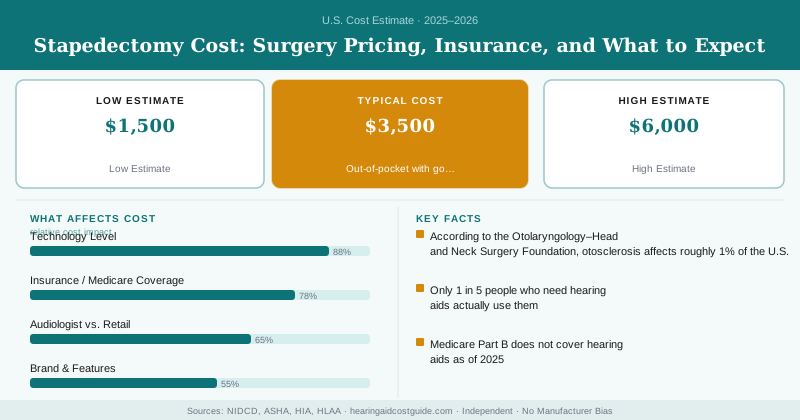
| Out-of-pocket with good insurance | $1,500 | $3,500 | $6,000 |
Prices are higher in major metro areas and at academic medical centers. Surgeons who specialize exclusively in otologic (ear) surgery typically charge more — and tend to deliver better outcomes on this highly precision-dependent procedure.
How Insurance Covers Stapedectomy
Stapedectomy is almost always covered by commercial insurance and Medicare because it’s a medically necessary reconstructive procedure for hearing restoration — not elective in the cosmetic sense. It’s not a hearing aid; it fixes the underlying mechanical problem.
The relevant CPT code is 69660 (Stapes surgery with footplate drill out) or 69661 (with footplate drill out, with ossicular chain reconstruction). Most PPO plans cover stapedectomy at the same rate as other surgery — you’ll pay your annual deductible plus coinsurance, typically 20%.
Medicare coverage: Under Part A (inpatient hospital) or Part B (ambulatory surgery center), Medicare covers stapedectomy. You’ll pay the Part A deductible ($1,632 in 2024 per benefit period) or Part B’s 20% coinsurance after meeting the annual deductible ($240 in 2024). Medicare Advantage plans vary — verify your specific plan before scheduling.
Always obtain preauthorization before scheduling stapedectomy. Your ENT will need to submit:
- Audiometric test results showing significant conductive hearing loss
- Evidence of otosclerosis (often clinical, sometimes CT-confirmed)
- Documentation that hearing aids were either tried or are not preferred for this type of loss
Insurance may request a second opinion before approving surgery. That’s normal and adds 4–8 weeks to the timeline.
Stapedectomy vs. Stapedotomy: Does It Affect Cost?
Many surgeons today perform stapedotomy (a variation where only a small hole is drilled in the footplate) rather than full stapedectomy (complete removal of the footplate). Outcomes are comparable, and some studies favor stapedotomy for reduced risk of inner ear damage. The billing codes and insurance coverage are similar, so cost to you shouldn’t change significantly between the two approaches.
What does affect cost is the prosthesis itself. Titanium stapes prostheses run $200–$800; some newer piston designs cost more. These are usually covered by insurance as implanted devices and aren’t typically billed separately to patients.
Is Stapedectomy Worth It Compared to a Hearing Aid?
That’s a genuinely personal calculation, and the answer differs for different patients. Here’s the clinical framing:
For patients with pure conductive hearing loss from otosclerosis — no sensorineural component — stapedectomy success rates are excellent. Most studies report that 85–95% of patients experience significant hearing improvement, with many achieving near-normal hearing. The improvement is often permanent.
A hearing aid, by contrast, requires ongoing maintenance, batteries, and eventual replacement. The cumulative 10-year cost of a mid-tier hearing aid (with replacements and service) easily reaches $6,000–$12,000. If surgery restores your hearing fully, that cost goes away.
However, stapedectomy carries real risks, including:
- Taste disturbance (chorda tympani nerve is in the surgical field)
- Tinnitus (can worsen temporarily or rarely permanently)
- Dizziness/vertigo in the first weeks post-op
- Sensorineural hearing loss (rare but irreversible) in 1–2% of cases
Never proceed with stapedectomy on your better-hearing ear first. Most otologic surgeons and the American Academy of Otolaryngology recommend operating on the poorer ear initially to protect your better hearing in case of a rare surgical complication.
Geographic Cost Variation
Stapedectomy prices vary substantially by location. In high-cost states like California, New York, and Massachusetts, all-in uninsured costs can reach $18,000–$25,000. In lower-cost states — Texas, Oklahoma, Tennessee — the same procedure at a quality ambulatory surgery center may total $9,000–$14,000.
Medical tourism is an option some patients research, particularly in Europe, where stapedectomy is widely performed and costs can be $3,000–$6,000 all-in. However, follow-up care, travel cost, and the challenges of managing complications abroad are real considerations. If you pursue this route, verify the surgeon’s credentials through a recognized international otologic society.
Recovery Time and Hidden Costs
Insurance covers the surgery, but not everything around it. Recovery takes 1–4 weeks before returning to light activity, and 6–8 weeks before full clearance for activities like air travel (pressure changes affect the middle ear). Budget for:
- Time off work: 1–2 weeks for sedentary work, 3–4 weeks for physical labor
- Transportation: You can’t drive yourself home from surgery or on any day you take prescription pain medication
- Follow-up visits: Usually 1–3 visits within 6 weeks; covered by insurance if billed correctly
- Audiometric testing: Post-op hearing tests at 6 weeks and 6 months confirm surgical success; these should be covered under your medical benefit, not your hearing benefit
Finding the Right Surgeon
Stapedectomy is a highly technique-dependent procedure. A surgeon who performs 5 stapedectomies a year has meaningfully different outcomes than one who performs 50. When choosing your surgeon:
- Ask specifically how many stapedectomies they’ve performed
- Ask their personal success rate and complication rate
- Verify they’re fellowship-trained in otology or neurotology
- Don’t let cost be the only factor — the cheapest surgeon isn’t always the best value when your hearing is at stake
University medical centers and major ENT practices with dedicated otology departments are good starting points. The American Neurotology Society maintains a directory of board-certified otologists.
Frequently Asked Questions
A stapedectomy typically costs between $8,000 and $20,000 without insurance, depending on factors like surgeon experience, facility type (hospital vs. outpatient surgery center), and anesthesia requirements. Major metropolitan areas and academic medical centers tend to charge toward the higher end of this range, while smaller cities may offer procedures closer to $8,000–$12,000.
Yes, Medicare generally covers stapedectomy as medically necessary treatment for otosclerosis, with patients typically paying 20% coinsurance after meeting their Part B deductible ($240 in 2024). Your out-of-pocket cost will depend on your specific Medicare plan and whether your surgeon and facility are in-network, but expect to pay $1,600–$4,000 total after insurance.
Stapedectomy offers a permanent surgical fix for otosclerosis with success rates around 90%, while hearing aids are a temporary, ongoing solution requiring replacement every 3–7 years at costs of $2,000–$6,000 per pair. Surgery may be worth the upfront $8,000–$20,000 cost if you have conductive hearing loss from otosclerosis and want to avoid lifetime hearing aid maintenance and expenses, but your candidacy depends on your audiogram results and overall health.