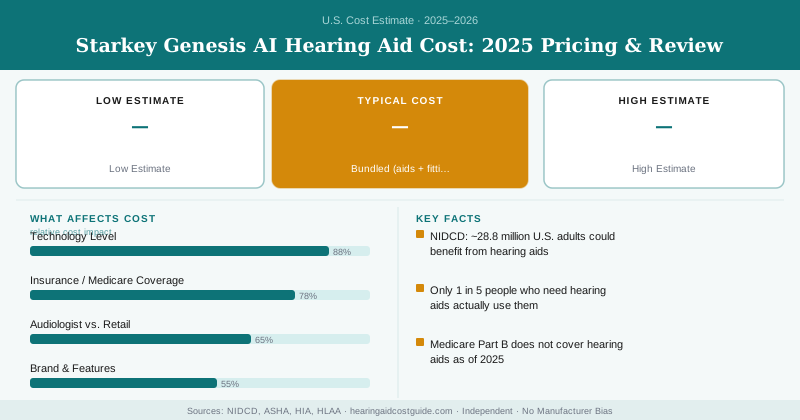
Starkey launched Genesis AI in late 2023 claiming it was the biggest platform leap in the company’s history. That’s typical manufacturer language — but Genesis does represent a genuine generational change from Evolv AI, the previous platform. Whether the improvements justify prices that run from $2,800 to $7,600 per pair depends on your hearing needs and which features actually matter to your daily life.
Starkey Genesis AI Pricing by Technology Level
| Technology Tier | Price Per Pair | Price Per Aid | Best For |
|---|---|---|---|
| Genesis AI 10 (entry) | $2,800–$3,800 | $1,400–$1,900 | Basic amplification, quiet environments |
| Genesis AI 20 (standard) | $3,800–$5,000 | $1,900–$2,500 | Moderate hearing loss, light social settings |
| Genesis AI 30 (advanced) | $5,000–$6,200 | $2,500–$3,100 | Active lifestyles, moderate noise |
| Genesis AI 40 (premium) | $6,200–$7,600 | $3,100–$3,800 | Complex hearing loss, noisy environments |
| Genesis AI 24 (IIC style) | $5,600–$7,000 | $2,800–$3,500 | Near-invisible fit, mild-moderate loss |
| Bundled (aids + fitting + 3 yr service) | Add $500–$1,200 | — | Full-service audiologist package |
Prices reflect full-service audiologist purchases. Starkey doesn’t sell direct-to-consumer. Buying through a Starkey-authorized dealer or audiologist is required.
What’s New in Genesis AI
Genesis AI ships on Starkey’s new Neuro Processor chip — a significant upgrade from the prior Edge AI processor. The practical differences:
Improved noise reduction: Genesis AI processes sound in real-time using deep neural networks trained on millions of sound environments. In controlled clinical tests, users report clearer speech in background noise, though real-world results vary significantly by setting.
Fall detection + health tracking: Genesis AI Premium tiers include an embedded accelerometer. Falls trigger an automatic alert to a designated contact via the Thrive app. Activity and health metrics (steps, active hours, hearing use) are tracked in the app. This is the only FDA-registered hearing aid with fall detection.
Hearing journal and cognitive engagement scoring: The Thrive app tracks how long you’re listening and engaging socially, presenting a daily “brain health” score. Clinical backing for this score is limited, but audiologists report patients find it motivating.
Edge Mode: A long-press button on the aid activates “Edge Mode,” which optimizes the aid for your current environment in real time. Useful in quick-changing situations — moving from a quiet hallway into a crowded restaurant.
Rechargeable: All Genesis AI models are rechargeable. No more disposable batteries.
Genesis AI vs. Evolv AI
The previous Starkey platform (Evolv AI, 2021–2023) is still sold as a lower-cost option through many audiologists at $2,200–$5,000 per pair. If your budget is constrained, Evolv AI remains a capable aid with solid noise performance. Genesis AI’s primary advantages over Evolv AI are:
- Faster processing with the Neuro chip (noticeably reduced wind noise artifacts)
- Better low-frequency handling for music and complex environments
- Updated Thrive app with improved Bluetooth stability on iOS 17+
- Longer battery life (approx. 51 hours on a charge vs. 36 hours for Evolv AI)
For most users with moderate hearing loss who don’t regularly attend concerts or noisy work environments, Evolv AI at $3,200–$4,500 delivers 85–90% of the Genesis AI experience at a lower price.
Genesis AI ships in receiver-in-canal (RIC), behind-the-ear (BTE), and invisible-in-canal (IIC) styles. Not all technology levels are available in all styles — the IIC style is limited to tier 24, which sits between the standard 20 and advanced 30 levels. Ask your audiologist specifically about style-level availability before comparing prices.
Where to Buy and What to Expect
Starkey hearing aids are sold exclusively through licensed hearing care professionals — audiologists, hearing instrument specialists, and ENT practices. You won’t find them at Costco.
Most Starkey dealers bundle the purchase price with:
- Comprehensive hearing evaluation
- Hearing aid fitting and programming
- 30–60 day trial period (most offer a full refund policy)
- 1–3 year follow-up adjustment appointments
- 1–3 year manufacturer warranty
Ask specifically how many follow-up visits are included and whether remote programming via the Thrive app counts as a visit. Starkey’s remote programming (Remote Assist) is available on Genesis AI and lets your audiologist make adjustments without an in-office appointment.
Is the AI Worth the Price?
For most adults with moderate sensorineural hearing loss living in average environments, mid-tier Genesis AI 20 or 30 ($3,800–$6,200 per pair) offers the best value. The premium tier (Genesis AI 40) primarily adds processing overhead for highly complex sound environments — it makes the most sense for patients with severe loss or demanding acoustic situations.
The fall detection feature is genuinely useful for older adults living alone and represents a real differentiator. If that feature matters to you, it’s available on all Genesis AI tiers through the Thrive app, not just the premium level.
The ASHA 2024 Consumer Report on hearing aid satisfaction showed Starkey consistently ranking in the top three for audiologist trust and patient-reported clarity in noise. That brand performance record matters when you’re spending $5,000+.
Frequently Asked Questions
Starkey Genesis AI hearing aids range from $2,800 to $7,600 per pair, depending on the technology tier you select. Entry-level Genesis models start around $2,800–$3,500, while premium tiers with advanced AI noise management and connectivity features reach $6,500–$7,600 per pair.
Most traditional health insurance plans, including Medicare, do not cover hearing aids as of 2025, though this is changing with some Medicare Advantage plans beginning to offer limited coverage. You may have coverage through a supplemental hearing aid insurance plan or your employer's benefits package, which typically covers 50–80% of costs up to $1,000–$3,000 per pair, leaving you responsible for the remaining balance out-of-pocket.
Initial fitting appointments typically take 1–2 hours, followed by 2–4 follow-up adjustment visits over 4–8 weeks as you acclimate to the devices. Most patients report noticeable improvement within the first 2–3 weeks, though full adjustment to AI features and personalized settings can take 6–8 weeks of regular use.