45 million Americans have tinnitus. What does treating it actually cost — and does anything actually work?
Those are two different questions. The cost part is answerable. The effectiveness part requires some honesty: there’s no cure for chronic tinnitus. What exists are management approaches that reduce how much it bothers you, help you habituate to it, and in some cases partially mask it in the moment. The NIDCD estimates that about 15% of the US population experiences some form of tinnitus, with roughly 20 million experiencing chronic tinnitus — the kind that doesn’t go away on its own.
Here’s what you can actually spend your money on, and what the evidence says about each option.
Tinnitus Device Costs at a Glance
| Approach | Cost Range |
|---|---|
| White noise machine (bedside) | $20–$150 |
| Personal wearable sound generator | $500–$1,500 |
| Tinnitus-specific hearing aids (pair) | $2,000–$7,000 |
| Tinnitus Retraining Therapy (TRT) full program | $2,000–$6,000 |
| CBT for tinnitus (audiologist or psychologist) | $1,000–$3,000 |
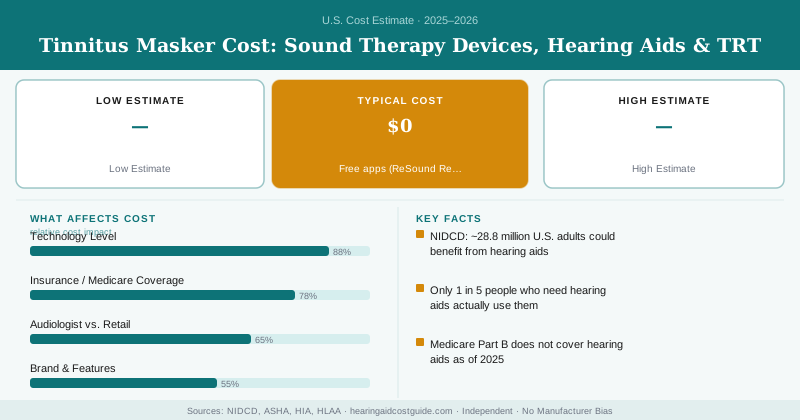
| Free apps (ReSound Relief, Widex Zen, myNoise) | $0 |
Sound Generators: Bedside vs. Wearable
The most basic tinnitus tool is a sound generator — a device that produces continuous background noise to partially mask the tinnitus signal.
Bedside white noise machines cost $20–$150. LectroFan, Marpac Dohm, and similar products generate white noise, pink noise, and nature sounds. They’re most useful at night, when silence makes tinnitus feel louder. At $50–$80, these are low-risk first purchases. Many people with tinnitus sleep with one for years.
Wearable sound generators fit in or behind the ear like a hearing aid and deliver masking sound directly to the ear canal. Cost: $500–$1,500. They’re useful for daytime tinnitus distress when you need sound delivered more precisely than a room speaker can. Some are standalone; others are combined with hearing aid amplification.
Sound masking covers up tinnitus in the moment. Habituation therapy trains your brain to classify tinnitus as unimportant background noise — similar to how you stop noticing a refrigerator hum. Tinnitus Retraining Therapy (TRT) targets habituation. Pure masking is faster relief; TRT aims for longer-term reduction in distress. Most audiologists use a combination of both.
Tinnitus-Specific Hearing Aids
If you have hearing loss alongside tinnitus — which is common, since they share many causes — hearing aids address both simultaneously. Several manufacturers have developed specific tinnitus management features built into their hearing aids.
ReSound includes a built-in Tinnitus Sound Generator with its hearing aids, playable via the app with customizable sounds. Widex offers the Zen therapy program with fractal tones designed to reduce tinnitus awareness. Starkey includes the Multiflex Tinnitus Technology in its Evolv AI and Genesis lines.
Cost: $2,000–$7,000/pair depending on technology tier. These aren’t a separate purchase — the tinnitus management feature is included in the hearing aid price. If you need hearing aids anyway, choosing a model with tinnitus features adds minimal cost.
Tinnitus Retraining Therapy (TRT)
TRT is a structured protocol developed by audiologist Pawel Jastreboff that combines counseling (helping you understand and reclassify your tinnitus) with low-level broadband noise delivered via ear-level sound generators. The goal is neurological habituation.
A full TRT program typically spans 12–18 months of regular audiologist visits. Cost: $2,000–$6,000 total. This includes the initial evaluation, the counseling component, the sound generators (if not already wearing hearing aids), and follow-up appointments.
TRT has solid evidence behind it. Studies published in the Journal of the American Academy of Audiology have shown meaningful reductions in Tinnitus Handicap Inventory (THI) scores in a majority of TRT participants over 12–18 months. It requires commitment — this isn’t a two-appointment fix.
CBT for Tinnitus
Cognitive behavioral therapy addresses the distress, hypervigilance, and sleep disruption that tinnitus causes — not the sound itself, but your relationship to it. A CBT-trained audiologist or psychologist works with you over 6–12 sessions.
Cost: $1,000–$3,000 depending on the number of sessions and provider type. Telehealth delivery is increasingly available and may reduce cost. Some health insurance covers CBT sessions when billed for anxiety or depression that’s comorbid with tinnitus.
Medicare doesn’t cover any tinnitus treatment specifically — not TRT, not CBT, not sound generators purchased for tinnitus management. However, if you have hearing loss and your audiologist prescribes hearing aids with tinnitus management features, the audiological evaluation and fitting may be covered as a medical service when referred by a physician. This doesn’t cover the devices themselves, but it reduces one cost.
Free Approaches That Actually Work
Don’t overlook what costs nothing. The ReSound Relief app, Widex Zen app, and myNoise website provide customizable soundscapes specifically designed for tinnitus relief — free to download. For many people with mild-to-moderate tinnitus distress, a combination of a white noise machine and a free app covers the essential needs of sound therapy without spending $2,000+.
Sleep hygiene improvements, caffeine reduction, and stress management also have documented effects on tinnitus perception severity. These aren’t substitute treatments for significant distress — but they’re real tools.
Choosing the Right Starting Point
Mild distress, occasional tinnitus: Start with a white noise machine and a free app. Total investment under $100.
Moderate distress affecting sleep or concentration: Audiologist evaluation first. If you have hearing loss, tinnitus-featured hearing aids solve two problems at once. If you don’t, a formal TRT or CBT program may be appropriate.
Significant distress affecting daily life, mood, or work: CBT with an audiologist or psychologist who specializes in tinnitus is the evidence-based choice. Don’t wait years for this one.
The $6,000 programs aren’t for everyone. But for people whose tinnitus is genuinely disabling, they’re money well spent — and frequently more effective than the cheaper alternatives.
Frequently Asked Questions
Sometimes. Tinnitus caused by a single loud noise exposure — a concert, a firecracker — often fades within hours to days. Tinnitus associated with temporary ear infections or fluid buildup typically resolves when the underlying condition is treated. Chronic tinnitus (lasting more than three months) rarely disappears entirely, but most people find that habituating to it is achievable. Research from the American Tinnitus Association shows that with proper counseling and sound therapy, about 80% of people with chronic tinnitus report reduced distress within 12–18 months.
Hearing aids can help some people with tinnitus even without clinically significant hearing loss, but the effect is less consistent. The main mechanism is amplification — when environmental sounds are louder, tinnitus seems softer by contrast. If your tinnitus is most bothersome in quiet environments, a low-gain hearing aid or sound generator may provide relief. An audiologist can do a tinnitus evaluation to determine whether your profile (pitch matching, loudness matching, masking level) suggests you're likely to respond to this approach.
For significant distress, yes. CBT for tinnitus is one of the few interventions with strong evidence behind it — not for reducing the volume of tinnitus, but for reducing the distress it causes. A 2020 Cochrane review found that CBT significantly reduces tinnitus-related handicap and improves quality of life. If tinnitus is affecting your sleep, your mood, or your ability to function, $1,000–$3,000 for a structured CBT program is a reasonable investment. Some audiologists and psychologists offer telehealth CBT, which reduces cost and increases access.